There is a certain magic to dropping the hook in a sheltered bay, rowing ashore, and then realising you have no idea how to cover the next ten kilometres. For cruisers who want to make the most of every port, anchorage, and coastal town they visit, having a reliable form of personal transport aboard can transform a good trip into a great one. The challenge is finding something compact enough to live on a boat without consuming the deck space you need for everything else.
From folding bicycles to electric motorbikes, the options have never been better. Here is a look at what is worth considering, and what suits different styles of cruising.
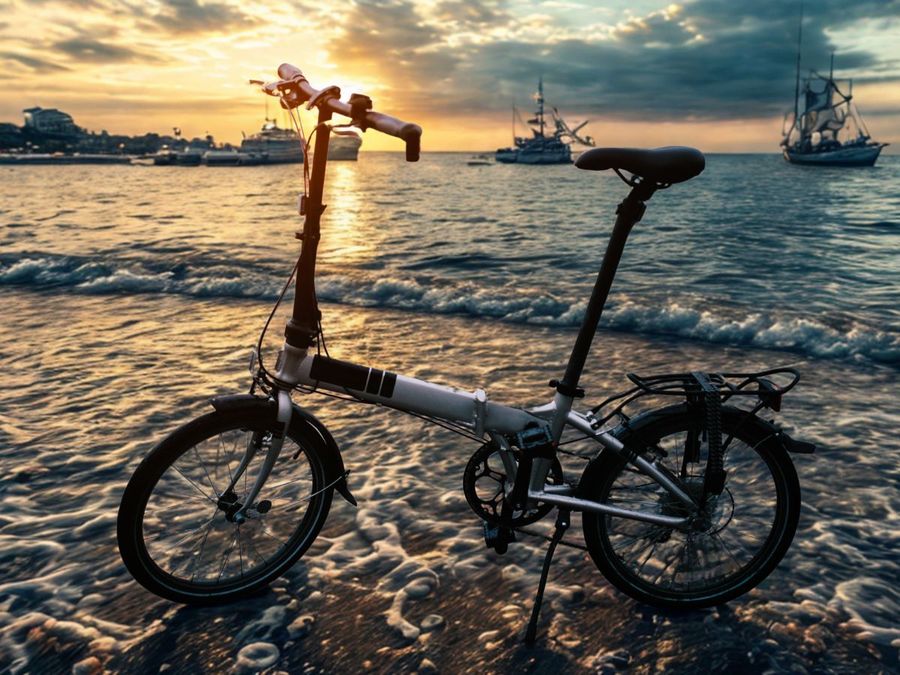
Folding bikes remain one of the most popular choices among long-range sailors, and for good reason. They stow neatly in a locker or under a bunk, tolerate the salty marine environment better than most, and make short work of grocery runs or exploring a new town. A few models stand out.
Brompton builds its bikes specifically for urban riding, and the engineering shows. Available in 2-speed, 6-speed, or 12-speed configurations, every Brompton folds the same way and collapses in under 20 seconds. Buyers can choose low, mid, or high handlebar positions, select from a wide colour range, and add mudguards or front carrier blocks. Weights start at around 12 kg for the 2-speed model, rising to 12.4 kg for the 6-speed, with the 12-speed coming in at approximately 12 kg.
“My bike has paid for itself ten‑fold … a small 22‑foot boat, and the Brompton fits perfectly under the steps into my cabin.” — Art of Hookie blogger
Dahon takes a broader approach, offering a wide spread of folding bikes that covers everything from lightweight performance models to practical city folders. The range suits multiple budgets and riding styles, with a consistent emphasis on quick folding, a solid feel on the road, and dependable components. That combination makes Dahon bikes a common sight at marinas and on liveaboard vessels.
The Tern Link series brings a no-nonsense practicality to the category. Built around 20-inch aluminium frames, these bikes handle New Zealand's varied terrain well, with 7-speed or 8-speed gearing, luggage sockets, and rear racks as standard. They fold and unfold in around ten seconds, and riders consistently praise their comfort and value. The main quirks noted by owners are the hinge design and some chain exposure, neither of which detracts significantly from the overall package.
Electric scooters have grown enormously in popularity, and for shorter runs between the dinghy dock and the shops, they are hard to beat. Compact, quick, and often small enough to slip into a cockpit locker or under a saloon seat, a good e-scooter adds real range to your shore excursions. Electric skateboards offer a similar appeal for those who are comfortable on them. Keep in mind that the rules around e-scooters differ from place to place. Helmet requirements and footpath speed limits vary, so it pays to check local regulations before you ride.
For cruisers with more space aboard, and the lifting gear to handle heavier loads, a folding electric motorbike or compact e-moped opens up the possibility of proper inland exploration. Some cruising catamarans already carry lightweight motorbikes for exactly this purpose when island hopping.
The UBCO 2x2 Adventure Bike deserves a serious look in this category. It runs dual hub motors producing 1 kW each, giving it all-wheel drive capability, and it tops out at 50 km/h. The battery is removable, available in either 2.1 kWh or 3.1 kWh versions, and the range sits between 80 and 120 km depending on conditions. A lightweight alloy trellis frame, suspension, and cargo racks round out a package that handles both on-road and off-road use comfortably.
Honda's Motocompacto takes a very different approach, reviving the concept of a suitcase-sized e-scooter with a distinctly retro feel. It weighs around 41 lb (18.7 kg) and folds to roughly 3.7 inches deep by 29 by 21 inches. A 250 W front-wheel motor, peaking at 490 W, pushes it to 15 mph (approximately 24 km/h), and the range of around 12 miles (20 km) charges back up in 3.5 hours. Not a distance machine, but as a stylish last-mile solution it does the job neatly.
The Eovolt Confort+ sits closer to a proper folding e-bike than a scooter. Built around a 20-inch 6061 aluminium frame with front suspension forks, it runs a 250 W Bafang motor paired with a torque sensor for natural-feeling power delivery. The battery is a removable 36 V, 10.5 Ah unit mounted in the seat post, braking is handled by hydraulic discs, and Shimano 7-speed gears manage the range of terrain. On a full charge, riders can expect between 70 and 100 km of range.
All of the heavier options in this category work best when the vessel has a swim platform hoist or electric tender to handle the loading and unloading. Without that kind of support, getting a motorbike or heavy e-bike safely in and out of a dinghy becomes a genuine challenge.
Transport does not always need to involve a motor or pedals, either. A folding wheeled cart or backpack trolley is one of the most practical things a cruiser can carry. Whether you are hauling provisions, shifting jerry cans, or carting dive gear from the marina to the boat, a good cart saves your back and your patience. These are readily available in New Zealand from Marine Deals, Mitre 10, and Trade Tested, among others.
However you store your onboard transport, a few practical principles apply across the board. Keep gear folded small and stored somewhere dry, whether that is a cockpit locker, lazarette, or under a bunk. Before adding e-bikes or scooters to your setup, check that your inverter and solar system can handle the charging load, because lithium batteries draw significant current. Rinse everything down with fresh water regularly to stay ahead of corrosion, and favour marine-friendly materials such as stainless steel, aluminium, and powder-coated alloys. Always carry locks and bring gear back aboard at night if you are anchored away from a marina.
The real value of good onboard transport goes beyond saving taxi fares, though it does that too. A folding bike or a compact scooter can take you to a lookout you would never have reached on foot, to a bakery tucked away from the waterfront, to a surf break, or to the edge of a national park that sits just beyond walking range. For Kiwi boaties cruising for weeks or months at a time, that kind of flexibility becomes part of the rhythm of life afloat. The right setup means you are never stuck at the marina gate, never hauling bags along the road, and never missing out on what lies just around the next corner.