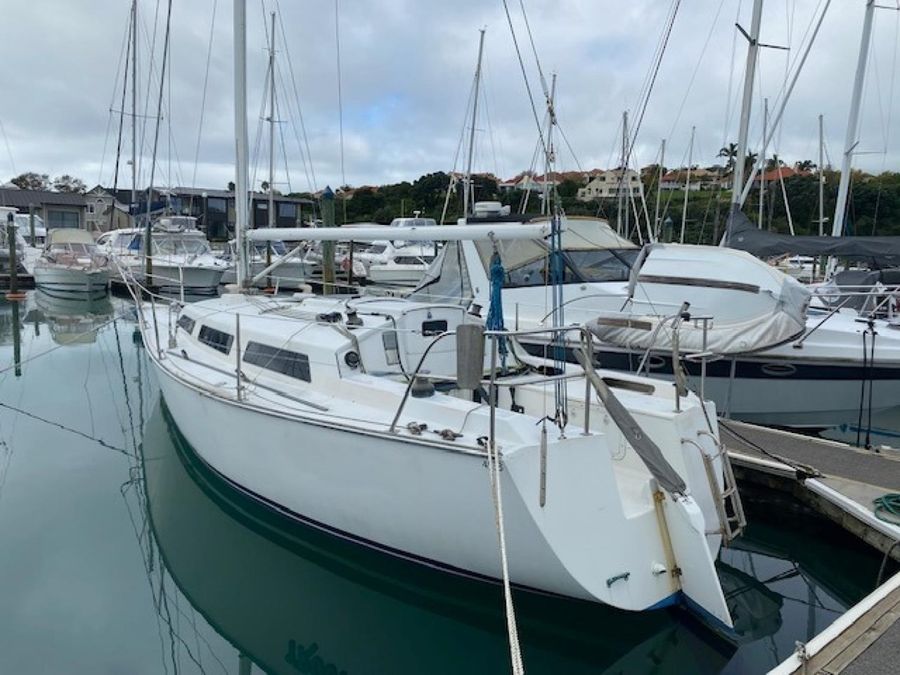
There is something quietly satisfying about a yacht conceived from the outset for New Zealand waters, drawn by a designer who understood local conditions rather than adapting plans borrowed from somewhere else. The early 1980s were a fertile period for that kind of work, a window before fibreglass production sailing took over completely, when local designers were still crafting hulls around the specific demands of our coastlines. The Lidgard name belongs firmly to that era, and a 1981 Lidgard 30 currently listed by Vining Marine for $15,000 makes a compelling argument that genuine quality and real liveability have nothing to do with size or price tag.
The first thing you notice about the Lidgard 30 is the height of the stern. That elevated transom is a signature of the Lidgard design philosophy, an outward sign of a hull shaped to move cleanly through the water even when the breeze is soft. A boarding ladder mounted directly at the transom completes the picture with quiet practicality. Anyone who has hauled themselves back aboard from a tender in a rolling anchorage will immediately appreciate why that positioning was chosen.
Step below the companionway and the mood shifts entirely. Curved timber deck beams sweep overhead, creating an atmosphere that is warm, personal, and unmistakably nautical in a way that moulded production interiors almost never manage.
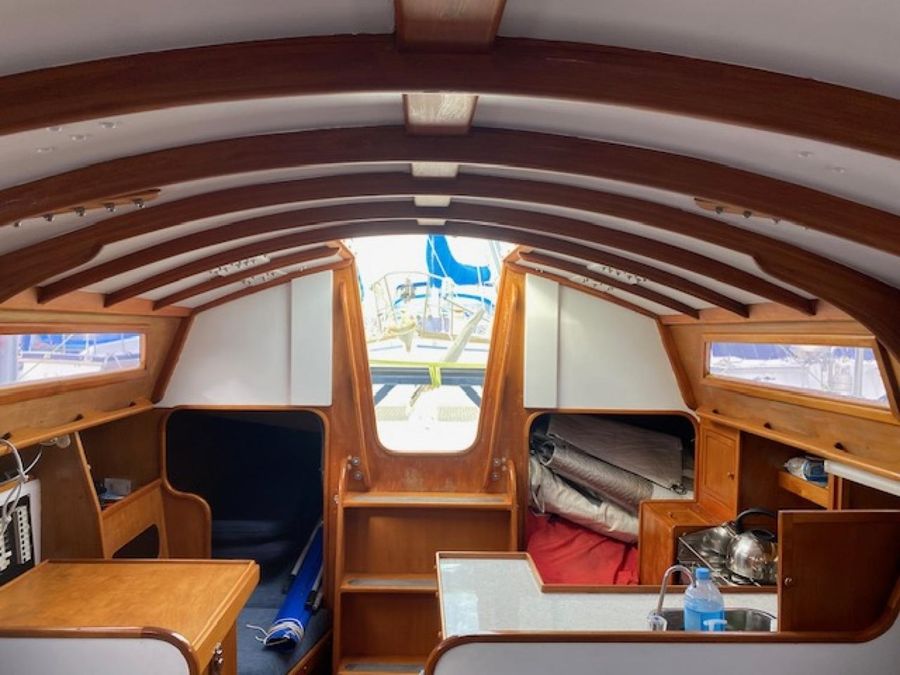
Being a custom 1981 build, the Lidgard 30 has a timber hull rather than a fibreglass one, a distinction worth exploring honestly. Wood carries an enduring reputation as high maintenance, but a well-constructed timber hull has real advantages on the water, and Lidgard construction sits well within that category. The result is a hull that insulates naturally against cold and dampens noise in a way fibreglass cannot match. The cabin stays quieter, winter condensation is less of a problem, and the relentless drumming of chop against the topsides is noticeably subdued. What is asked in return is consistent, straightforward maintenance: keeping on top of antifoul and ensuring the bilge stays dry. A hull that receives that attention can, in practice, outlast a fibreglass equivalent compromised by osmosis over the same period.
The reputation Lidgard designs hold was built in the conditions New Zealand sailors actually face: the short, steep chop that forms when wind and tide run against each other, the tighter channels winding between the inner gulf islands, the more exposed passages of the Bay of Islands, and the emphatic southerlies of the South Island. The Lidgard 30's high stern and balanced underwater form are designed to lift over oncoming water rather than punch through it, giving the boat the nimbleness to duck into a sheltered bay off Waiheke or Great Barrier Island while remaining composed enough to handle a sharp squall on a Firth of Thames crossing without fuss.
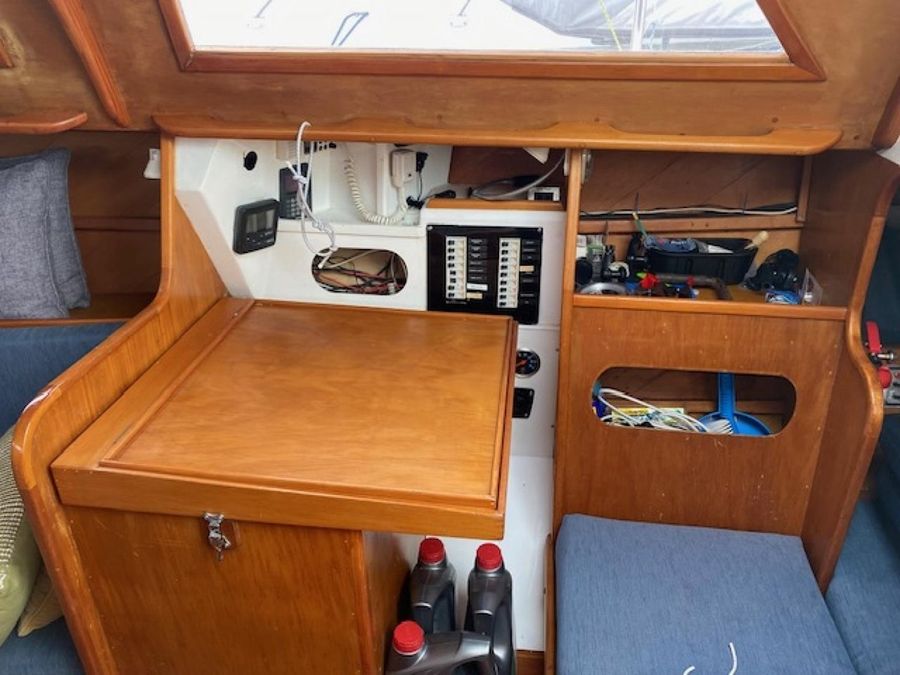
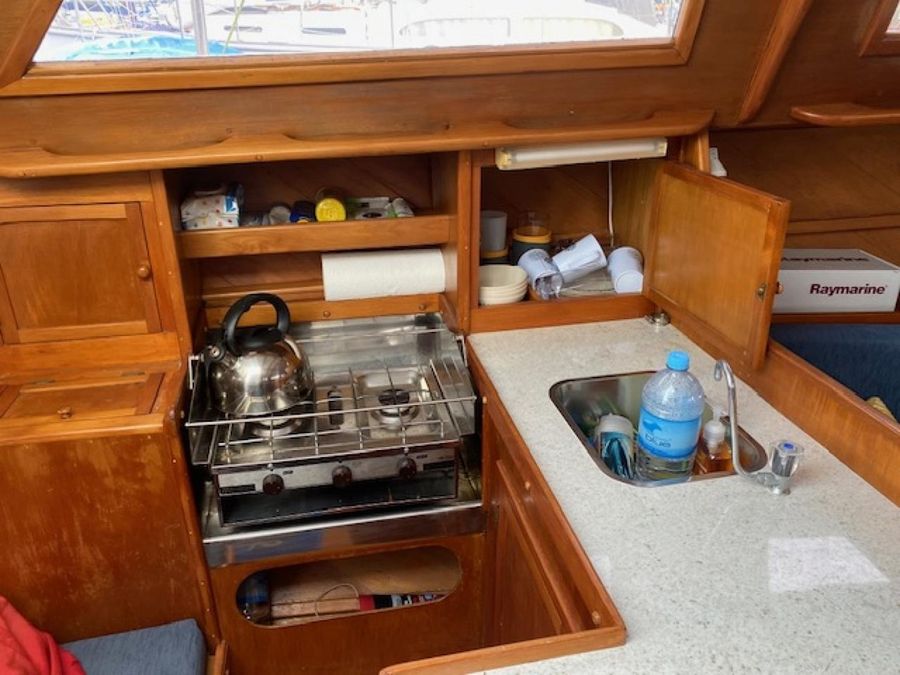
Fitting a genuinely workable interior into thirty feet requires discipline rather than optimism, and the layout here shows exactly that. Two three-quarter berths sit either side of the companionway, and a pair of saloon benches occupy the main cabin. The space directly beneath the hatch follows a well-proven arrangement: a compact U-shaped galley to one side and a dedicated chart table positioned directly opposite.
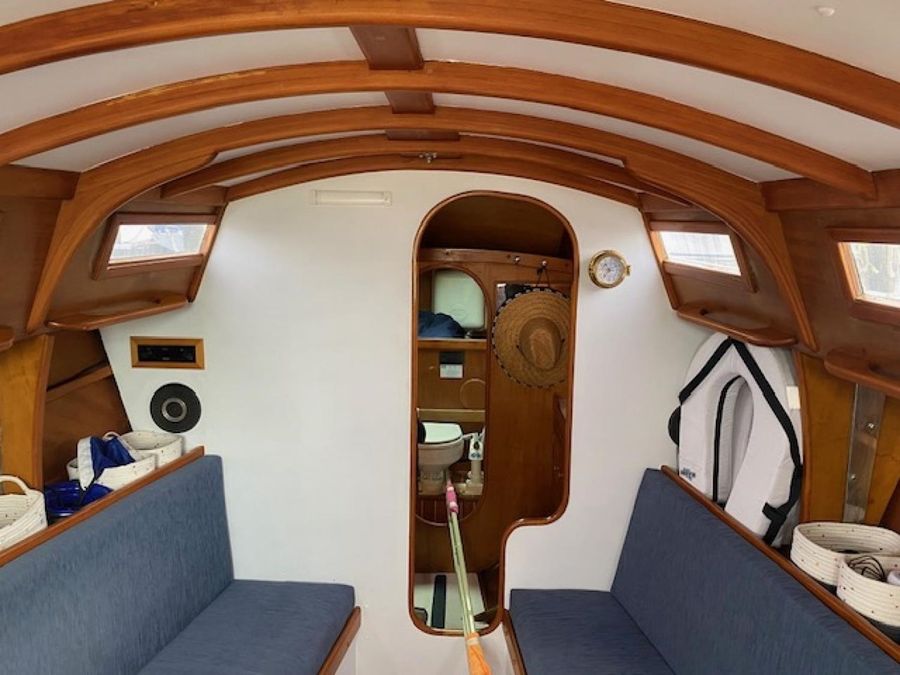
The galley is compact, but it has the feel of something specified by a person who has actually cooked at sea rather than by a marketing team working from a brochure. The centrepiece is a gimballed gas stove and oven, which is more or less essential equipment for anyone planning to eat properly on a coastal passage or an overnight leg. The U-shaped configuration earns its keep too. When the boat is heeled or pushing through confused water, being able to brace between the counters gives you the control to manage a hot pan without it turning into something dangerous. The head is a comfortable space, which is far from guaranteed on a vessel of this length.
On deck, the approach is clean and free of clutter. Tiller steering offers a direct, physical connection to the rudder, delivering the kind of moment-by-moment feedback that tells you exactly how the Lidgard 30 is balanced against the wind. With the boat swinging at anchor and the tiller folded away, the cockpit becomes a comfortable place to sit. Line management has been well considered throughout, with lines led aft in an arrangement that suits short-handed sailing well. Whether you are singlehanding or sailing with a group of friends new to the sport, the ability to manage everything from the cockpit without constant trips to the foredeck keeps the whole experience relaxed rather than frantic.
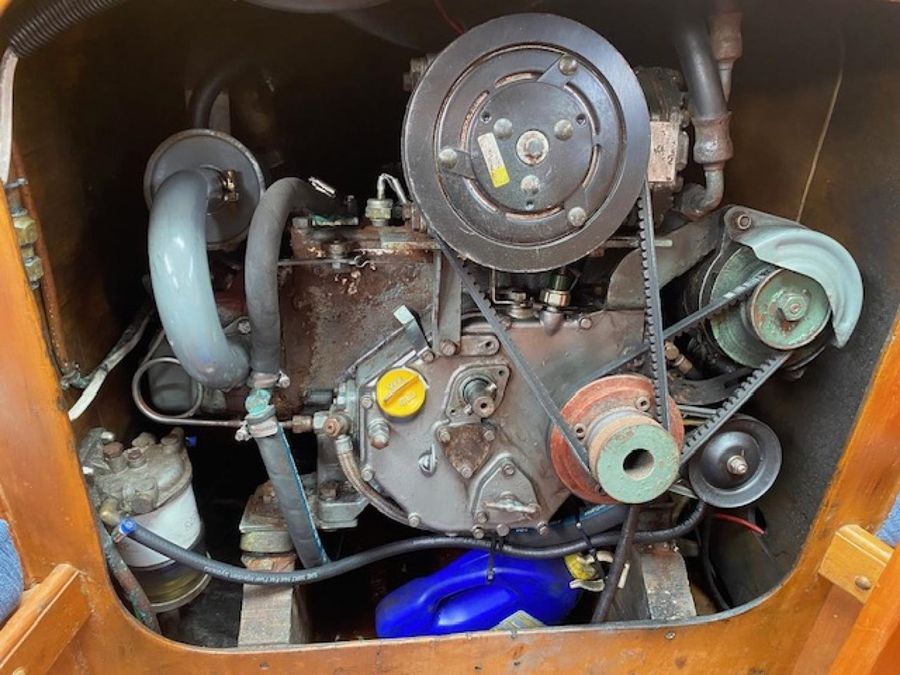
A Yanmar diesel with 1,340 hours is fitted, a fresh antifoul has been recently applied, and the overall impression is of a boat that has been looked after with genuine care and is ready to sail in earnest. At $15,000, this 1981 Lidgard 30 is a characterful, well-sorted vessel and a reminder that sailing well does not always require spending a great deal to do it.