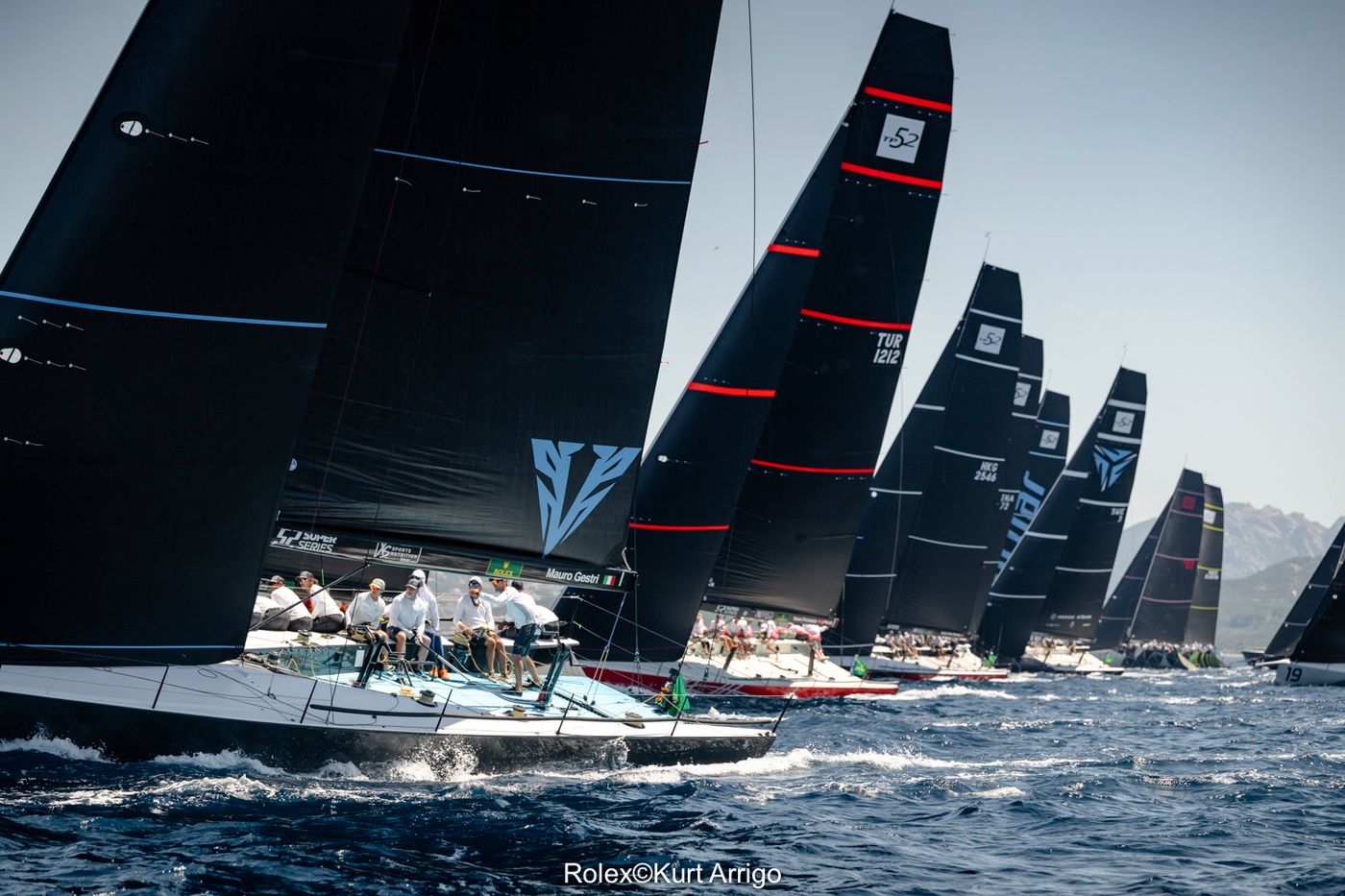
Adam Beashel's Sled arrived at the final day of the 2026 Rolex TP52 World Championship with the mathematics laid out in stark clarity. A single point separated them from Hong Kong's Alpha+ at the head of the leaderboard. A tie would not be sufficient. One race off Porto Cervo would decide everything.
Racing did not begin early. The Race Committee held the fleet in patient reserve through a quiet morning, waiting for the Gulf of Arzachena to fill with wind before committing. Eventually, a 13 to 14-knot easterly rolled down from the Gallura mountains, and the boats crossed the line into a proper afternoon breeze. Sled's crew had spent the wait knowing exactly what was required.
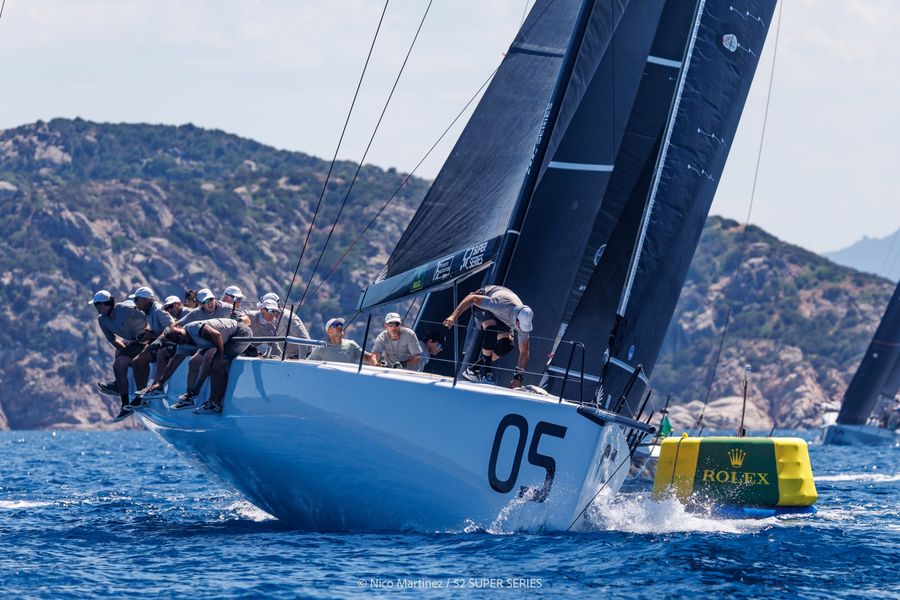
Sailing under the flag of Japanese owner Takashi Okura, Sled did not need victory. Third place would do. Italian tactician Checco Bruni engineered a clean start, and the crew threaded their way through the middle marks with discipline rather than aggression, tracking key rivals without over-extending. Six-time America's Cup winner Murray Jones shaped the strategic framework that kept the campaign composed when composure was most difficult to maintain. When Alpha+ crossed the finish line in twelfth, the title was settled.
"You don't win a world championship every day," Bruni said after the final gun. "We needed a good start and got one, then we simply had to mark a few opponents, and it went very well." The result gives Sled three consecutive TP52 world titles, a run that includes taking the Porto Cervo leg the previous year and now opening the 2026 season with back-to-back Super Series victories.
The most arresting story of the week centred on Trinity Racing. Joakim Sundberg's Swedish team sailed the decisive final race with enough speed and nerve to take the gun on the last run downwind. Theirs was only their second Super Series event and their first appearance at a world championship, yet nothing about their sailing suggested inexperience. Ed Baird's tactical guidance ran through their performance clearly, and they claimed second overall.
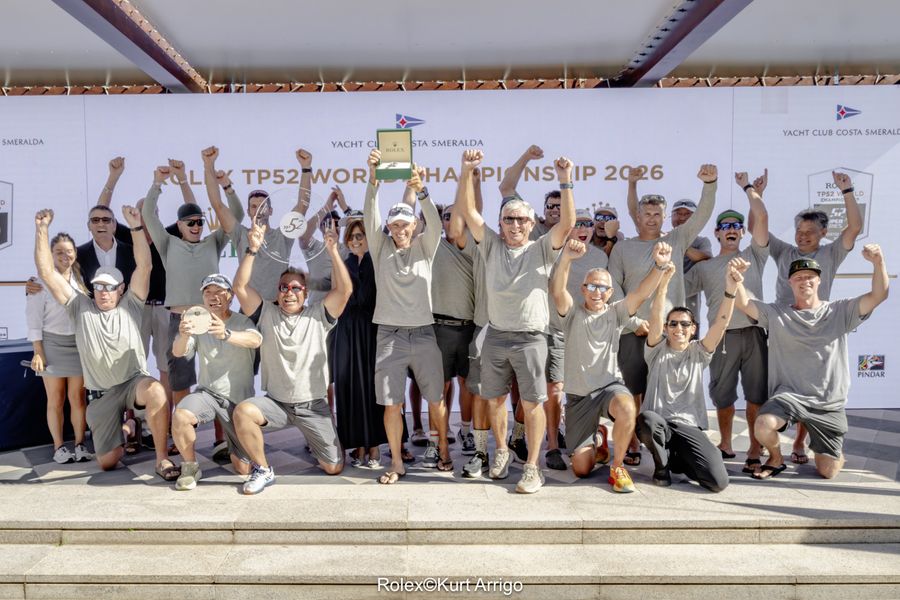
The bronze medal went to Germany's Platoon Aviation, steered by Harm Müller-Spreer with Vasco Vascotto directing tactics and Olympic champion Jordi Calafat overseeing strategy. They rounded the windward mark at the front of the fleet in the final race but could not convert that position into the race win. Their championship podium was built on something quieter than a decisive final-day charge. Across the nine-race series, Platoon Aviation produced just one double-digit finish, and that kind of sustained clean sailing accumulates into results.
For Alpha+, the overnight position at the top of the standings made the final result all the more difficult. A twelfth place in the closing race ended their title bid. In a nine-race series where the fleet is separated by margins this fine, a single poor result carries a weight that is almost impossible to offset.
The Yacht Club Costa Smeralda hosted what was the largest TP52 World Championship fleet ever assembled, 15 boats representing 11 nations. Commodore Andrea Recordati described the event as the finest technical and competitive keelboat sailing on display anywhere, a verdict the week's racing supported without qualification.
Bruni's words at the finish line pointed to something about this level of competition. Tactical precision compounds across a series. A single misjudgement costs positions that may never be recovered. The crew that manages to stay clear-headed when the scoring is tightest tends to be the one lifting the trophy at the end.