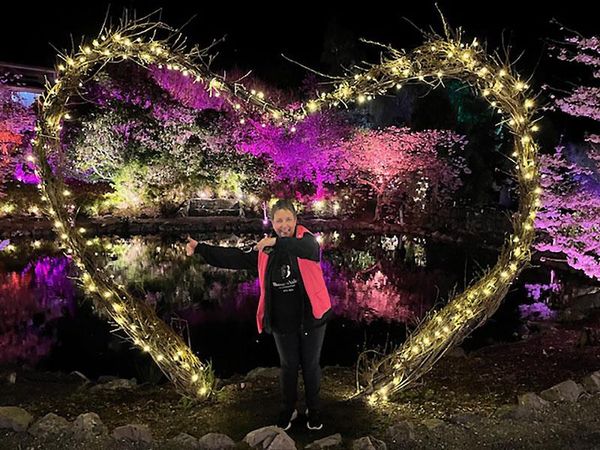
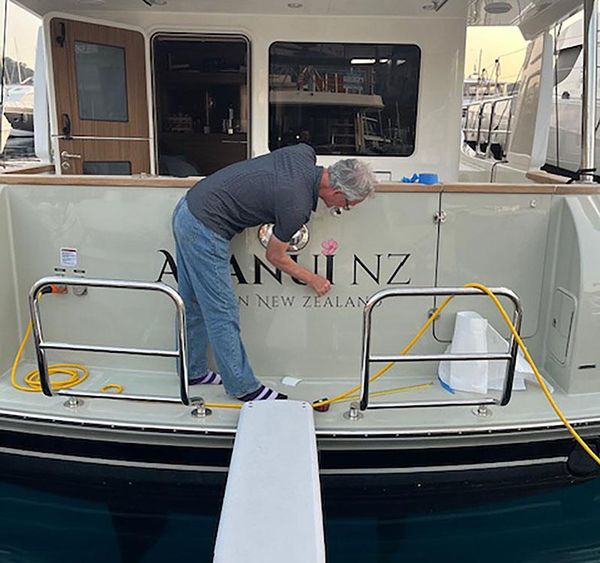
The name Awanui NZ carries its meaning in both directions. Awanui is a Māori word for "big river," and for skipper Mark Rammell, that meaning extends well beyond the vessel herself. "All the oceans flow together," he says. "So, we're travelling on the big river back to New Zealand." The name also connects the boat to life on land. The Rammells own a property near Wellington, Aston Norwood Gardens, widely known as Blossom Valley, where more than 300 mature flowering cherry trees grow alongside countless other species. Each Spring the property draws tens of thousands of visitors, and one of those cherry trees bears the name Awanui. Vessel and land are, in that sense, quietly connected.
The scale of what the name now represents is considerable. Mark and his wife Fiona are more than 8,000 nautical miles and two years into a voyage that will total at least 22,000 nautical miles before Awanui NZ reaches New Zealand later this decade. They have not yet reached the furthest point of the outward journey. That still lies ahead. The distance, though, is almost secondary to what the voyage has actually become: a transformation of two fairly casual boaters into committed long-term liveaboards, with a 34-metric-tonne Nordhavn 51 at the centre of family life for Mark, Fiona, their daughter, and three sons.
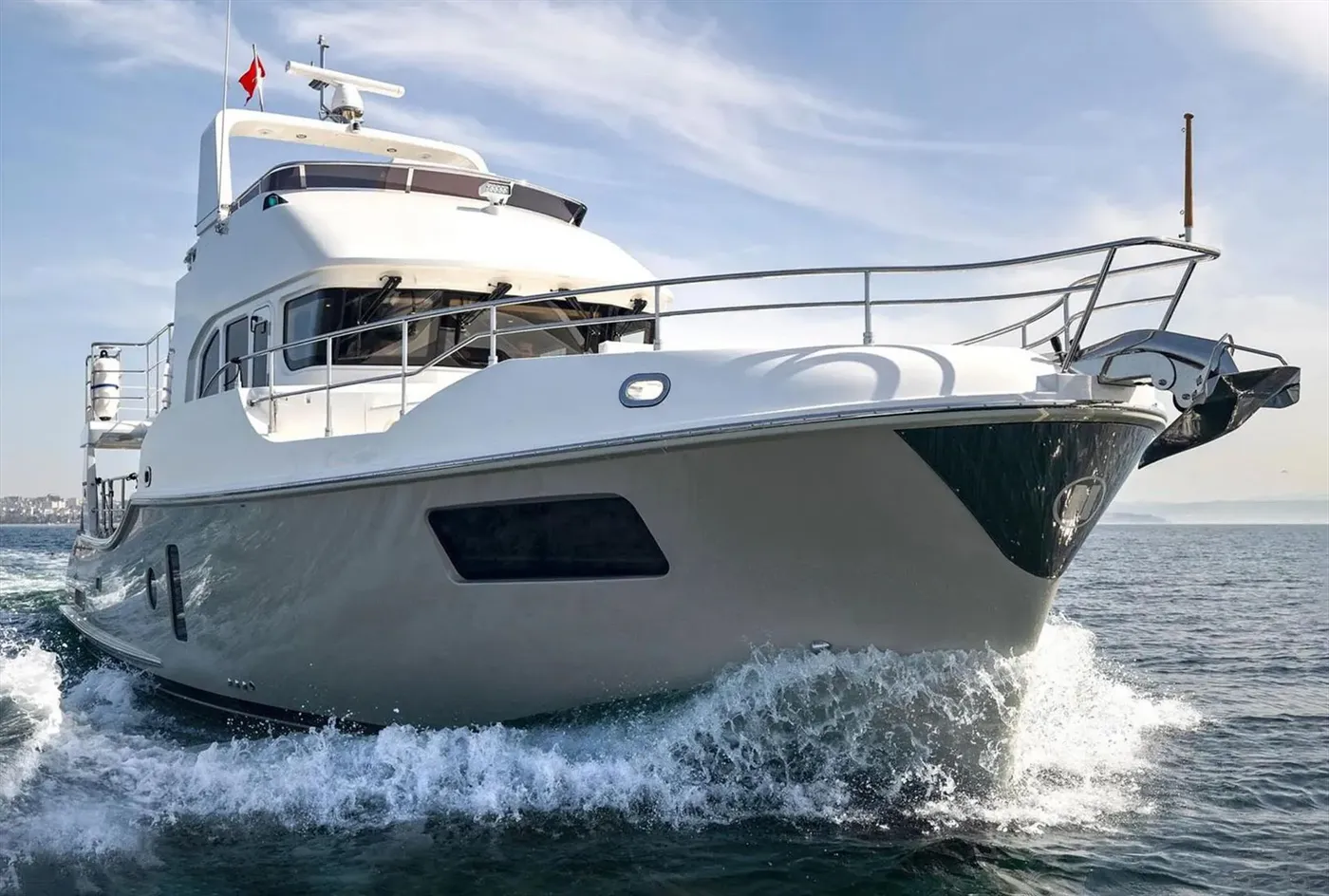
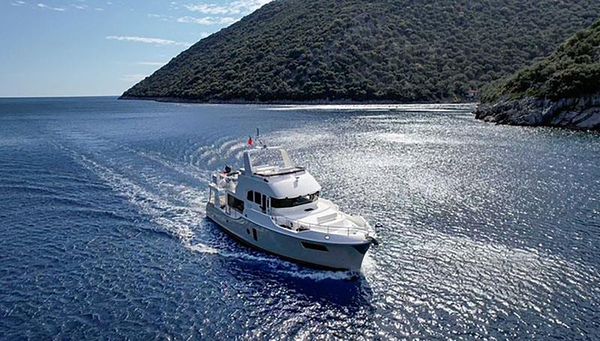
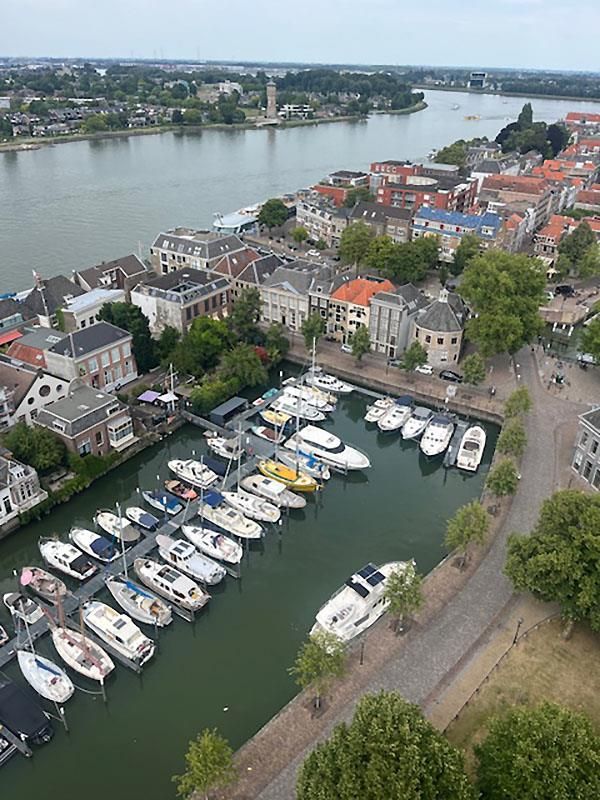
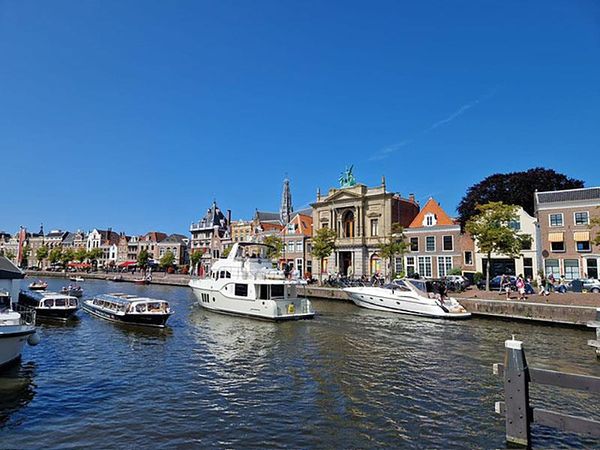
Awanui NZ is a full-displacement vessel built for ocean passage-making. At six knots she burns just six litres per hour combined, achieving the widely cited ratio of one litre per nautical mile. Her twin 160hp John Deere diesels consume roughly double that at seven knots, and double again at eight, which explains why a total fuel capacity of 5,000 litres is fundamental to any transoceanic planning. The boat is currently in Holland and has not taken on fuel since the Channel Islands. More than two years after leaving the yard in Turkey, she has spent the majority of her time working coastlines rather than crossing open water. The true bluewater passages are still ahead, and they are something Mark is genuinely looking forward to.
The seed of all this was planted at altitude. For four decades Mark worked as a pilot, including 35 years with Air New Zealand, flying types ranging from the Fokker Friendship and the Boeing 737 through various Airbus variants, the 767, 787, and finally the 777. On long-haul North Atlantic crossings routing over Newfoundland, Greenland, Iceland, and Scotland, he would look down at the coastlines passing far below and find his thoughts wandering. "I used to fly from Los Angeles to London, and we'd go over Newfoundland, Greenland, Iceland and Scotland. Those long-haul flights across the North Atlantic often passed over remote and rugged landscapes and coastlines. In the Summer it often looked beautiful down there. Sometimes the ocean appeared completely calm from that altitude."
What started as a passing thought during long flights grew into something more considered. "I found myself imagining what those places might look like from the sea. I remember thinking, 'I wonder what it's actually like down there? I'd love to go and see it.' At the time it was simply a thought. A passing curiosity that comes easily during long flights, but the idea slowly took root. Years later, it would become the basis for the route that Awanui NZ now follows."
His aviation background gave Mark a practical advantage in certain areas. Navigation, checklists, maintenance procedures, watches, and provisioning all transfer reasonably well from one discipline to the other, even though the lived reality of managing a boat at sea is something quite different.
Family has shaped the voyage as much as geography. Fiona has joined for various legs, as has their daughter and friends, though the nature of a multi-year circumnavigation means Mark has frequently pressed on alone while Fiona returned to New Zealand. He hopes the boat will come to mean something lasting to the next generation. "I'm really hoping one of the kids develops the passion for it as well. Maybe one day they'll take the boat out with their own families." Rather than treating Awanui NZ as a temporary chapter before ordinary life resumes, Mark imagines her remaining woven into the family's story indefinitely. He has said he may choose to keep living aboard once the boat returns home.
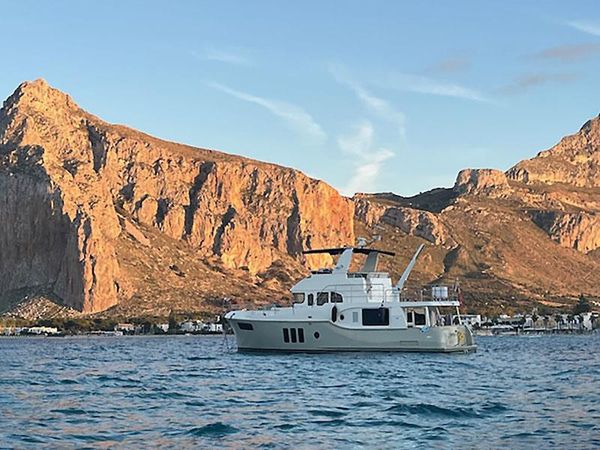
Life aboard is rarely still. There is always a repair to make, a system to attend to, or a new episode to produce for the Rammells' YouTube channel. Mark runs it as an honest and unfiltered account of liveaboard life, faults included.
The decision to actually go was crystallised by a profoundly personal moment. A close friend of Mark's, someone he had spent years boating with, became seriously ill. In their final conversations the two men returned repeatedly to the idea of travelling the world by boat, and before his friend died, he asked Mark to promise he would still go and do it. That request stayed with Mark. Not long afterwards, he and Fiona sat down and asked themselves the question they had been circling for years. Were they actually going to do this?
Mark describes that moment of commitment as the hardest step in the entire process. "The hardest thing to do is make the decision. Once you've made the decision, everything else just becomes how you're going to do it."
A shared ownership arrangement in a Salthouse Motor Yacht had already introduced Mark to the philosophy of long-range, displacement-hulled passage-making, and from there he found his way to the Nordhavn brand. "I remember seeing a Nordhavn and thinking, 'That's the boat I love.'" When Nordhavn introduced the N51 model, he recognised it immediately as the right platform. The chance to purchase hull number one came up, and Mark and Fiona took it.
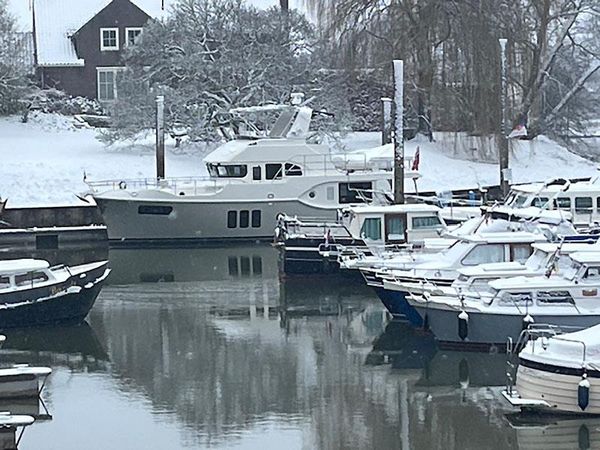
The final cost came in roughly NZ$300,000 above their original expectations. By that point, however, the decision had been made and the only remaining question was how to fund it. "So, it was just a matter of finding the money. Sadly, Dad passed away at about that time, which helped with the finances, and most certainly added to the desire to make it happen. All the money is in the boat now," Mark adds with a laugh.
Fiona's Dutch heritage has given the route an added dimension. She had spent little time in the Netherlands, and exploring her ancestral country by sea has made that leg of the journey particularly meaningful. "So, it's been a really special experience for her," says Mark. The choice to head north from Turkey rather than east through Suez was deliberate, shaped by those North Atlantic memories from the flight deck and by the desire to reach Northern Europe.
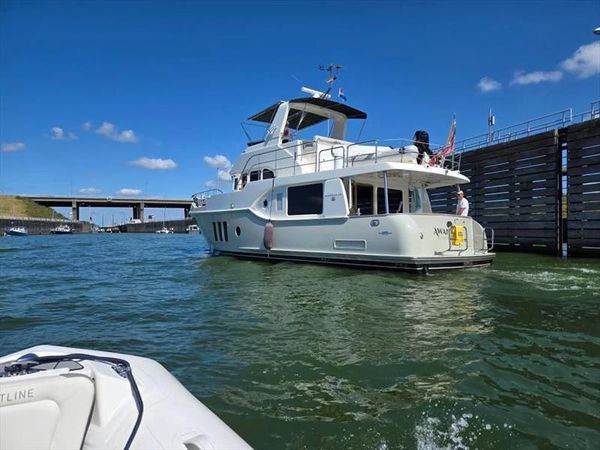
From Holland, the plan for the coming Northern Summer is to cruise Scotland and its islands, the very coastlines Mark once watched slide beneath him from the cockpit. The following year takes Awanui NZ north to the Faroe Islands, then on to Iceland and Greenland, before she crosses the North Atlantic to Newfoundland and Nova Scotia. From there the route works south along the Eastern Seaboard through Maine and down to Florida.
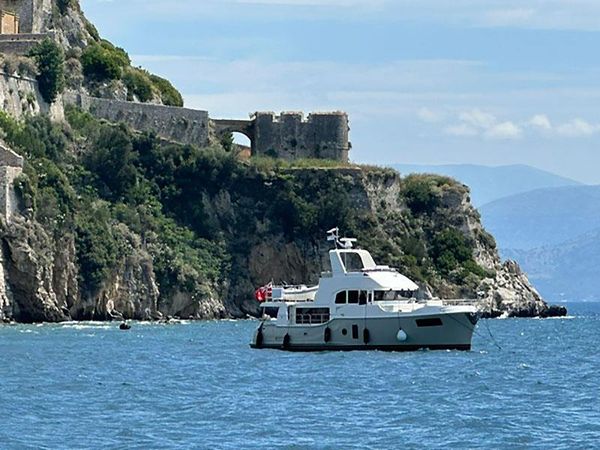
Around 2027, Awanui NZ is expected to reach the Caribbean and transit the Panama Canal. Once through, the course finally turns west across the Pacific, likely passing through the Marquesas or possibly via Hawaii, then continuing through the South Pacific island chains toward Fiji and ultimately New Zealand. The projected homecoming sits somewhere around 2030 or 2031.
For all his decades in aviation, Mark is candid about how much boating has demanded of him. "Pleasure boating is something you really learn as you go." Flying comes with the support of rigorous training, established procedures, and a professional crew. On a boat, especially when single-handing, every decision and every consequence belongs to the skipper alone. "You don't have someone sitting beside you. You're it. The learning curve has been steep."
Mechanical troubleshooting, weather reading, marina manoeuvring, and constant maintenance fill the days. "There's not a day that goes by where I don't learn something. Maintenance alone is effectively a full-time job." Mark handles most of the work himself, from engine servicing and systems diagnostics to minor hull repairs. "Hiring professionals for every task would dramatically increase the cost of operating the boat."
The popular image of ocean cruising, all turquoise anchorages and sundowners, bears little resemblance to the daily reality aboard. "I think people imagine beautiful blue water and cocktails, but the reality is that with a complex global boat you're looking after the vessel day after day, after day." Managing costs over a voyage of this length matters enormously. Anchoring rather than using marinas wherever possible is one of the simplest and most effective strategies available. In a recent year, Mark estimates he spent around 300 nights at anchor, and the benefits extend well beyond the savings. "When you're in a marina, you're looking at another boat and another boat. When you're at anchor every time you look out the window it's different."
There is a subtler challenge that long-term cruisers rarely anticipate. When every day delivers something extraordinary, the extraordinary gradually becomes ordinary. "When you wake up every day on the boat, if you're not careful it becomes your new normal," says Mark. The YouTube channel exists partly as a guard against this. By committing to regular episodes and documenting the journey honestly, the Rammells ensure the experience does not simply disappear onto hard drives, unexamined. The act of recording keeps the sense of wonder alive. "You have to pinch yourself sometimes."
When Awanui NZ returns home, the Rammells will have built a life around curiosity, family, and the conscious choice to follow a genuinely different path.
A voyage spanning multiple oceans and dozens of countries over the better part of a decade demands insurance capable of matching that ambition, and Mark discovered exactly how much that matters in a direct and memorable way. Following a fairly public grounding, local police impounded Awanui NZ and required a full hull inspection before releasing her, an exercise that cost 2,500 Euro. About a month later, Mark sat down to renew the boat's insurance and took the time to read the policy carefully. The excess stands at NZD17,000, but he found that in the event of a grounding that excess is waived entirely, because Pantaenius Sail and Motor Yacht Insurance want the hull inspected every bit as thoroughly as the owner does.
The claims process proved straightforward. "I wrote to Pantaenius, and within two weeks, the money was in our bank account. I just sent them the social media reports from Portugal, the documentation, and our YouTube clip. They just came back, and said, 'No problem at all.'" The renewal premium was unaffected. "That builds a lot of loyalty for me to Pantaenius. Big time!"