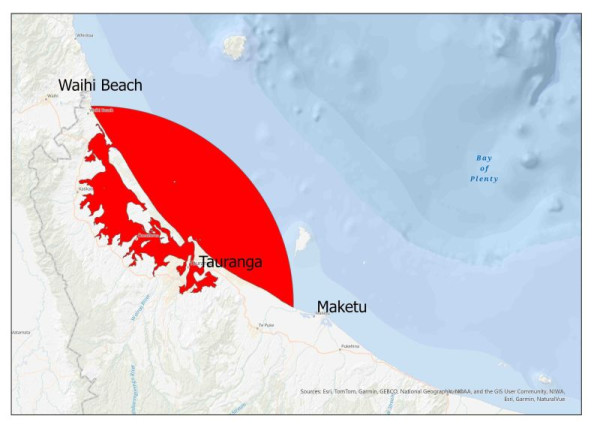
New Zealand Food Safety has asked boaties and beachgoers to stop collecting shellfish along a stretch of Bay of Plenty coastline after testing found unsafe toxin levels between Maketu Beach and Waihi Beach.
Deputy director general Vincent Arbuckle says pipi taken from the area showed paralytic shellfish toxin above the allowable limit.
"The affected stretch starts just north of the Maketu Beach estuary and runs through to the northern end of Waihi Beach," he says.
A map showing the closure boundary has been released for anyone uncertain about the exact extent of the affected zone.
The restriction covers all recreational gatherers across a wide range of species. Mussels, oysters, tuatua, pipi, toheroa, cockles, scallops, pūpū (cat's eyes) and Cook's turban should not be taken or eaten from this coastline. Cooking provides no protection, as heat does not break down the toxin.
An algal bloom moving through the region is behind the elevated readings. Toxins from the algae accumulate in shellfish gut and flesh as they feed, and more intense blooms generally produce higher toxin concentrations.
Symptoms in people who have eaten contaminated shellfish can appear within minutes or take a few hours to develop. These include tingling around the mouth or face, numbness in the hands and feet, difficulty swallowing or breathing, dizziness, headache, nausea, vomiting and diarrhoea. Severe cases may lead to paralysis.
Pāua, crab and crayfish are only safe if the gut is removed before cooking. The toxin concentrates there, and any leakage during preparation can contaminate the meat.
Finfish are not affected, though New Zealand Food Safety advises gutting the fish and discarding the liver as a precaution.
No illnesses linked to this event have been reported so far.
Anyone who becomes unwell after eating shellfish from this coastline should call Healthline on 0800 611 116 or seek medical care. Keeping any leftover shellfish for testing can help authorities track the issue.
Arbuckle says monitoring is underway and updates will be issued as conditions change. Shellfish sold commercially remains safe because it is harvested under strict testing rules.