
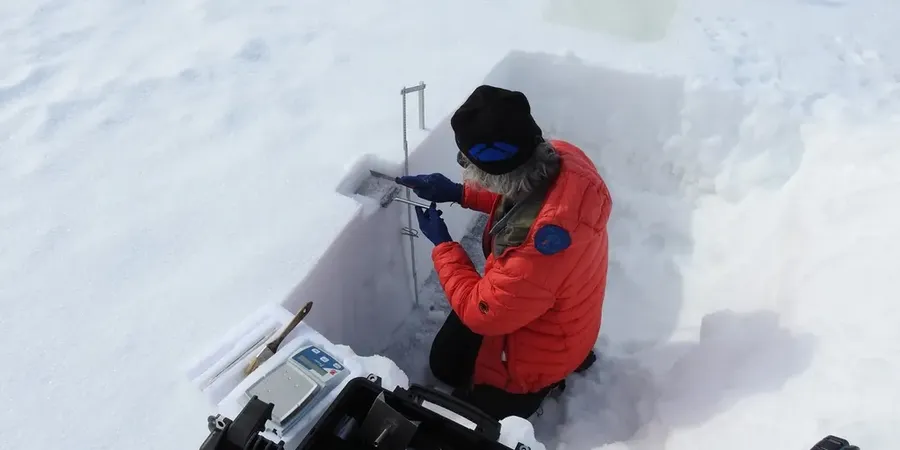
Few parts of the planet are transforming as rapidly as the Arctic, and while competitors navigating the race were among the earliest skippers to push north across the Arctic Circle, the region's most consequential stories were unfolding well away from any competition course. Across the High North, scientists were immersed in missions aimed at making sense of what is happening to a corner of the world whose stability underpins the entire planet's balance.
The Arctic performs a regulatory function for atmospheric and oceanic circulation at a global scale. Its ice sheets, glaciers, permafrost and singular ecosystems are irreplaceable, and the pace at which rising temperatures are reshaping all of them has drawn researchers from a wide range of disciplines toward problems that are simultaneously urgent and diverse.
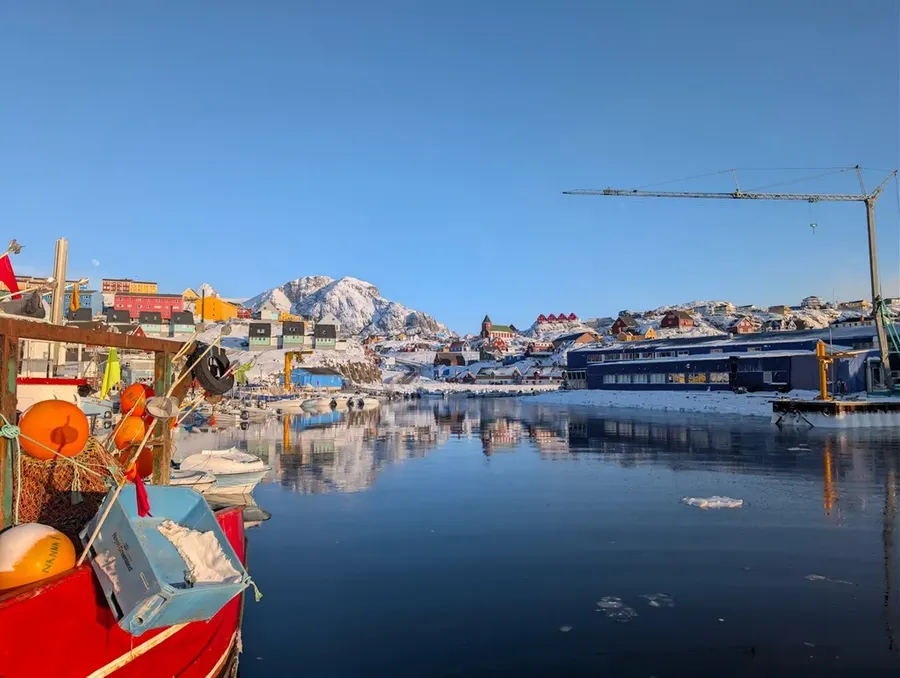
At Ny-Ålesund in Svalbard, the ARCSNOW team was pursuing one of those problems with particular intensity. Their focus was the relationship between the atmosphere and the snow lying across the landscape, an interaction that turns out to carry enormous weight for the broader climate. Snow's reflectivity, its ability to deflect solar radiation back into space, plays a central part in governing how much heat the planet holds onto. Svalbard warms more quickly than almost anywhere else on Earth, and that warming has brought rapid shifts in the archipelago's precipitation patterns. The ARCSNOW researchers were tracking how the physical and chemical properties of snow evolve over time, with particular attention paid to thaw periods, when those transformations tend to accelerate most sharply. The data gathered through this work will feed into climate models and improve predictions about how the Arctic will continue responding as temperatures push higher still.
The questions being pursued across Svalbard extend outward to Greenland and beyond. Glaciologists are cataloguing ice loss and working out its contribution to rising sea levels. Biologists are following marine and terrestrial species as the habitats those animals depend on shift underneath them. Social scientists are working alongside Inuit communities, documenting how hunting practices, food security and deep bodies of traditional knowledge are being reshaped by environmental changes that are arriving faster than any living generation has previously witnessed.
For those aboard the competing yachts, the race has provided an unusual vantage point on a region that most people will never see for themselves. Sailing through waters that carry less ice than they once did, competitors have moved through visible, tangible evidence of change, while the scientific work continuing onshore translates that evidence into data, models and documented fact. None of what is happening here is distant or theoretical. It is occurring now, and it is being carefully measured.