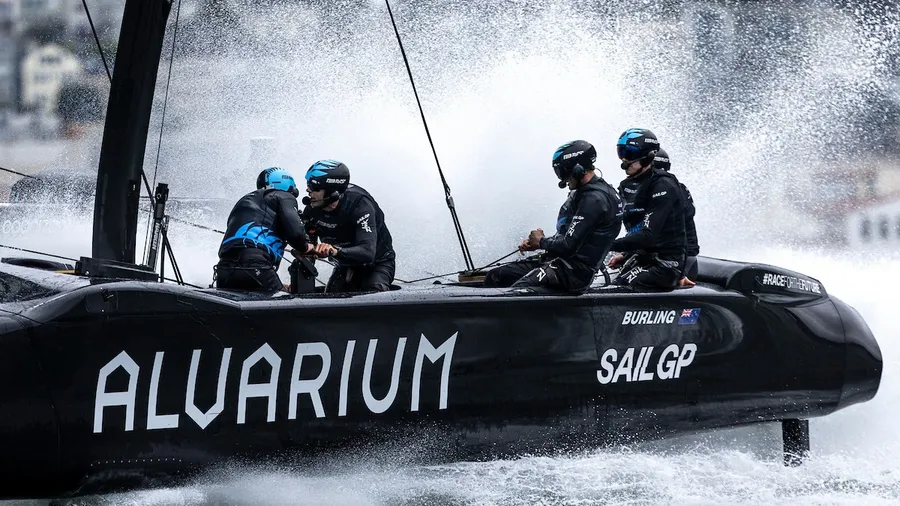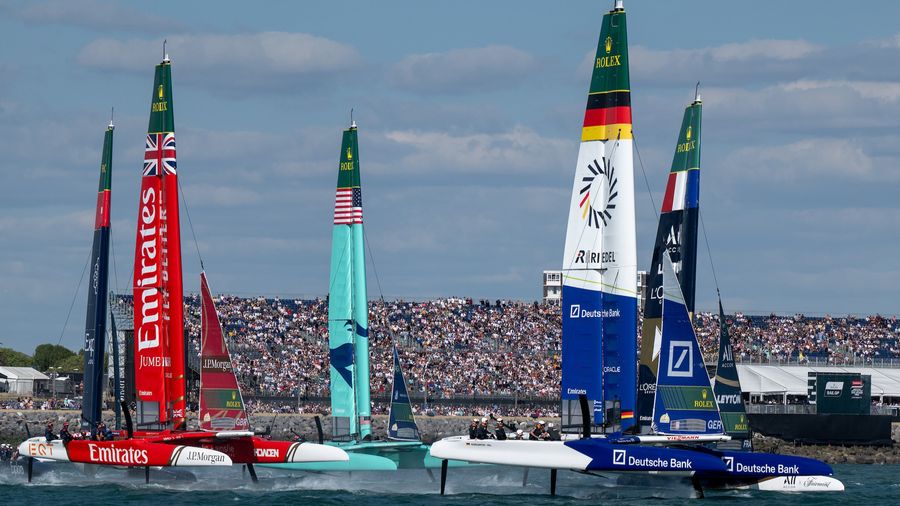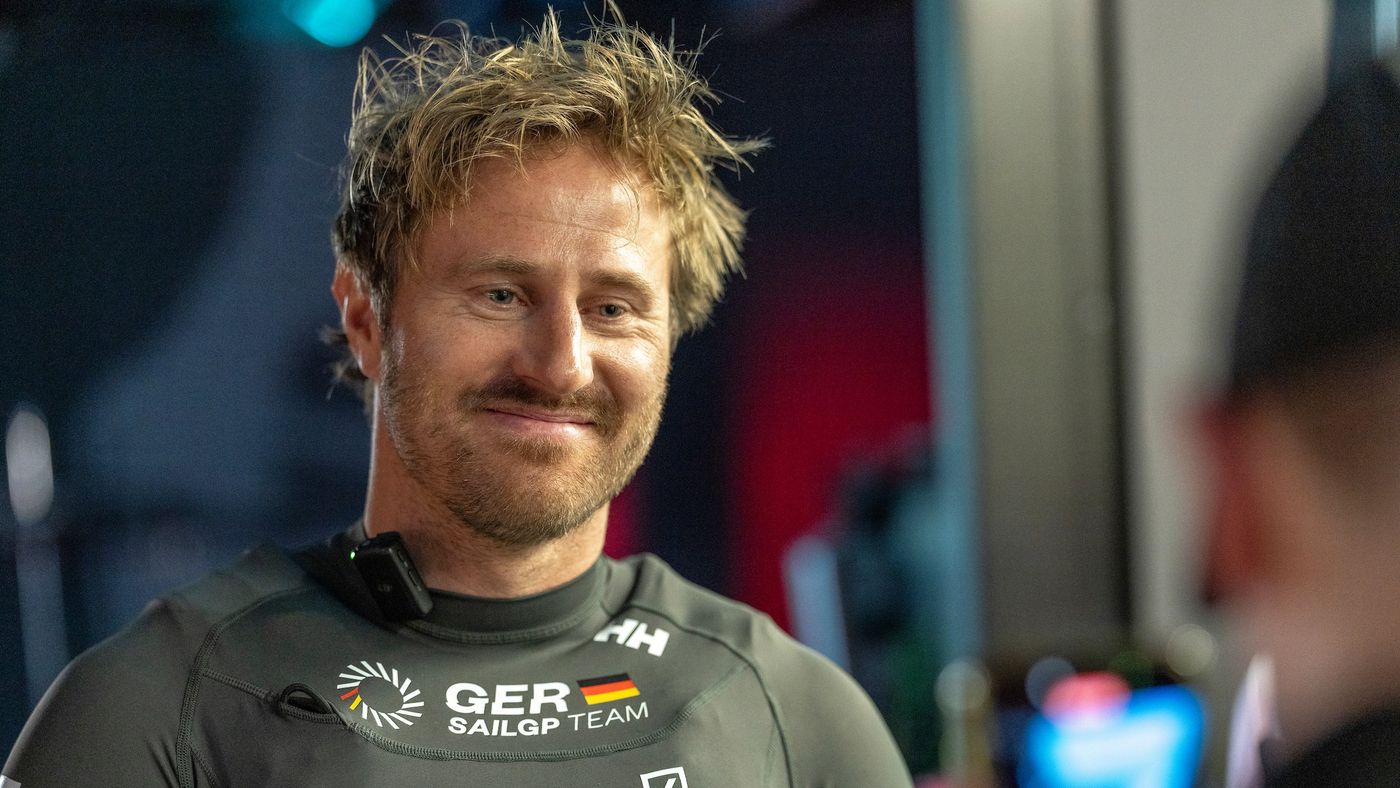
When SailGP arrived on the shores of Sassnitz in 2025, most weren't quite sure what to expect from the German resort town.
It exceeded expectations on every count. Drama on the water, packed grandstands with 13,000 fans, every vantage point along the shore lined with spectators, and ROCKWOOL Racing hitting 103.93 km/h (56.2 knots) to set a new SailGP speed record. Not bad for a debut.
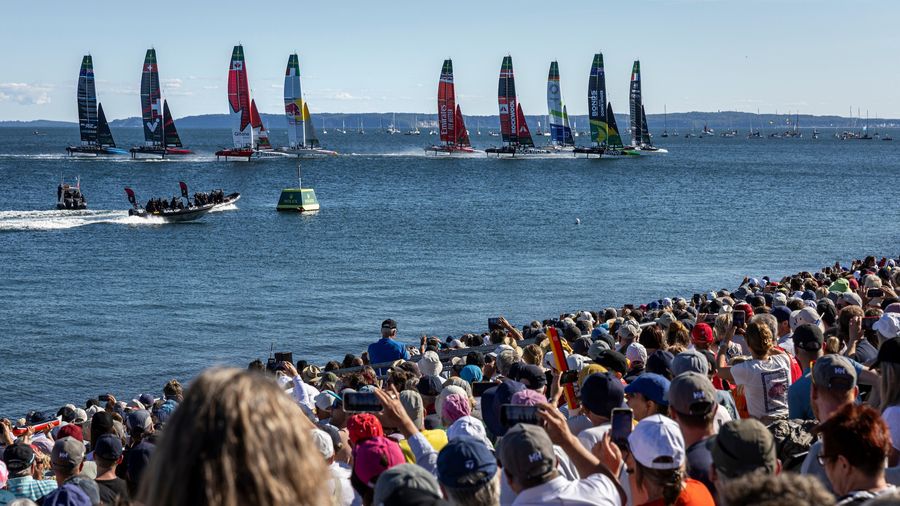
Perched on the northeast tip of Rügen, Germany's largest island, Sassnitz is a place shaped by the Baltic. A fishing village as far back as the 13th century, it carries genuine maritime history into its current life as a seaside tourist town, with the chalk cliffs of Jasmund National Park rising dramatically just north of town. In August the beaches are busy, the air is clean, and the pace is unhurried. Then SailGP arrives and the pace changes.
After that first event the return was locked in quickly, with Germany now part of a longer-term SailGP commitment running through 2027. The grandstands have been expanded, the event is almost sold out, and based on ticket sales Sassnitz is expected to be one of the three best-attended stops on the circuit this season.
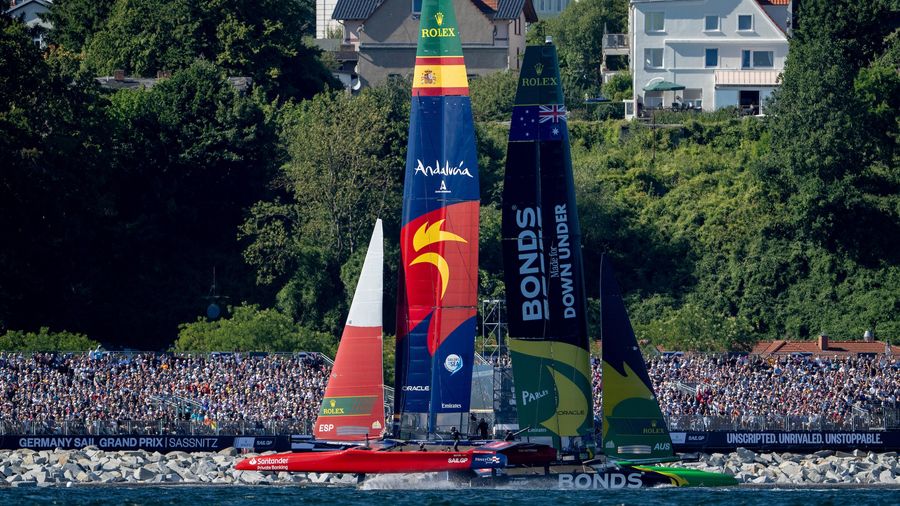
For the sailors, the real interest is what happens when the breeze meets the racecourse.
August is one of the calmer months on the Baltic, with average winds around 10 to 12 knots, though conditions can build well beyond that. The prevailing pattern runs westerly through the month, but the direction can shift, bringing very different pressure and racecourse configurations from one day to the next. In 2025, the change from training conditions to race day caught more than one crew out.
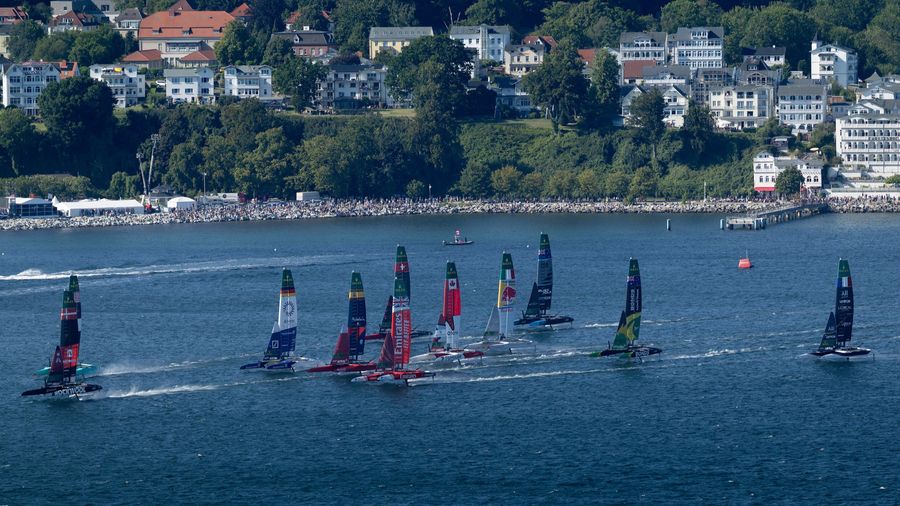
A light-to-moderate onshore easterly can produce clean, fast racing on relatively flat water. But the seawall the grandstand sits on creates reflected chop at the bottom gates, the kind of messy water that punishes inattentive crews. When a westerly sets in offshore, wind direction and speed can change quickly enough to scramble any tactical plan.
Sassnitz hasn't traditionally figured in conversations about international sailing destinations. It doesn't carry the celebrity of New York, the iconic backdrops of Sydney and Rio, or the established draw of Bermuda. What it proved in 2025 is that it doesn't need to. The fans came, the racing delivered, and the venue held its own against every other stop on the circuit.
In 2026 the fleet returns to find out whether the Baltic has more surprises in store.