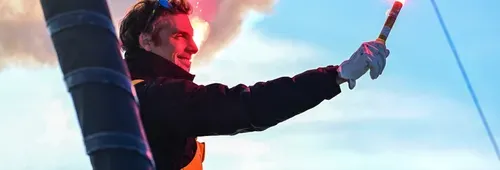
Sam Goodchild etched his name into offshore sailing history on Thursday morning when he crossed the Arctic Circle at 9:45 am, passing 66 degrees north to the west of Iceland aboard his IMOCA yacht. The Franco-British skipper became the first solo sailor ever to achieve this milestone in an IMOCA, a landmark as significant to the wider sport as it is to Goodchild personally.
The Vendée Arctique has been staged twice previously, and on both occasions the race's northern ambitions were curtailed by conditions that kept the entire fleet well below 66 degrees. This third edition has broken that pattern entirely. By pushing into ocean territory that competitive offshore racing had never reached before, Goodchild crossed a boundary that had held through two prior runnings of the event.
His crossing immediately opened the same possibility for the seven other competitors still in the race. Élodie Bonafous, Violette Dorange, Ambrogio Beccaria and Francesca Clapcich were all expected to reach the Arctic Circle within hours of his passage, each set to follow him into waters the sport had not previously explored.
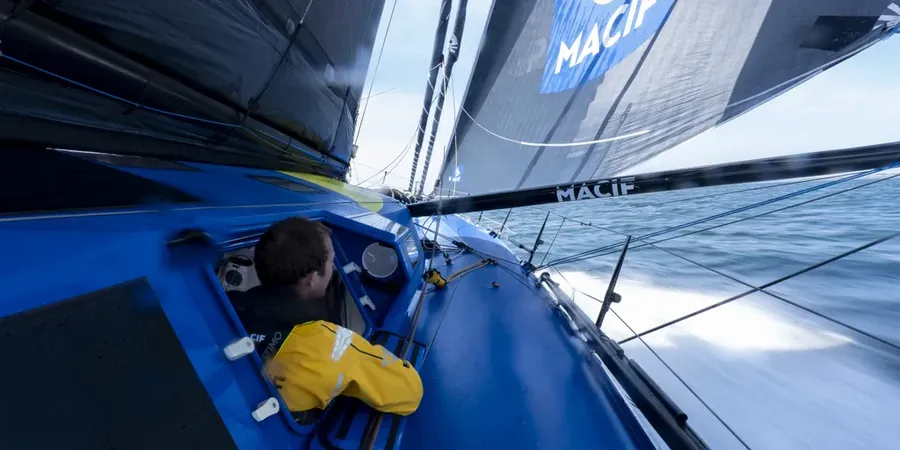
The fleet had spent nearly three days at sea since the previous checkpoint, working steadily northward through the Hebrides and the Faroes. The shift in environment along the way had become impossible to ignore. Mineral-grey skies replaced the temperate horizons further south, and fog moved in and refused to lift. The nights, already long, softened into a half-light sitting somewhere between dusk and dawn, true darkness barely arriving at all. The sea carried the character of these high latitudes: cold, formidable, wrapped in mist and spray.
For Goodchild, who holds the overall race lead, the moment carried weight well beyond the purely geographical. It confirmed that the 2026 Vendée Arctique had genuinely outgrown what either of its predecessors achieved, and that a route once considered more theoretical than practical had proven itself real and navigable, even in conditions demanding enough to test any skipper in the fleet.
The fleet continues north. Every remaining competitor will stand at that same threshold before long, each adding another name to a list that did not exist before this week, and together writing what is, by any measure, a new chapter for the sport.