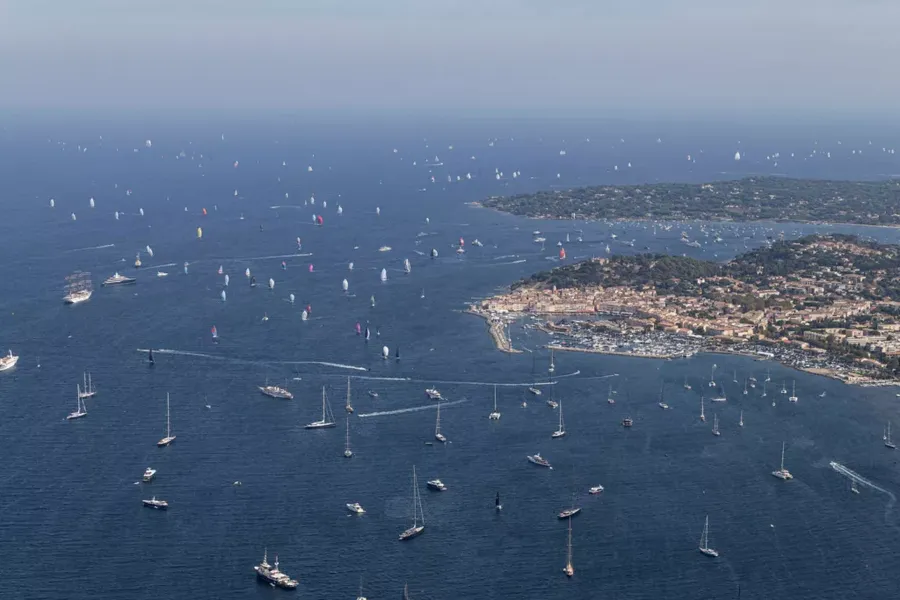
Good breeze, plenty of sunshine, and 251 crews out to prove what their boats can do. That was the scene in the Golfe de Saint-Tropez and Pampelonne Bay as the 28th edition of Les Voiles de Saint-Tropez opened, with the 77 Tradition yachts taking to the water alongside the start of the Rolex Trophy.
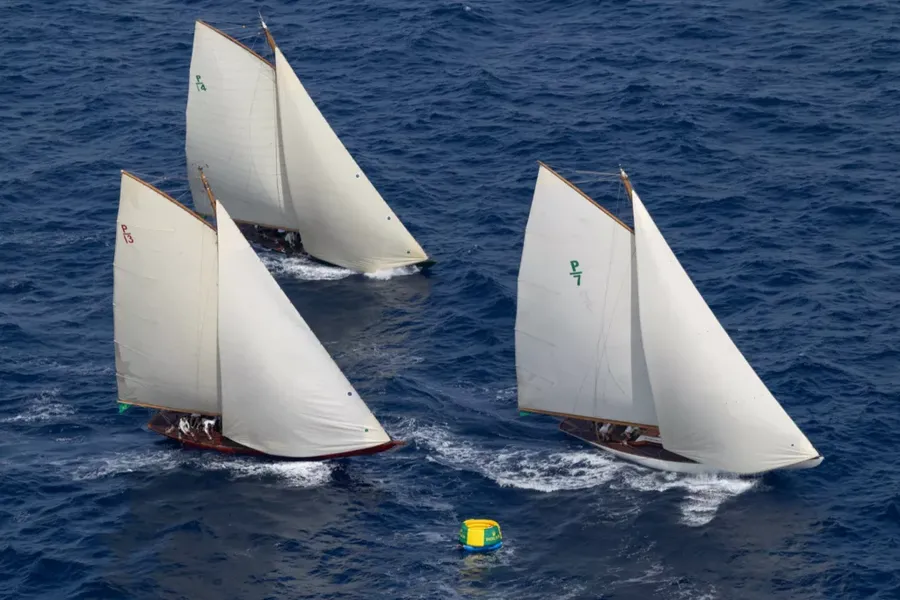
Three race committees made the most of near-perfect conditions to run a full slate of races with barely a hitch. The Tradition fleet ranged from the oldest, the 1890 Epoque Aurique Sky, to the youngest, the 1976 IOR entry Resolute Salmon. Big boats like Elena of London and Atlantic needed an extended start sequence just to get underway, race officer Georges Korhel explained.
Among the highlights was a tight duel between the two Bermudan yawls Varuna and Baruna, separated by a single letter of the alphabet and very little else at the windward mark. There was a strong match race too between the 12 Metre JI South Australia and French Kiss, with Marc Pajot trying repeatedly to find a way inside his rival before finally conceding.
In the Modern fleet, the TP52 Nanoq led early before Knutte snatched victory on the line. Thomas Andersen's German team, on the podium the day before, now sits atop the provisional standings for the BMW Trophy. In IRC 1, two Ker 46s took the top two places, with Lisa R the winner. Fremito d'Arja, a Melges 32, won IRC 2 ahead of the J133 Jwow, while three Farr 30s swept the IRC 3 podium, led by the Swedish entry Letto di Pletto.
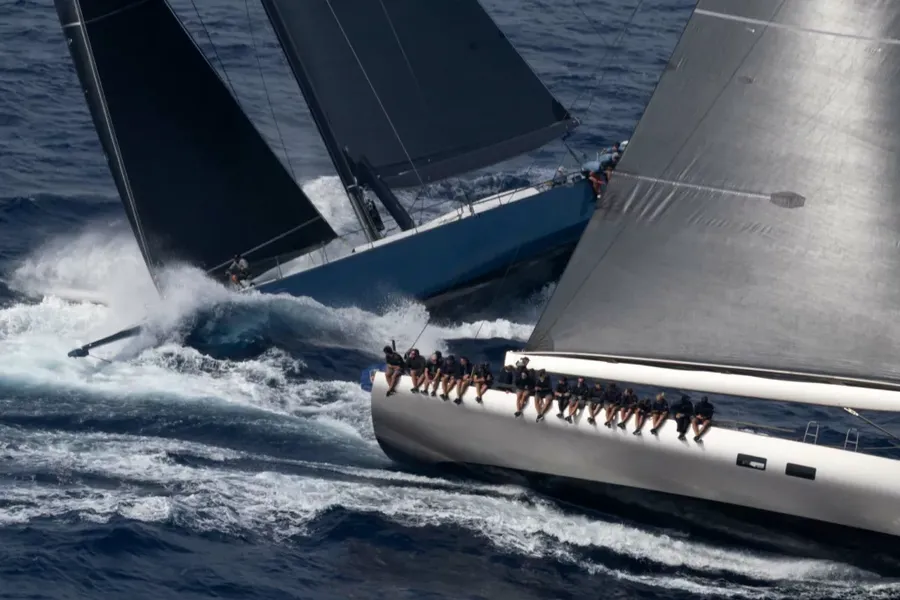
The Maxi fleet's story of the day was Northstar III. Peter Dubens' new 76-foot Judel-Vrolijk design took command after the first lap in 15 to 20 knots and simply didn't let go, beating boats with far bigger ratings on the water. It looks more like an oversized TP52 than a classic Maxi, and sails like one too.
"A whole combination of factors," strategist Wouter Verbraak said of the boat's edge, pointing to a keel angled to a minimum, giving lift without the weight and drag of an extra daggerboard, along with the aero package with its rotating mast and the flush deck. The larger, heavier Maxis such as the Wallycento V still had the satisfaction of beating the other Maxi GPs on the day, with fellow Judel-Vrolijk design Capricorno taking second.
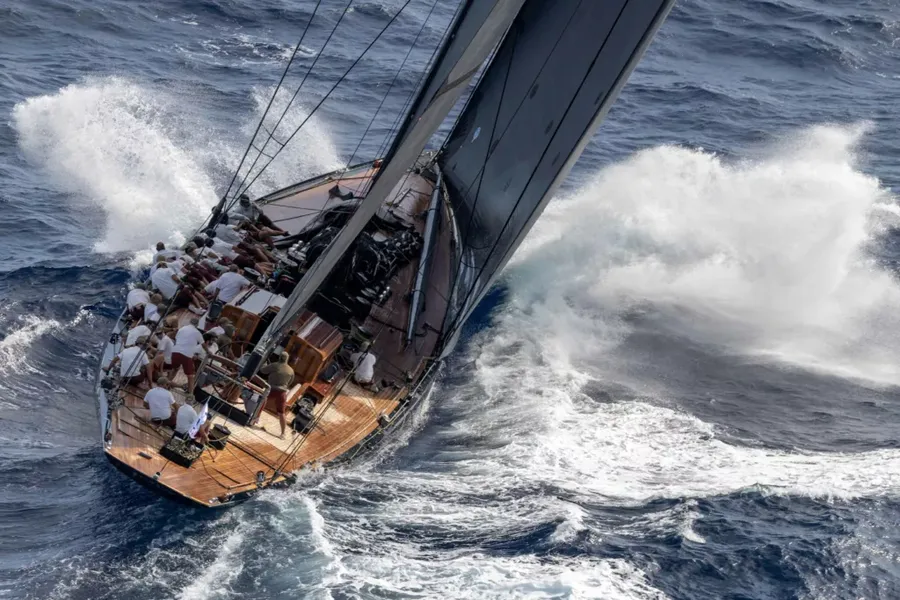
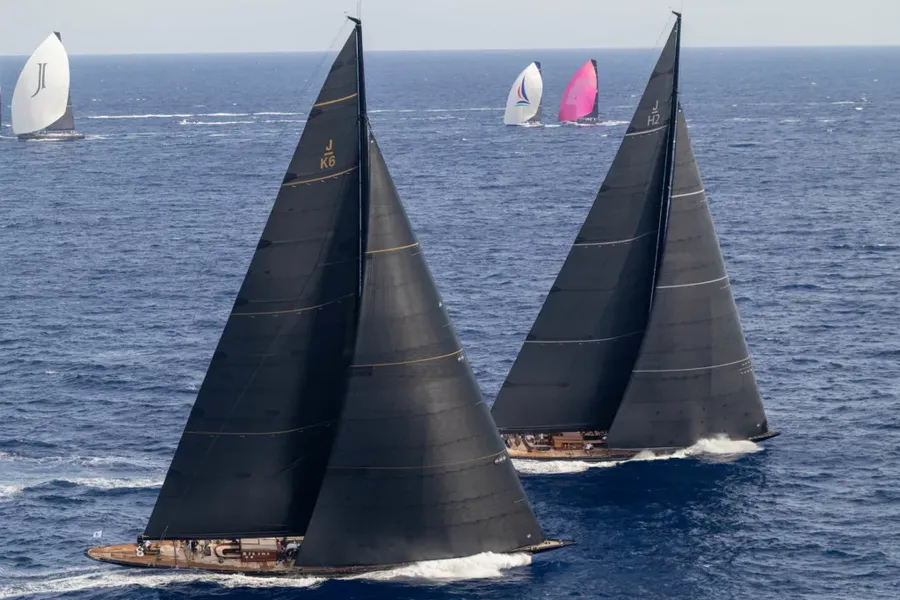
The J Class boats put on their usual show in Pampelonne Bay, 180 tonnes of yacht carving through 15 to 20 knots of easterly. Svea's genoa hook broke shortly after the start, a reminder of the forces at play behind all that grace. With the previous day's winner retired, the race came down to a match race between Rainbow and Hanuman, with around twenty tacks traded on a near three-mile windward leg. Hanuman led at the top mark and held control downwind, but a mark misjudgement and a fumbled spinnaker takedown let Rainbow through for the win. Hanuman answered in race two.
Three races in two days, three different winners for the J Class fleet.
Paul Cayard, tactician aboard the ClubSwan 80 My Song, a two-time America's Cup finalist and winner of the 1997 Whitbread Round the World Race, first raced at Les Voiles in 1993, when he helmed Tuiga. He described the regatta as a unique gathering of top sailors at the end of the season, with classic yachts mixing among the racing fleet.
Racing the 25-metre My Song against 100-footers like Magic Carpet, Galateia and V, Cayard said the bigger boats are a touch quicker, meaning his crew has to sail differently to avoid being shut out. The presence of three Maxi GP boats, purpose-built racing machines, has made things harder again this year.
"We'll have to make the right calls and be a bit clever if we want good results," he said. "Sometimes you're forced to go where you shouldn't, just to avoid direct contact with the faster boats. It's pretty unusual, but we have a lot of fun on board, and it's always good to come here for some great racing."