SailGP's newly released 2027 season calendar has sparked considerable debate across the sailing world, and the headline numbers offer little clue as to why. Thirteen events spread across five continents, identical in count to the 2026 fleet schedule. For a series that built its reputation on relentless, headline-grabbing expansion, matching the previous year's tally might look like stalled momentum.
The reality is far more interesting. Beneath that familiar figure lies a fundamental rethinking of how SailGP operates. The league is consciously moving away from the breakneck growth model that defined its early seasons, trading geographic novelty for something considerably harder to achieve: lasting commercial relationships, long-term host city agreements, and the kind of stable local presence that transforms a passing spectacle into an annual institution.
For followers of the series, that strategic shift carries a genuine cost. The calendar gains coherence and durability, but some well-loved venues have been left behind to make it work.
| Date | Event | Location |
| Jan 23–24 | Hong Kong Sail Grand Prix | Victoria Harbour, Hong Kong |
| Feb (TBC) | Australia Sail Grand Prix | Perth, Western Australia |
| Apr 3–4 | San Francisco Sail Grand Prix | San Francisco, USA |
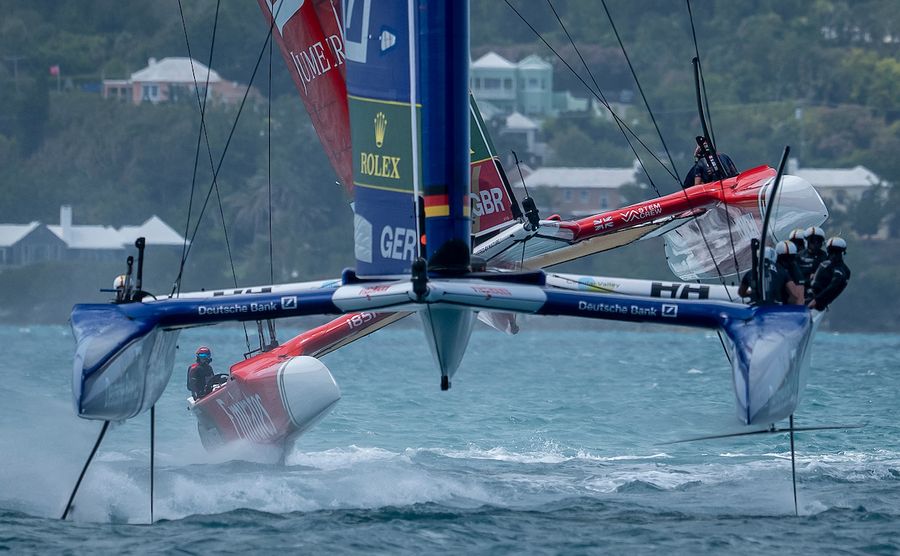
| May 1–2 | Apex Group Bermuda Sail Grand Prix | Bermuda |
| May 15–16 | Canada Sail Grand Prix | Halifax, Canada |
| June 5–6 | New York Sail Grand Prix | New York, USA |
| July 24–25 | Emirates Great Britain Sail Grand Prix | Portsmouth, UK |
| Aug 14–15 | Germany Sail Grand Prix | Sassnitz, Germany |
| Sep 4–5 | Spain Sail Grand Prix | Valencia, Spain |
| Sep 11–12 | Italy Sail Grand Prix | Italy (Venue TBC) |
| Oct 9–10 | Enel Rio Sail Grand Prix | Rio de Janeiro, Brazil |
| Nov 20–21 | Emirates Dubai Sail Grand Prix | Dubai, UAE |
| Nov/Dec (TBC) | Rolex SailGP Championship Grand Final | Venue TBC |
The pace of SailGP's expansion in its formative years was exhilarating to follow, yet it generated real strain beneath the surface. Racing into new waters each year produced global media attention and a sense of perpetual momentum, but it also meant short-term commercial arrangements, logistical complexity, and very little continuity for the host cities, partners, and teams caught up in the churn.
CEO and co-founder Sir Russell Coutts has been candid about what the 2027 calendar is designed to address. Multi-season hosting commitments with venues including Sassnitz in Germany, Perth in Australia, and Portsmouth in the United Kingdom form the backbone of a structure intended to give the championship a far more resilient financial foundation.
"SailGP's 2027 Season represents a major step forward, reflecting both the scale of our ambition, and the strength of the demand we're seeing from cities and partners globally wanting to be part of the championship," Coutts said.
"With each season we ask ourselves the same question: how do we make this bigger, bolder and better, on par with the world's leading sporting properties."
"Not just more events, but events in world-class, iconic destinations, where we can become a standout showcase on the sporting calendar, with partners who understand the value of staging an annual event that becomes inextricably linked with their city and country."
The value of that shift toward predictability is especially clear to team owners and global sponsors. Rather than rebuilding logistics, hospitality, and marketing frameworks from scratch each year, partners can now plan multi-season campaigns and cultivate genuine fan engagement over time. The distinction between arriving as a one-off visitor and returning as a recognised fixture on a city's sporting calendar is significant, and increasingly that is the version SailGP wants to be.
Coutts was equally direct about the breadth of the schedule itself: "Thirteen events. New markets, including Hong Kong and Italy, alongside iconic destinations such as Dubai, New York, San Francisco and Rio. Each venue brings something unique to the championship, from local culture and passionate fans to vastly different racing conditions. That diversity, and the truly global make-up of the Rolex SailGP Championship, is one of SailGP's greatest strengths."
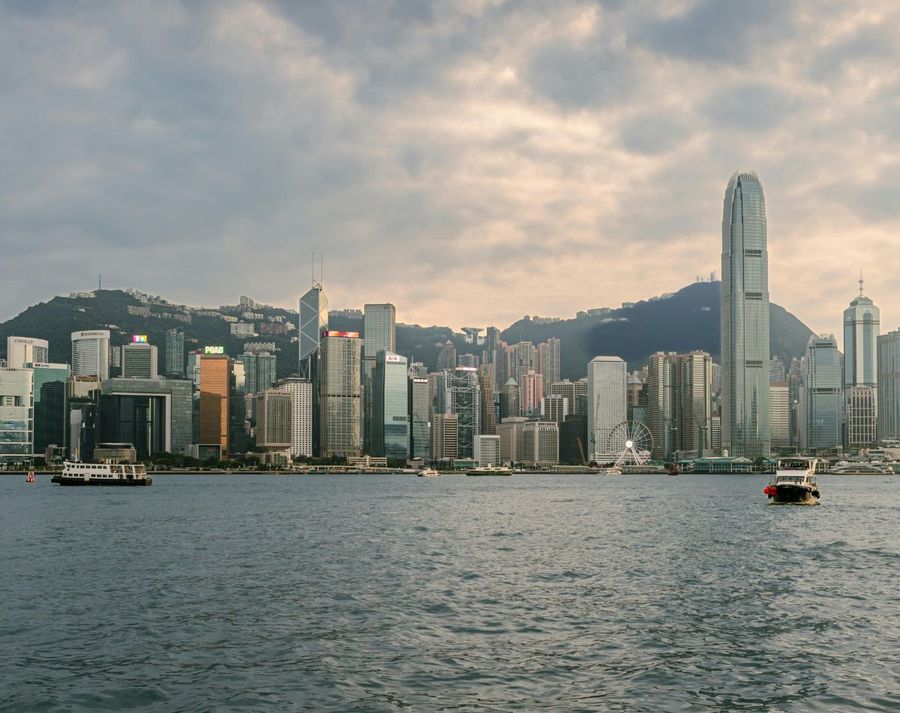
Of all the new additions, the season opener carries the most symbolic weight. On 23 and 24 January, the fleet will race in Hong Kong's Victoria Harbour for the very first time in the championship's history, a debut that places the F50 catamarans against one of the most dramatic urban backdrops on earth. The harbour's steep waterfront geography, densely packed promenades, and reliable wind conditions create a natural amphitheatre well suited to the close-quarters, shore-side racing that has become central to SailGP's identity. For audiences across Asia, it puts a marquee event directly beneath one of the world's most recognisable city skylines.
Europe continues to account for a substantial portion of the schedule, though one entry keeps observers watching closely. The Italy Sail Grand Prix, pencilled in for September, still carries a location listed only as "to be announced." That open slot reflects active negotiations rather than any doubt about Italy's place in the calendar. The league is committed to racing there, but prospective host municipalities must still satisfy SailGP's commercial and operational requirements before the venue is confirmed.
The mathematics of a fixed 13-event calendar are unforgiving. Every new city added means another is removed, and the 2027 schedule makes those decisions plain.
San Francisco returns to the circuit in April after a period of absence, anchoring a compact North American sequence running through Bermuda, Halifax, and New York. Hong Kong secures its place in the championship's history. Sassnitz and Portsmouth lock in their futures through multi-year agreements.
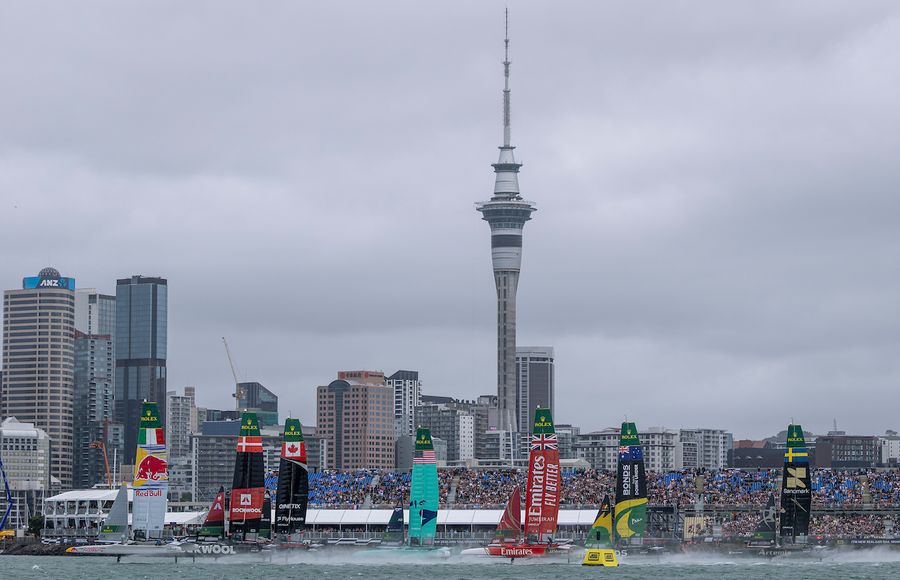
The departures are harder to absorb. Auckland does not appear on the 2027 calendar, which will sting. The city has delivered some of the series' biggest crowd numbers and most enthusiastic local receptions during previous visits. Commercial discussions were genuine, but workable terms for 2027 could not be reached. Talks about a possible return in 2028 are continuing, though for now New Zealand fans will be watching from the sidelines.
Sydney has also been cut, and the reason is largely geographic. The traditional open-harbour configuration cannot accommodate the large-format grandstands and premium hospitality infrastructure that SailGP's commercial model now demands. Long-standing European venues Saint-Tropez and Geneva have been dropped for similar reasons, cleared out to create room for the new direction.
Hong Kong illustrates precisely what SailGP now seeks in a host city. Victoria Harbour delivers what Sydney's layout cannot: concentrated spectator areas with clear sightlines to the racing, a globally iconic urban setting, and the density needed to support high-value corporate hospitality at scale. A January event also injects premium activity into the city during a quieter period on the tourism calendar, while simultaneously opening the series to broader Asian commercial networks. For broadcasters, luxury brands, and international sponsors seeking meaningful reach across the region, the proposition is compelling.
A clear pattern is emerging across the calendar as a whole. SailGP is gravitating toward globally connected, infrastructure-rich cities capable of sustaining both spectacular on-water racing and the commercial returns the championship requires across multiple seasons.
The 2027 schedule also carries a practical environmental and operational benefit in how it is sequenced. By grouping events into tighter regional clusters, the European leg running through the United Kingdom, Germany, Spain, and Italy being the clearest example, the series reduces the distances its F50 catamarans must travel between venues. That translates directly into lower shipping costs and reduced carbon emissions across the season.
For the wider fanbase, this calendar signals that SailGP has entered a more deliberate phase of its development. The restless expansion of the early years has given way to consolidation, deeper city partnerships, and a more considered view of where the series belongs. The 2027 season is not attempting to eclipse 2026 in scale. Its ambition runs in a different direction: to become smarter, more stable, and genuinely embedded in the cities it has chosen. For a championship with serious long-term aspirations, that may well prove its most significant move yet.