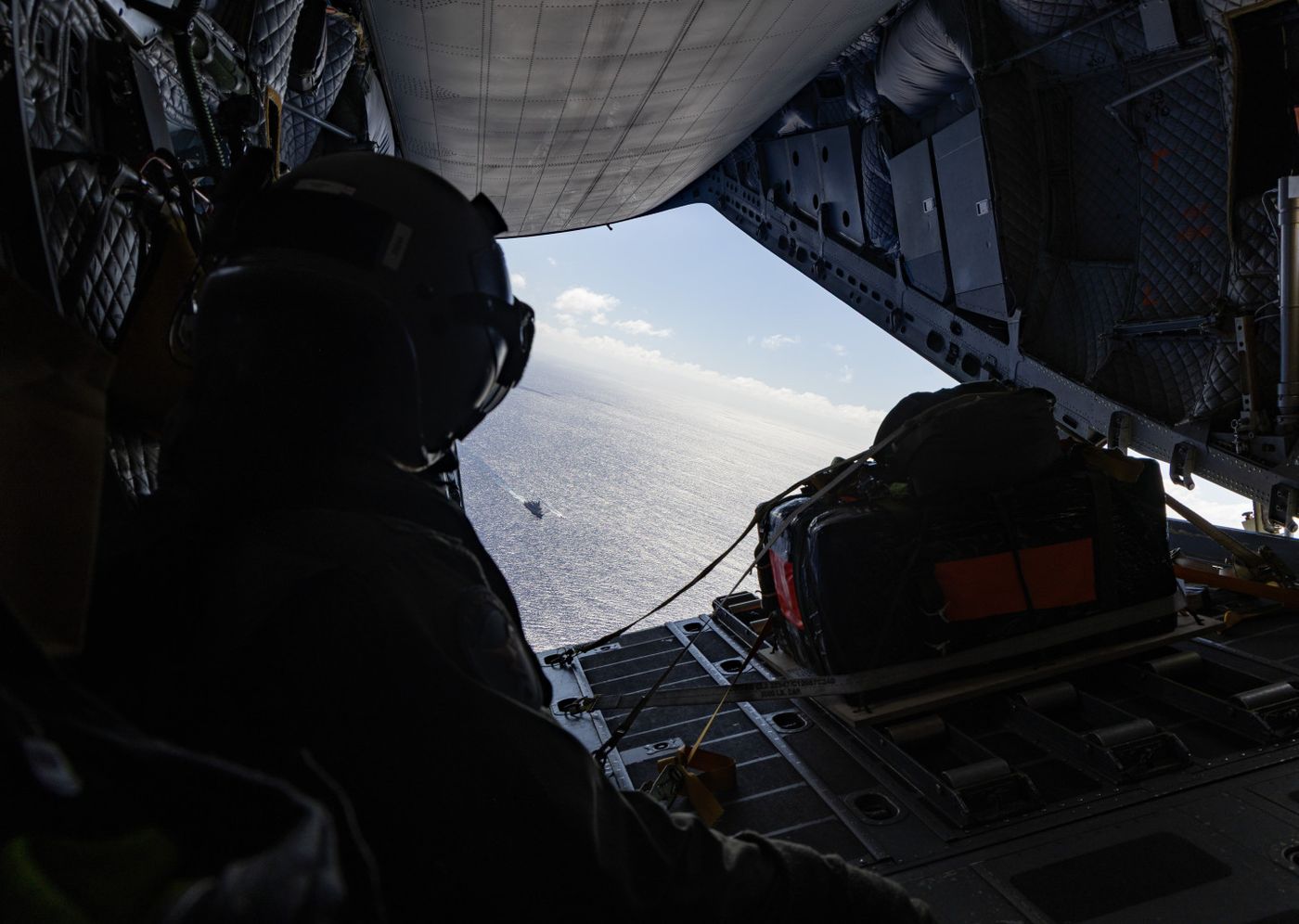
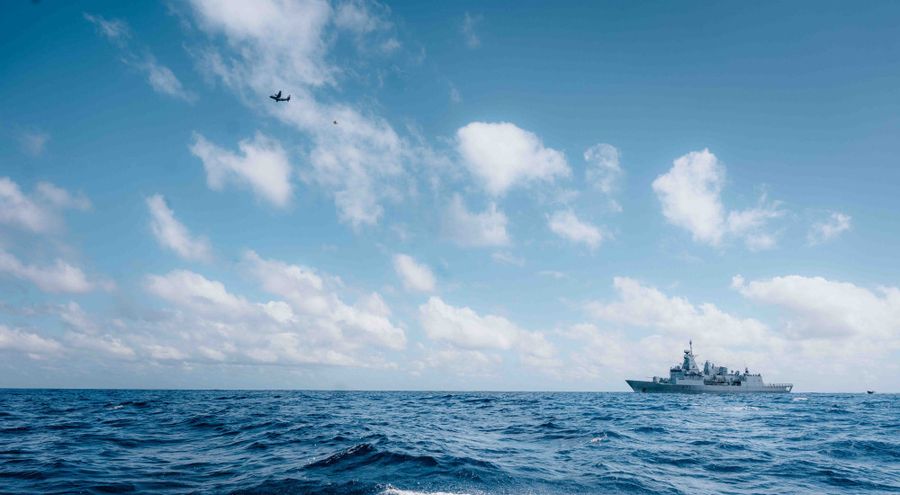
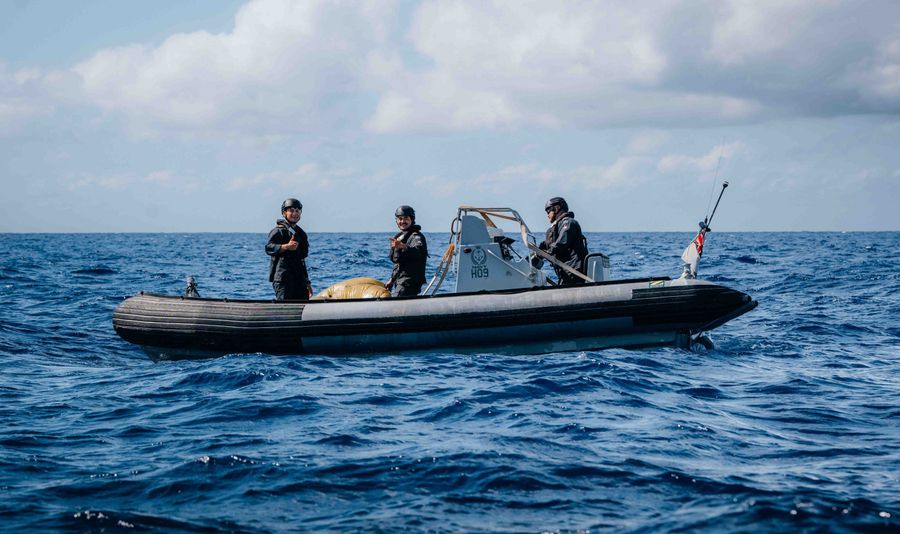
A package drops from 1,000 feet above the Coral Sea, splashes into the swell below, and a RIB crew from HMNZS Te Kaha races out to retrieve it. What sounds like something from an action film was, in fact, a carefully planned logistics trial conducted off the Queensland coast during Exercise Talisman Sabre 2025, and it could change the way the Royal New Zealand Navy sustains itself at sea.
The trial tested a method known as Maritime Air Delivery, or MAD, in which a Royal Australian Air Force C-27J Spartan flew over Te Kaha at 1,000 feet and released a packed cargo case into the water for recovery. The goal was straightforward but significant: to explore whether naval vessels can receive supplies without pulling into port or relying on ship-to-ship transfers, keeping them on task for longer in demanding operational environments.
"This was a great opportunity to test the concept of an aviation resupply," said Lieutenant Commander George Blackmore, Maritime Logistics Officer aboard Te Kaha. "Being able to remain on tasking and still receive supplies means we can maintain operational tempo and avoid the limitations of port or helicopter dependency."
Exercise Talisman Sabre is the largest multi-domain military exercise in the world, with activity spanning northern Australia, Papua New Guinea, and the Coral Sea. Within that demanding environment, the airdrop tasking offered a practical demonstration of how closely the Australian Defence Force and the New Zealand Defence Force can work together, with planners from both nations required to align flight paths, weather windows, and drop coordinates under the pressure of live operations.
Two RNZN personnel, Lieutenant Alex Dooley and Petty Officer Omarama Sutcliffe, were aboard the Spartan to observe the drop directly. Both are embedded with the Australian Expeditionary Logistics Team Maritime, an arrangement that gives them firsthand exposure to how Australia manages complex over-the-horizon resupply at a scale New Zealand rarely encounters independently.
“We were there as observers to see how they operate and how we might bring elements of that capability back to New Zealand,” said LT Dooley. “The ADF’s model of a deployable logistics team that doesn’t rely on ships coming alongside is impressive. We had a few lightbulb moments.”
For Petty Officer Sutcliffe, the exercise reinforced something that goes beyond platforms and procedures.
“It’s about building those connections so when we need to move something from A to B, we’ve already got someone to reach out to,” he said. “These exercises help us speak the same language—whether we’re coordinating a drop or a full-scale deployment.”
The successful drop and recovery have generated genuine momentum around expanding airborne logistics capability within the RNZN. Helicopter resupply is not going away, but MAD offers a different kind of flexibility, particularly in remote or contested settings where helicopter availability is constrained or deck access is limited.
New Zealand's naval forces are operating across an increasingly wide Pacific theatre, and a single airdrop trial off Queensland carries implications well beyond the day it occurred. The experiment points to a broader shift in thinking: that sustaining a fleet at sea, whether through a tanker alongside, a helicopter overhead, or a cargo case tumbling from an aircraft, demands creative solutions and the interoperability to make them work.
As Talisman Sabre 2025 continues, the lessons drawn from Te Kaha's MAD trial will feed into wider conversations about New Zealand's deployable logistics model and what future naval support might look like across the region.
“Ultimately, it’s about readiness,” said LTCDR Blackmore. “And readiness means being able to get what you need, when you need it—no matter where you are.”