
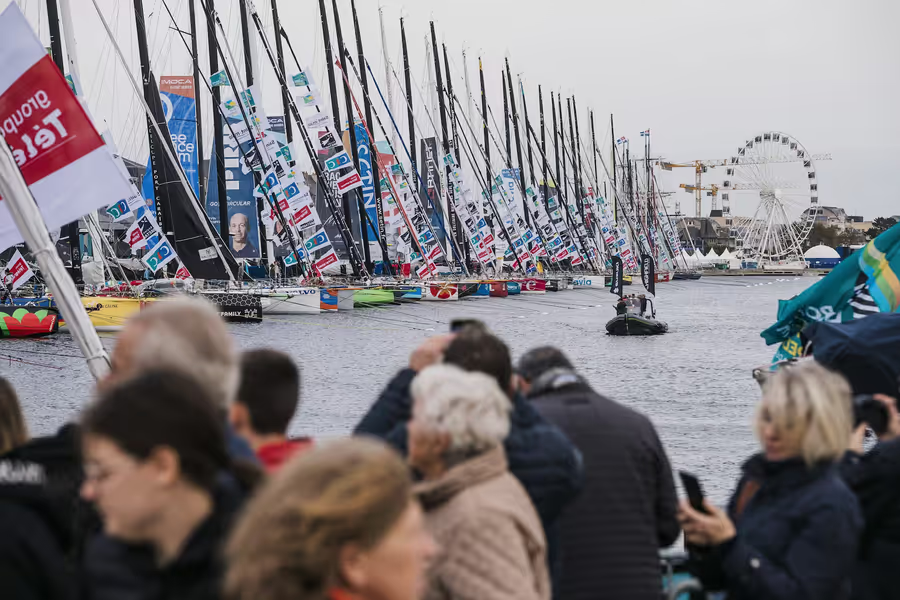
With less than 30 days until the start of the Route du Rhum, race organiser OC Sport Pen Duick says it is acutely aware of the pressure on water resources in the Saint-Malo region and intends to play its part in the collective effort to conserve supply.
The event does create extra, temporary demand tied to the length and popularity of the race village. Organisers say they are committed to limiting that impact given the current situation, and have announced plans to ditch generators for mains power at the 2026 edition, part of a wider corporate responsibility programme.
Numbers from 2022 give some sense of scale. Over the 13 days the village was open that year, local water authority RME recorded around 6,000 cubic metres of water distributed compared with 2021 over a similar school holiday period. Saint-Malo as a whole distributes more than 3 million cubic metres annually, so that works out to less than a single day's average consumption.
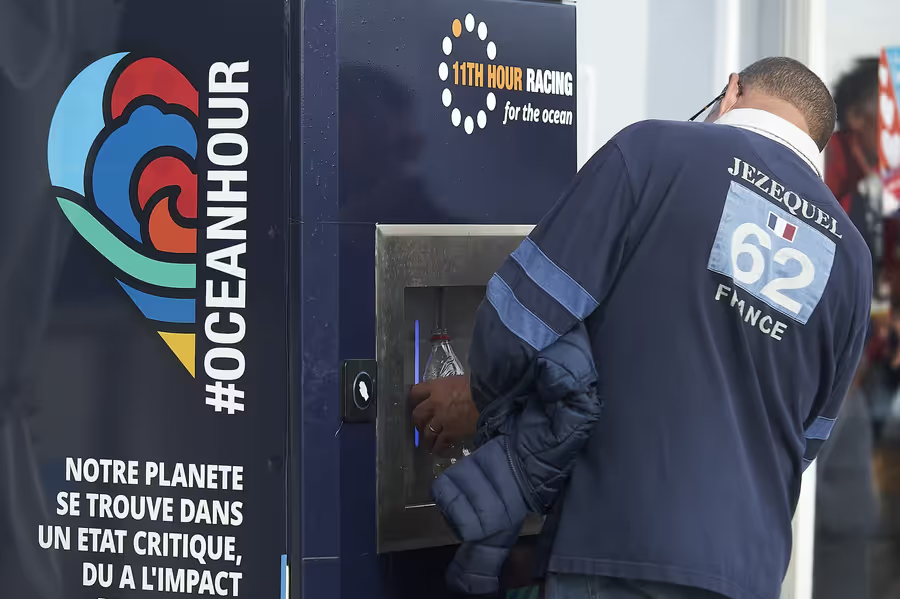
Regional body EPSM recorded a larger increase: around 35,000 cubic metres across the wider Pays Malouin area over the same period, against more than 8.5 million cubic metres distributed annually across the territory. Organisers say those figures put the event's impact in context, though they stress this doesn't make light of where things stand now.
Competitors will be bound by restrictions already in force across Ille-et-Vilaine under a préfecture order. An addendum to the sailing instructions confirms that freshwater washing of competitors' boats is strictly banned, the same rule applying to all boat owners in the area.
A dedicated awareness campaign will run throughout the village, aimed at visitors, team members and everyone working the event. It will promote what organisers call the "good habits of a Route du Rhum visitor". Exhibitors and food vendors get particular attention too, each receiving tailored guidance on cutting their own water use and footprint.
Weather and rainfall over the coming weeks will matter. So will everyone's behaviour.
Visitors to the village are being asked to fill water bottles before arriving, reuse hotel sheets and towels across multiple days, favour short showers over baths, avoid running taps unnecessarily, run washing machines and dishwashers only at full load, and watch for leaks in their own systems. The préfecture's order, organisers note, applies fully whether you're on the village site or not.
The goal, organisers say, is straightforward: comply fully with the préfecture's restrictions and do everything possible to minimise the event's footprint on the region's water supply.
The Route du Rhum is temporary. The water pressure facing this part of Brittany is not. OC Sport Pen Duick says it wants to approach that reality with humility, vigilance and responsibility.