
Two days into the Route du Rhum, Destination Guadeloupe 2026, and the fleet has split into two distinct weather worlds. A powerful anticyclone remains anchored over the north of the British Isles, still dictating conditions for a large part of the fleet, while a disturbed front is now bearing down on the sailors furthest west.
The impact is already brutal. That disturbed sea state has cost Fabien Delahaye his Class40 campaign, ended by a fall on a pitching foredeck in 25 knots of wind.
Skippers pushing west are the first to feel the front, bringing more unsettled conditions as they head into open water. Those still under the high's influence continue to deal with the steadier, if sometimes light, conditions typical of an anticyclone's grip.
Cyrille Duchesne, a meteorologist with METEO CONSULT, the official weather partner of the Route du Rhum, Destination Guadeloupe 2026, has been breaking down how this pattern is likely to evolve over the coming days.
Much now depends on how the fleet's routing choices play out as boats close in on the Azores and push into the western Atlantic. Wind angles and strength will shift considerably depending on how quickly the front moves through, and how long the anticyclone holds its position over the British Isles.
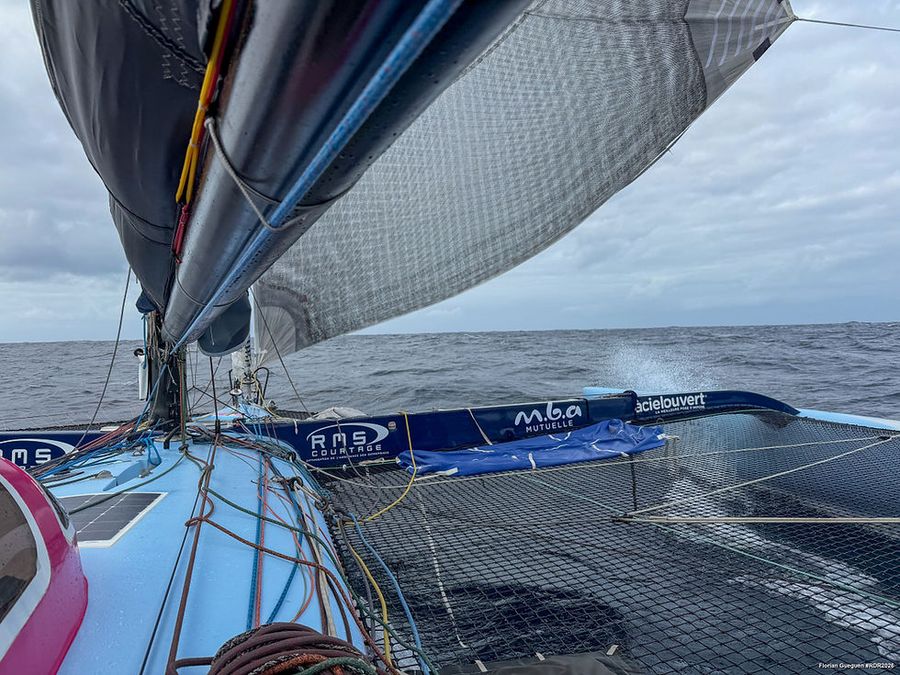
At the front of the fleet, the leading Ultims have already been clocked at 30 to 35 knots as they close on the Azores through a confused, multi-directional sea, a sign of just how demanding conditions have become even for the fastest boats in the fleet.
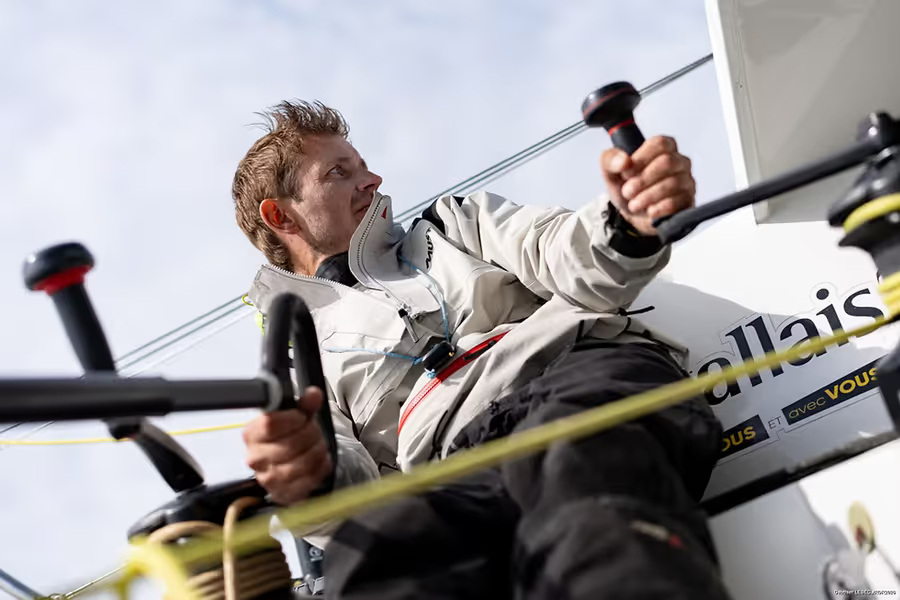
For the leaders already clear of the Bay of Biscay, the next 48 hours are likely to prove decisive. That pressure is already showing: Sam Goodchild has reported that managing fatigue, rather than boat speed, is proving the biggest challenge aboard MACIF as he navigates the leading pack through this complex system.
Further back, skippers will be watching closely to see whether they can use the edge of the high pressure system to their advantage, or whether the front catches up with them first.
It is still early days in a race that traditionally rewards patience as much as speed. Even so, it has already claimed one of its biggest names: Charles Caudrelier was forced to turn back to Lorient after major foil damage to his new Maxi Edmond de Rothschild, ending his title defence barely two days in.
With skippers spread across such a wide swathe of the Atlantic, boats to the east and west are, in effect, racing under two different skies. The routing decisions made now, as the fleet threads between the high pressure and the oncoming front, could well define how the race shapes up heading toward the Azores and beyond, into the final run for Guadeloupe.