Bill Barry-Cotter's reasons for entering Maritimo 100 in the Rolex Sydney to Hobart Yacht Race are straightforward. He genuinely enjoys offshore sailing, and he wants a yacht capable of performing reliably across the full length of a demanding race. Beyond the personal motivation, there is a commercial logic: what works well on Maritimo 100 in an offshore environment feeds directly back into how Maritimo designs and builds its production boats.
That philosophy puts function ahead of everything else. Comfort is not a marketing exercise. It exists because a crew operating effectively over several days at sea makes sharper decisions when conditions turn difficult.
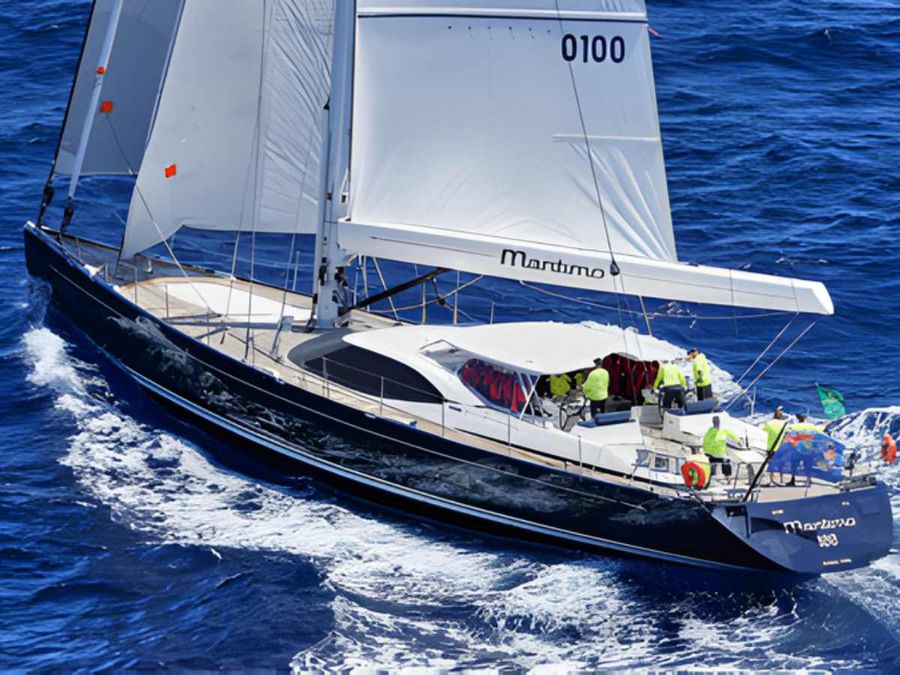
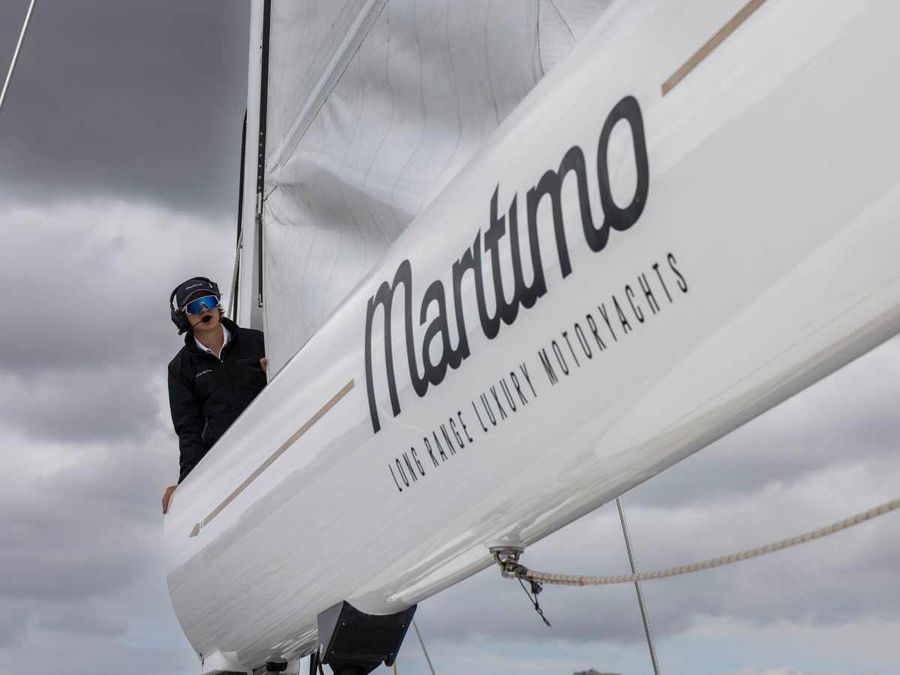
Maritimo 100 is a 100-foot Oyster sailing yacht measuring 30.4 metres, and one of only two Oyster 100s ever constructed. Designed by Ed Dubois and launched in 2012, she carries Oyster's long-range cruising heritage into a race setting without abandoning it. Purchased from Newport, Rhode Island in early 2024, she arrived in the Southern Hemisphere with a defined purpose.
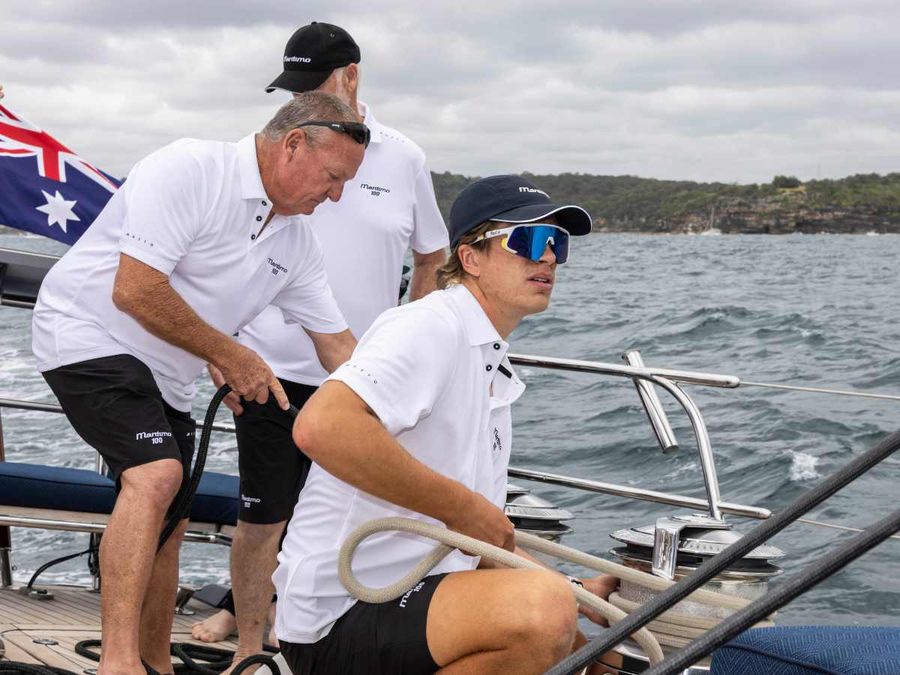
Peter Jones will skipper the yacht, taking his 28th start in the race. Barry-Cotter, at 81, will also be sailing, joined by family members, long-standing friends, senior Maritimo staff, and a core crew with established familiarity with the programme. The combination of personal connection and collective experience is intentional.
Jones describes the brief in simple terms. Engineering took priority. Comfort was treated as a component of performance rather than a trade-off against it, not because the owner planned to sail every mile, but because crews who can work without unnecessary strain stay more effective across a long race.
What caught the team off guard was how capable the boat proved to be under sail while maintaining that balance. Maritimo 100 does not follow the stripped-out formula common to dedicated Hobart contenders. Weight is retained where it serves the yacht. The layout is designed to function consistently from start to finish, rather than deliver short peaks before fading. She is one of six 100-footers lining up for the 80th anniversary edition of the race, but her approach to the event is distinct from the others.
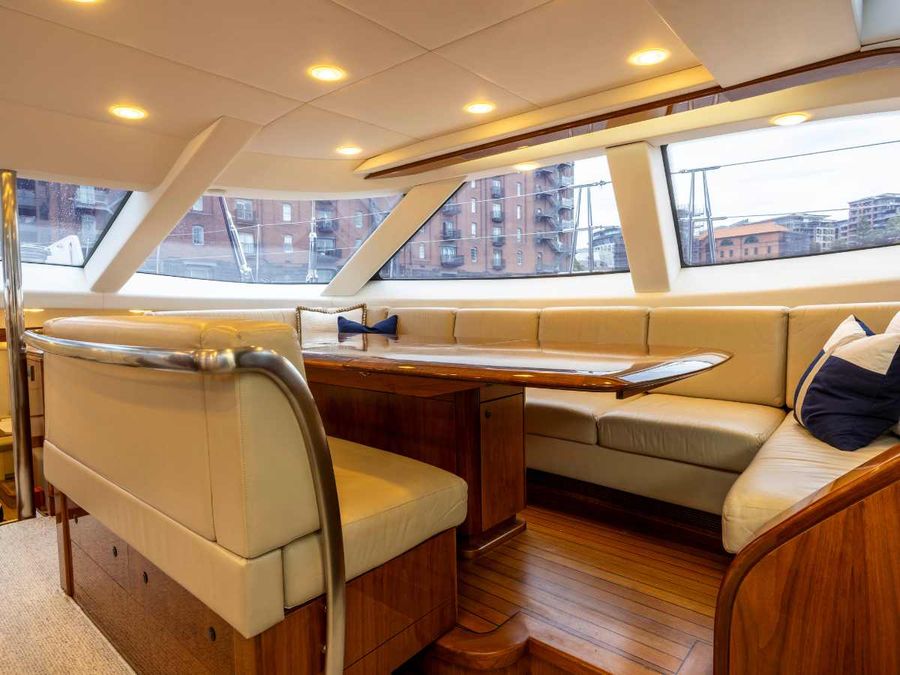
Those priorities connect directly to Maritimo's wider business interests. Many of the systems aboard Maritimo 100 are directly comparable to those fitted across the company's luxury motor yacht range. Electrical layouts, plumbing, air conditioning, and general engineering standards all mirror what goes into the production boats.
Manufacturing manager Paul Wrench describes the yacht as a working reference point, noting that offshore racing surfaces problems quickly.
"All plumbing, electrical, engineering, air conditioning, all the facets we put into our luxury motor yachts are on board this boat."
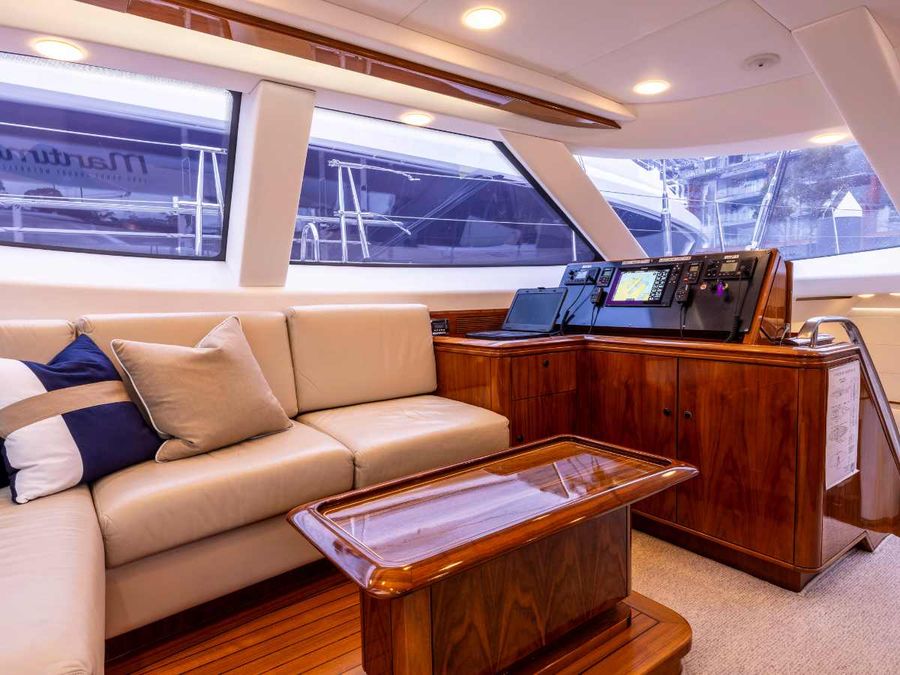
Once a boat is offshore, build quality stops being abstract. As an Oyster product, Maritimo 100 benefits from strong access and consistent construction. Lockers open cleanly. Floor panels lift without a fight. Systems are arranged in a logical order. These are the kinds of details that reduce physical and mental load after the boat has been at sea for days.
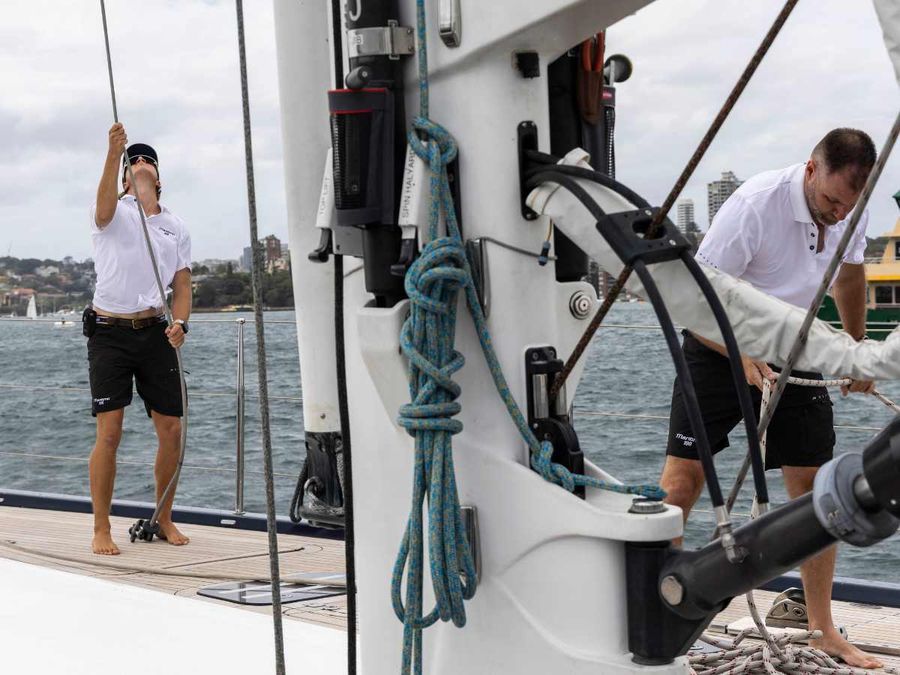
The rig reflects the same measured approach. A carbon mast is supported by multiple forestays, checkstays, and backstays. Sail handling manoeuvres are kept controlled to manage load on the rig and preserve it across the race. Reliable, repeatable handling takes precedence over chasing maximum boat speed at any given moment.
The sail inventory runs to around 1,670 square metres in total, but it is deployed conservatively. The team stepped up from a cruising sail wardrobe to a mid-range cruiser-racer inventory. A new mainsail and reaching headsail were commissioned, along with a jib and staysail on the inner forestay. Running rigging was upgraded throughout to cut friction and reduce the physical effort required on deck.
Preparation the previous year was compressed, and sail damage was the consequence. The advantage heading into this campaign is uncomplicated.
"We had some damage to the sails which slowed us down quite a bit."
Every sail in the wardrobe is now available from the start gun to the finish.
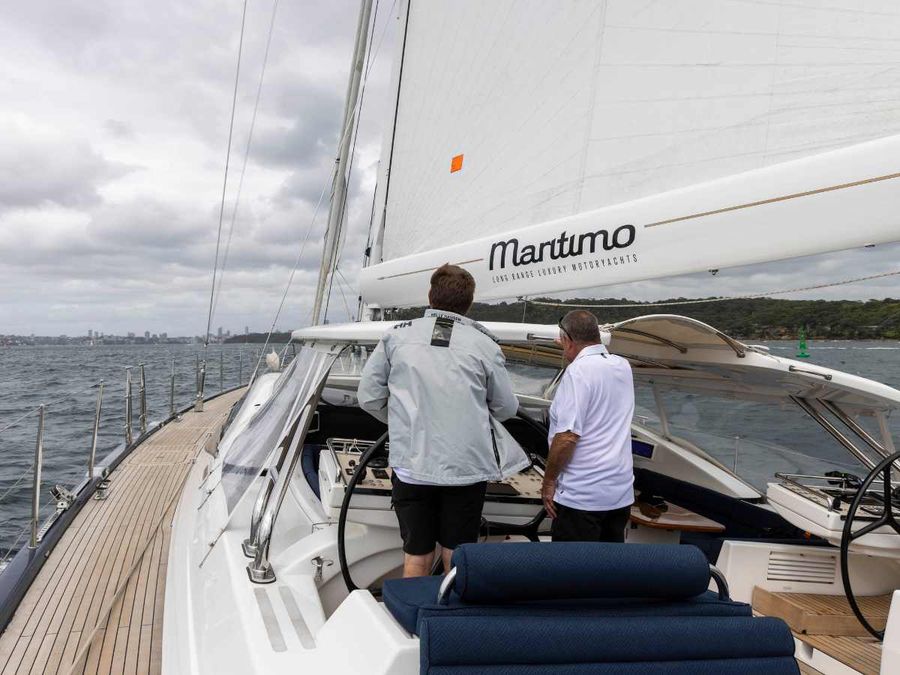
Below deck, the arrangement is built around continuous operation. The cockpit is sheltered and practical, with refrigeration fitted under both cockpit tables so food and drinks can be accessed without disrupting watch rotations. Below, there is sufficient space to navigate, eat, and rest properly. Air conditioning operates throughout the interior. The galley is set up for genuine offshore use, with gimballed cooking facilities, generous refrigeration, underfloor freezers, and a coffee machine included as a practical measure rather than a luxury addition.
The repower programme produced a concrete result. Fuel consumption fell from roughly six litres per mile to two. Offshore racing places sustained load on machinery, and systems that demonstrate their reliability in that environment earn a level of trust that no controlled test can replicate.
Maritimo 100 is not in pursuit of hardship or drama. She is built to sail well, run cleanly, and cross the finish line intact.
For Barry-Cotter, the campaign carries a significance that goes well beyond the race itself.
"It will be a once in a lifetime opportunity for me to do this race with a group of people who have been involved in my companies over the past 60 years," he says.
That perspective explains why Maritimo continues to return to the Sydney to Hobart. The race still rewards boats that work properly, crews that endure, and the kind of judgement that holds up when conditions and exhaustion begin to press.