An American team with a tight deadline and a clear plan has inserted itself into the AC38 conversation, and the sailing world is paying attention.
Riptide Racing, headed by world match racing number one Chris Poole, announced its intention to challenge for the 38th America's Cup within the past 24 hours. The bid arrives at a moment when the prospect of a Cup cycle running without a confirmed United States challenger had begun to feel uncomfortably real. Riptide changes that picture, at least in ambition. Whether the ambition becomes a campaign depends on what the team can put together before 31 January 2026, when a funded entry must be lodged with the organisers.
That deadline is weeks away, not months. The climb is steep, the to-do list is long, and the financial target is substantial. But the intent is on the table.
Rather than committing to a design-and-build programme, Riptide's plan centres on acquiring an existing AC75 package, complete with the performance data and infrastructure that surrounds a race-ready platform. For a syndicate entering the Cup for the first time, the logic is sound. A proven boat shortens the gap to competitive speed, removes the risk of an untested design, and allows the crew to begin meaningful training without waiting on a build programme. Preliminary conversations with event organisers have, according to the team, indicated that the current rules and protocol provide a workable entry point for new challengers. The campaign carries the backing of Seawanhaka Corinthian Yacht Club, one of the most historically significant sailing clubs in the United States.
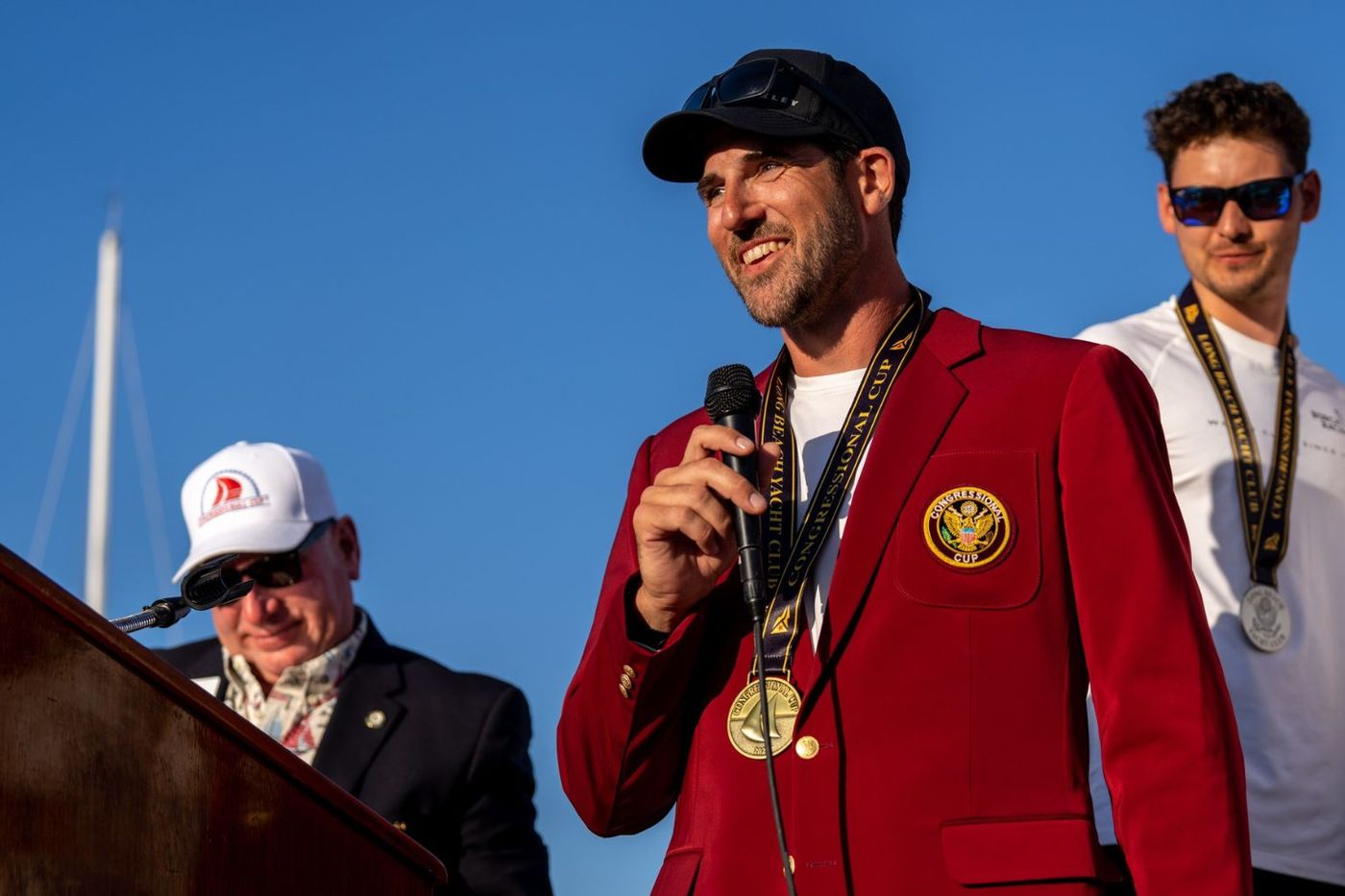
Chris Poole's path to this moment has been built on years of grinding consistency at the top of the match racing circuit. He grew up sailing on the coast of Maine, developed his tactical instincts at Maine Maritime Academy and the Chicago Match Race Center, and has since accumulated results that place him firmly among the best in the world at one-on-one racing. He has won the Thompson Cup and the Chicago Grand Slam, and collected podium finishes across the World Match Racing Tour. In 2023, Riptide completed a 24–0 unbeaten run at the Congressional Cup, a result that underlined just how dominant the team had become at that level of competition. Poole has held the number one ranking on the global match racing leaderboard for four consecutive years.
The America's Cup represents a very different challenge. AC75s are foiling monohulls operating at speeds and in conditions that bear little resemblance to the tight, tactical duels of the match racing circuit. Poole is candid about where his confidence comes from.
"To compete in the America's Cup has always been a dream," he says. "Our focus is to take our winning formula and bring it to the pinnacle of yacht racing."
His strengths are real. Match racing instincts remain central to AC75 competition, and his record under pressure speaks for itself. Transitioning to a platform of this scale and complexity is the most demanding step of his career to date.
Riptide has set an initial fundraising target of USD 50 million. That figure is considered realistic for getting to the start line, but it leaves little margin. Full Cup campaigns regularly exceed USD 100 million once design development, shore facilities, support staff, and extended testing programmes are accounted for. Purchasing an existing AC75 reduces upfront costs and compresses the timeline, but it does not eliminate the need for a capable design and performance group. Without ongoing development, a team risks competing at the pace of a previous cycle while rivals continue to push the platform further.
The 31 January deadline applies equally to all of this. Funding, boat acquisition, base selection, crew completion, design capability, and a compliant entry lodgement all need to come together inside the same narrow window. Teams that have entered campaigns late in previous Cup cycles have sometimes succeeded, but none of them had the luxury of moving slowly through any part of the process.
The core sailing group Poole has assembled carries genuine credentials. Mal Parker, rated among the top trimmers in the world, brings a combination of America's Cup and offshore experience. Luke Payne is a highly regarded grinder with time across both the America's Cup and SailGP. Matt Cornwell is a veteran bowman whose multiple Cup cycles have given him deep knowledge of both the platform and the rules. Joachim Aschenbrenner, who has worked closely with Poole since 2019, provides helming and tactical experience built directly alongside the skipper.
Two positions in the crew are not yet filled. AC38 rules mandate the inclusion of a female athlete and a youth athlete, and Riptide has not yet indicated who may take those roles or how selection will be approached.
The club standing behind the bid has its own story to tell. Seawanhaka Corinthian Yacht Club was founded in 1871, and its history intersects with the early development of yacht racing in ways that still resonate. The Seawanhaka Rule, which took its name from the club, helped shape the foundational principles of yacht design during the Cup's formative era. Its return to the Cup conversation after more than a century adds a layer of historic weight to Riptide's announcement.
Club Commodore Julian Fisher has made the syndicate's support structure clear.
"Riptide Racing has been the number one team in match racing for the past four years," he says. "The Club will do everything it can to support Chris and his team to get this challenge off the ground."
For the broader AC38 picture, an American entry matters beyond the symbolic. The United States is woven into the event's origins in a way no other nation is, and its absence from the challenger field would have left a conspicuous gap. A credible American team adds competitive variety on the racecourse, strengthens the narrative heading into Naples, and gives both sponsors and broadcasters a story with reach well beyond the core sailing audience.
For New Zealand readers watching the challenger roster take shape, the straightforward reality is that a deeper, more competitive field sharpens the regatta. An additional challenger, particularly a late one scrambling to prove itself, brings a kind of pressure and unpredictability that established teams cannot entirely prepare for.
The immediate list facing Riptide is unambiguous: lock in the USD 50 million, confirm purchase of an AC75 package, establish a design and performance unit, recruit the female and youth sailors, choose a training base, and lodge a compliant entry before the January deadline. Every one of those steps is necessary. None can wait.
Riptide Racing has put its name forward with a credible skipper, a practical entry strategy, and a syndicate structure built around genuine match racing pedigree. The eight weeks ahead will determine whether this announcement becomes one of AC38's most compelling storylines or an ambitious bid that ran out of time.