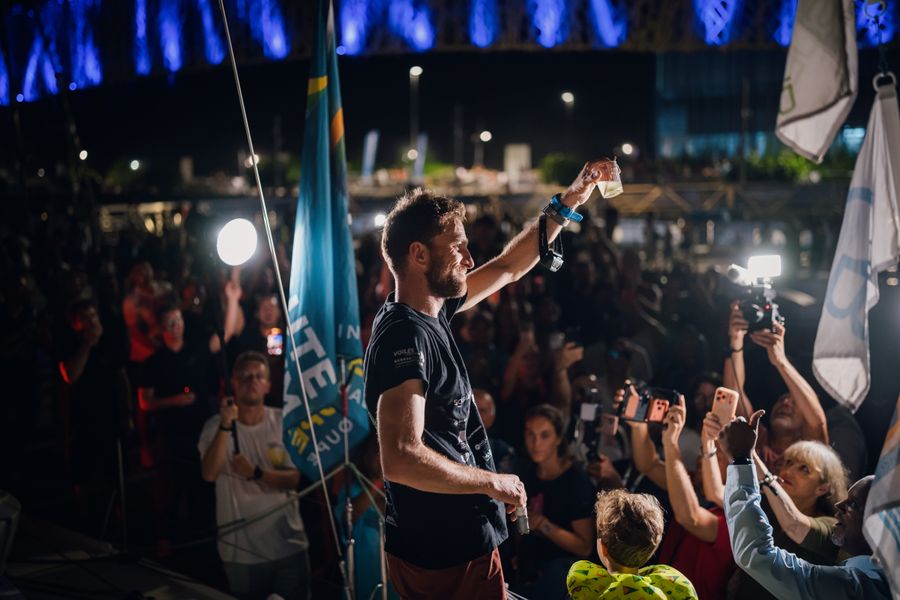
Rio de Janeiro's Marina da Glória threw open its gates on Wednesday for the official opening of the SSL Gold Cup 2026, bringing sailors from 40 nations back to the waters that staged Olympic sailing a decade ago at Rio 2016. Racing begins Thursday on Guanabara Bay, with the Final Series running through to 13 December.
The transformation of the venue is hard to miss. Flags from all 40 qualifying nations now line the marina entrance, and SSL Gold Cup branding covers the buildings, team areas and walkways. The look blends the event's own colours with visual cues from Rio itself, and the campaign has spilled well beyond the marina gates, with advertising across the city and coverage in Brazil's major newspapers and broadcast outlets.
The 40 national teams will race identical SSL47 yachts, each crewed by ten sailors, through to the final on 13 December. The fleet includes Olympic medallists and world champions drawn from across the sport.
SSL Team Brazil enters at the Round of 16 stage, which takes place from 2 to 5 December. The squad features two-time Olympic champion Robert Scheidt, racing on home waters in front of his own supporters.
"It means a great deal to see the Copa do Mundo da Vela come to Rio de Janeiro, ten years after the Olympic Games," Scheidt said. "Marina da Glória and Guanabara Bay are part of Brazilian sailing history, and now they are welcoming teams from different continents, bringing together sailors from different generations and classes. We have an experienced team that has been preparing for this moment, and we know the level of competition will be extremely high."
Among the teams starting their campaigns this week is SSL Team Portugal, with sailor Paulo Manso speaking of the pride of representing both his country and his home region of Madeira. "We will do our very best over these days of racing," he said, adding that the team would be "ready to take charge on the racecourse and keep pushing all the way through the championship."
Beyond the racecourse, the SSL Gold Cup Village has become something of a drawcard in its own right. More than 50 digital screens around Rio are carrying event content, and there's advertising at Santos Dumont Airport and Glóriamar featuring SSL47 racing footage and details of the competing nations.
The official merchandise store sits inside a geodesic dome at Marina da Glória, stocking T-shirts, caps and bags alongside beach towels patterned on the black-and-white waves of the Copacabana promenade. Miniature SSL47 models made by COBI, complete with Rio 2026-branded spinnakers, are proving popular with younger visitors. The championship trophy itself is on display too, a preview of what's at stake on 13 December.
There's also a quieter corner of the Village given over to Guanabara Bay's marine life. An exhibition linked to a laboratory within Rio de Janeiro State University's Oceanography programme focuses on the Guiana dolphin, known locally as the boto-cinza, a species under conservation pressure.
"We have an exhibition here from a laboratory linked to UERJ's Oceanography programme," said Maria Carvalho Pinto Pusete, an event promoter with a degree in International Relations. "It provides information about the Guiana dolphin, a species that lives in Guanabara Bay, as well as other marine species found in the area. The aim is to raise awareness."
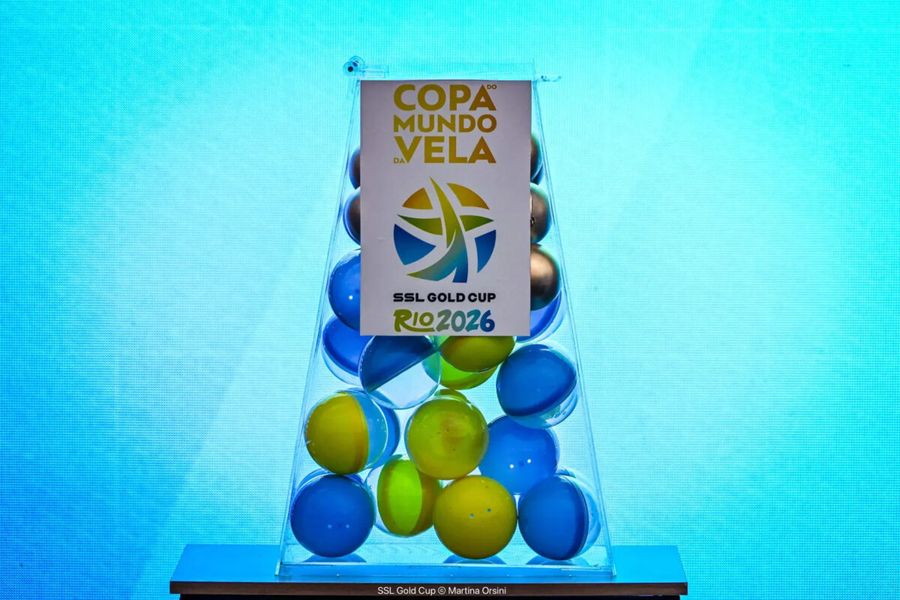
On the water, the opening 1/32 Finals run from 19 to 22 November, with sixteen nations split into groups of four: Colombia, South Korea, Greece, Malaysia, Singapore, Myanmar, Oman, Tahiti, Seychelles, Estonia, Lithuania, Ukraine, Portugal, Cuba, Uruguay and Antigua & Barbuda.
Cuba, Uruguay and Antigua & Barbuda booked their places just last week, through the Pan-American Qualifiers on Guanabara Bay.
The top eight advance to the 1/16 Finals from 26 to 29 November. The 1/8 Finals follow from 2 to 5 December, when Brazil enters the fray, then Quarterfinals from 7 to 10 December. Semifinals are set for Saturday 12 December, with the Final and the crowning of the Nations World Champion on Sunday 13 December, bringing the championship full circle on the same waters that once carried the Olympic flame.