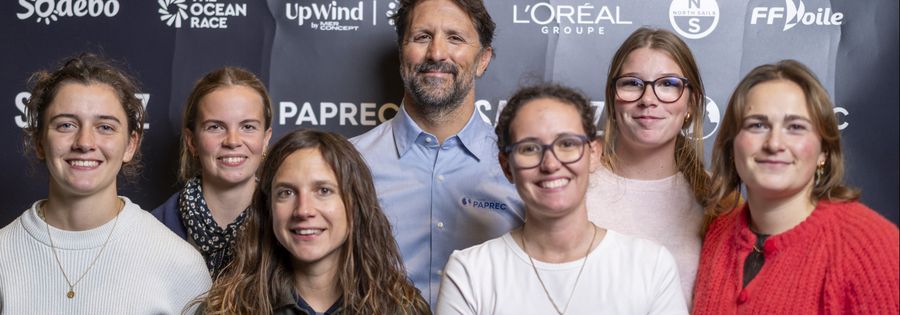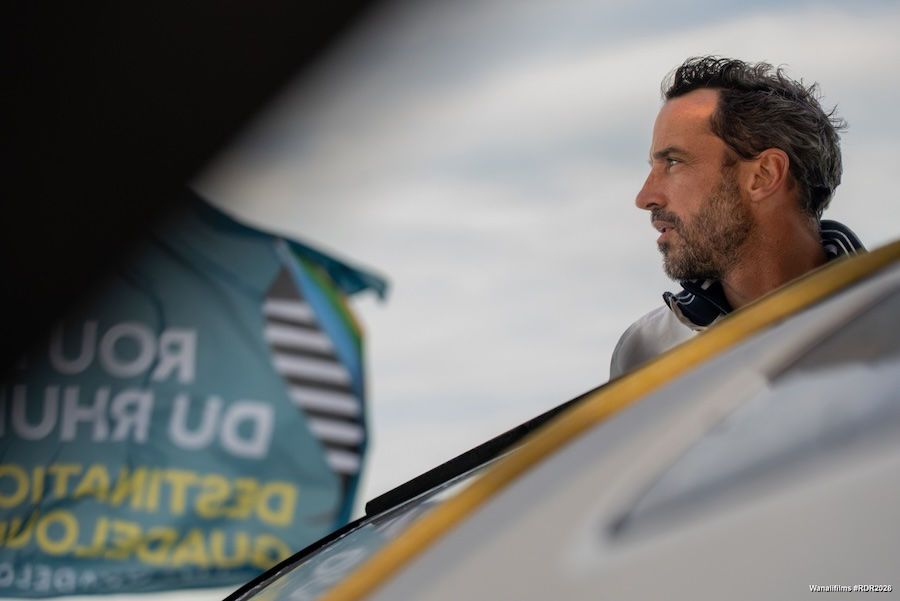
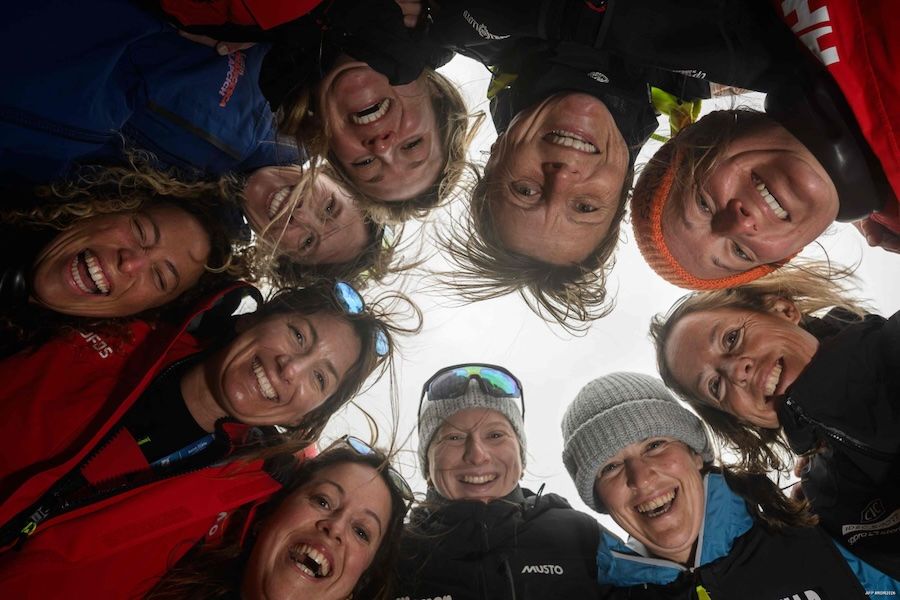
Eleven women will take the start line at this year's Route du Rhum-Destination Guadeloupe, and for the first time in the race's history, female skippers will compete in every multihull category.
Alexia Barrier lines up in Ultim aboard IDEC Sport-CIC, the first woman to race the class at the Rhum. Anne-Claire Le Berre becomes the first woman to race Ocean Fifty at the event aboard UpWind by MerConcept. In IMOCA, Violette Dorange (Initiatives Cœur), Francesca Clapcich (11th Hour Racing) and Élodie Bonafous (Association Petits Princes-Quéguiner) are among the outsiders for a podium place. Eleven women on the line marks real headway on gender diversity, though plenty of ground remains to cover.
On stage at the Folies Bergère in Paris during the race presentation last September, Barrier chose to laugh it off. "It's true I'm the first woman to race in Ultim but I had nothing to do with that," she joked. Days later, by phone, she was more reflective: "I obviously regret that there were no women before me. But at the same time, I feel privileged to be able to open that door."

"Things are shifting and I think that's brilliant, especially in multihulls," agrees Le Berre. Everyone still remembers Florence Arthaud's stunning 1990 win aboard the trimaran Pierre 1er. Since then, only Anne Caseneuve has lined up in Multi50, back in 2010, before going on to win the Rhum Class in 2014.
Having a woman in each multihull category matters, Le Berre says, because "it's a new step in the feminisation of our sport." Sacha Lanièce, racing Alderan in Class40, puts it plainly: seeing a representative in every category lets others think, "okay, it's possible." Multihulls used to feel off limits.
That shift owes much to deliberate effort. 11th Hour Racing and MerConcept created UpWind by MerConcept specifically to help women gain multihull experience, and Clapcich, who came through that programme, calls the progress "incredible." Barrier took a similar path, launching The Famous Project, the first fully female non-stop crewed round-the-world voyage, completed earlier this year. "The idea was to give women the opportunity to sail multihulls, which had remained the preserve of men in our world," she says.
Monohulls are seeing a new generation too. Bonafous won the Rolex Fastnet Race in 2025. Dorange finished third in the Vendée Arctique in June. Clapcich was second in The Ocean Race Atlantic in September. Tellingly, none of the three dwelt much on gender in recent interviews, focusing instead on preparation and goals.
Still, eleven women on the start line is fewer than ten percent of the fleet. Le Berre points to the absence of any female skippers in the Vintage Multi and Vintage Mono categories. In Class40, the biggest fleet with 49 entries, just six are women.

"There's still work to do giving top female athletes a real chance," Barrier says. Some skippers, she adds, are still in precarious positions and struggle to pay themselves a proper salary. Le Berre sums it up simply: what matters most is that women can access every category, and believe anything is possible.
The eleven: Alexia Barrier (IDEC Sport-CIC), Anne-Claire Le Berre (UpWind by MerConcept), Élodie Bonafous (Association Petits Princes-Quéguiner), Violette Dorange (Initiatives Cœur), Francesca Clapcich (11th Hour Racing), Aina Bauza (Alice Milliat Foundation), Sasha Lanièce (Alderan), Sophie Faguet (Défi Solidaire avec Ellye et L'Arche), Théa Khelif (Women of Course), Pamela Lee (#Empowher), Djemila Tassin (Belgium Ocean Racing).