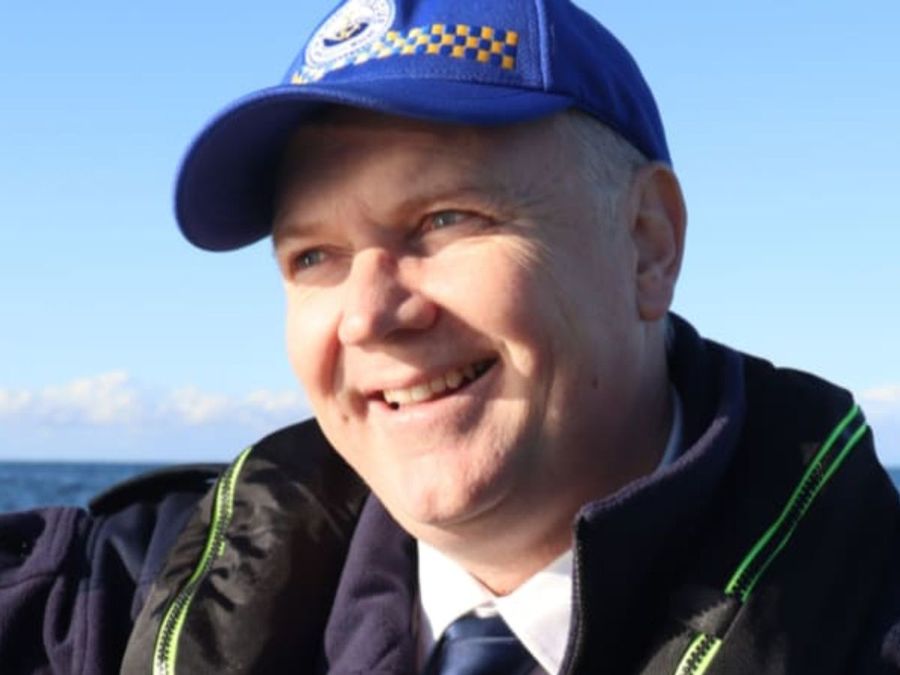
Mike Hammond has spent time studying boating technology across three continents, and what he saw has convinced him that the rescue fleets of tomorrow will look very different from those of today.
As Superintendent of Marine Rescue New South Wales and a Churchill Fellow, Hammond visited boatbuilders and search-and-rescue organisations in Europe, Japan and the United States. The trip left him with a clear view: new propulsion systems and hull technologies are approaching a point where they will genuinely reshape how rescue agencies think about their fleets.
Diesel power, tough hulls and long offshore range have defined rescue vessels for decades, and Hammond is not suggesting those qualities become obsolete. But he returned from his Fellowship believing that change is closer than most people working in the sector currently expect.
The shift is already visible in recreational boating, where electric craft, advanced battery systems and foiling hulls are appearing in marinas at a pace that has surprised many observers. Hammond's argument is that SAR agencies need to engage with these developments on two levels: understanding how to respond when these vessels get into trouble, and exploring whether some of them might eventually work within rescue fleets themselves.
Quiet power, smoother rides
Among the strongest advantages Hammond identified in next-generation vessels is the significant reduction in noise and vibration. In a search-and-rescue context, that quietness is more than a comfort feature. A crew listening for a faint voice from the water needs engines that are not competing with that effort. Reduced mechanical noise during a search could make a meaningful difference to outcomes.
Ride quality matters just as much. Active foil systems respond quickly to changing sea conditions, lifting the hull clear of the surface chop and producing a more stable, predictable motion. Hammond sees significant operational value in this, particularly for casualty care and crew endurance over extended operations. Fatigue affects decision-making and physical performance, and a smoother working platform helps responders stay effective throughout a long mission.
Where electric vessels fit best
Hammond is clear that electric propulsion is not yet ready to take over from diesel in offshore environments. Range remains the limiting factor, and offshore rescue simply demands too much of current battery technology. Where he does see strong potential is in shorter-range work: harbours, estuaries and river systems where fast acceleration, low wake and reduced running costs are genuine advantages. As battery technology continues to improve, the range limitation will ease, and the case for electric inshore vessels will strengthen accordingly.
Hydrofoils offer additional gains by cutting drag at speed. During his Fellowship, Hammond trialled a Swedish-built foiling vessel that delivered impressive range relative to its size. He is measured in his assessment, noting that every vessel under consideration for rescue work must be rigorously evaluated for structural strength and safety performance, but he sees real potential for these craft as part of a broader fleet.
Learning from early prototypes
Several European countries are already running low-emission rescue craft in operational or trial settings. Sweden's Project Elinn, a nine-metre electric prototype built specifically to generate real-world feedback, represents exactly the kind of initiative Hammond believes will shape future fleet decisions. He expects the lessons from trials like this to be shared across international SAR communities, accelerating the learning curve for agencies that come to the technology later.
For New Zealand and Australia, that learning is directly relevant. Both countries have to manage an unusually wide range of operating environments, from exposed offshore coastlines to sheltered harbours and narrow tidal estuaries. No single vessel design performs well across all of those settings, which is precisely why a more diverse fleet could give agencies better tools matched to specific missions.
A mixed fleet approach
Hammond's vision is not one of wholesale replacement but of gradual diversification. Offshore rescues will continue to require vessels with strong towing capacity, long range and the structural confidence to handle heavy seas, and diesel will remain the answer for those jobs. Inshore, however, electric and hybrid craft are increasingly logical choices, while foiling vessels could offer genuine speed and low-wake performance in environments where both qualities are valued.
Over time, agencies may find themselves operating a blend of traditional and modern platforms, a development that would bring its own demands around training, maintenance and operational planning. Recreational boaters will feel the effects of this shift too. As electric and foiling vessels become more common on the water, their particular handling characteristics and emergency requirements will influence how SAR teams prepare and respond.
A careful step forward
For all his enthusiasm about what new designs can offer, Hammond is deliberate about the limits of that enthusiasm. "We must embrace innovation, but we must do it safely," he says. The goal is not technology for its own sake, but measurable improvements in ride quality, crew working conditions, search effectiveness and operational efficiency. Technology serves rescue capability; it does not replace the judgement and skill that rescue work demands.
Hammond will present his research at the Global Maritime SAR Forum (GMSF) in early 2026. His findings point toward a future where new vessel types strengthen what rescue services can offer, not through overnight transformation, but through a considered evolution toward craft that are cleaner, more versatile and better suited to the full range of environments our crews work in.