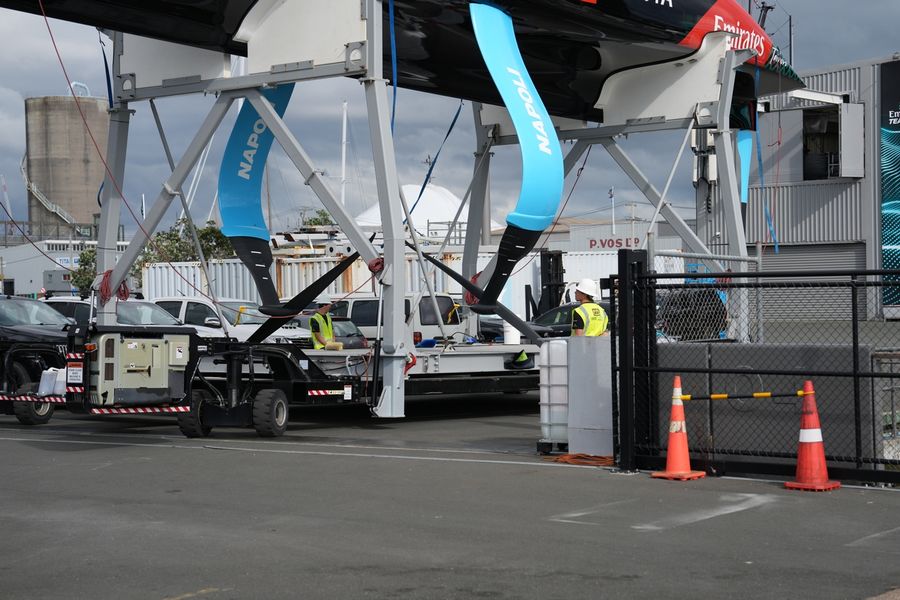
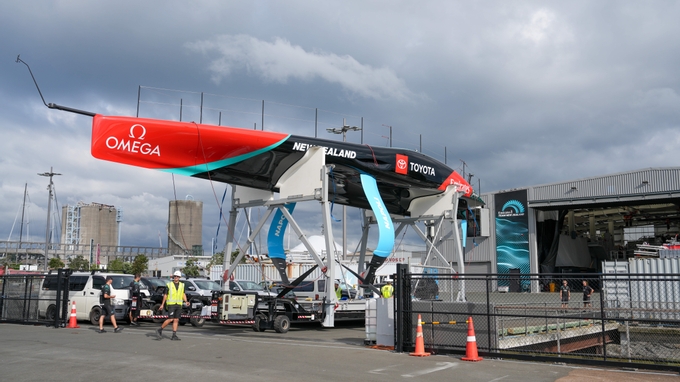
Much anticipation down at the Wynyard Point base of Emirates Team New Zealand in Auckland today as their revamped AC75 Taihoro rolled out of the shed with every intention of beginning training for the Louis Vuitton 38th America's Cup. First launches are a signature moment in any ETNZ campaign cycle, but a tropical front swept in and dramatically altered the day's plans before a single tack could be sailed.
By 11.22am NZL time, the call had been made and Taihoro was back under cover, just over two hours after her 9am roll-out. The reconnaissance teams had been working the scene from the moment the boat appeared on its high-cradle, their attention immediately drawn to the striking 'Napoli' adorned Naples-blue foil arms and foils. For those who watched Taihoro win the 37th America's Cup in Barcelona back in October 2024, there are differences worth noting.
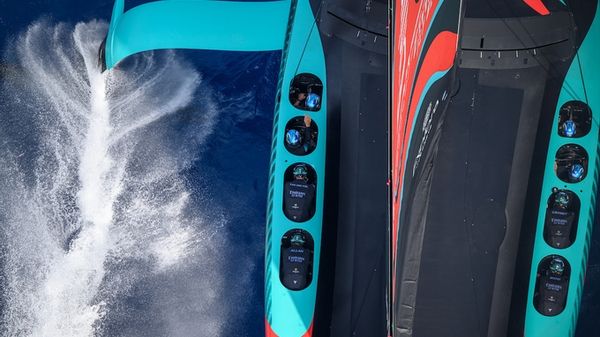
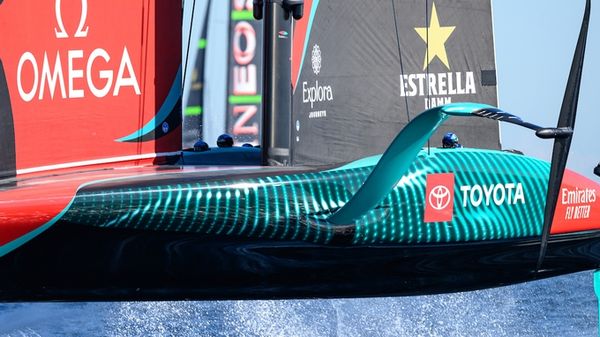
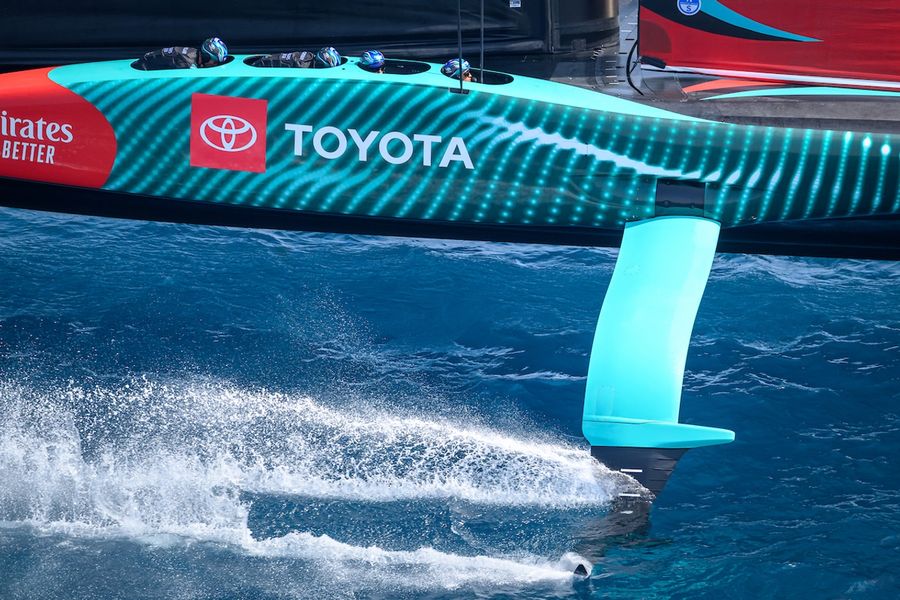
Chief Designer Dan Bernasconi was interviewed by the recon team and fielded questions about weight distribution in the new AC75 electro-configuration. The updated setup removes four cyclors from the sailing team, replaces their considerable physical output with limited battery power, adds one sailor to bring the active sailing crew to five, and also accommodates a guest racer. On the subject of how weight has been managed, Bernasconi was direct: "we've taken weight out of the foils." The most visible evidence of that decision is a comparison of the 2024 foil arm fairings against what is fitted to Taihoro today.
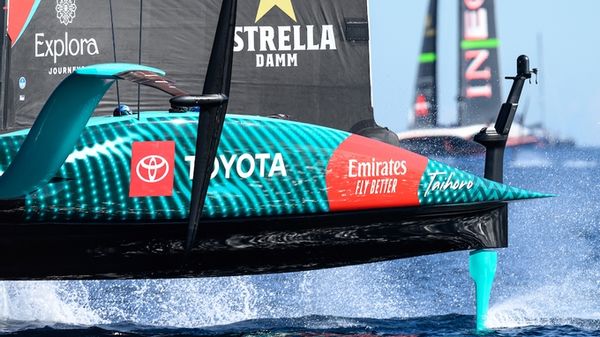
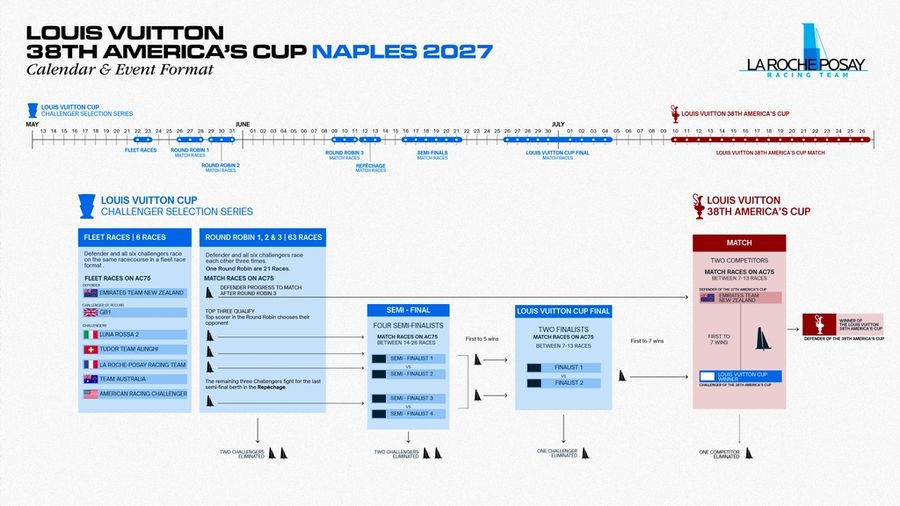
The change that stands out most immediately is a substantial reduction in the volume of what became known as the 'foil spike' during the Barcelona campaign. That feature was widely considered to serve as a ballast area. With the AC38 Protocol setting a raceable wind-speed window of 6.5 knots to 23 knots, ETNZ have clearly focused on low-wind take-off performance, and the new configuration reflects that. The forward-protruding inverse anvil shape that featured so heavily in Barcelona is no longer present on Taihoro.
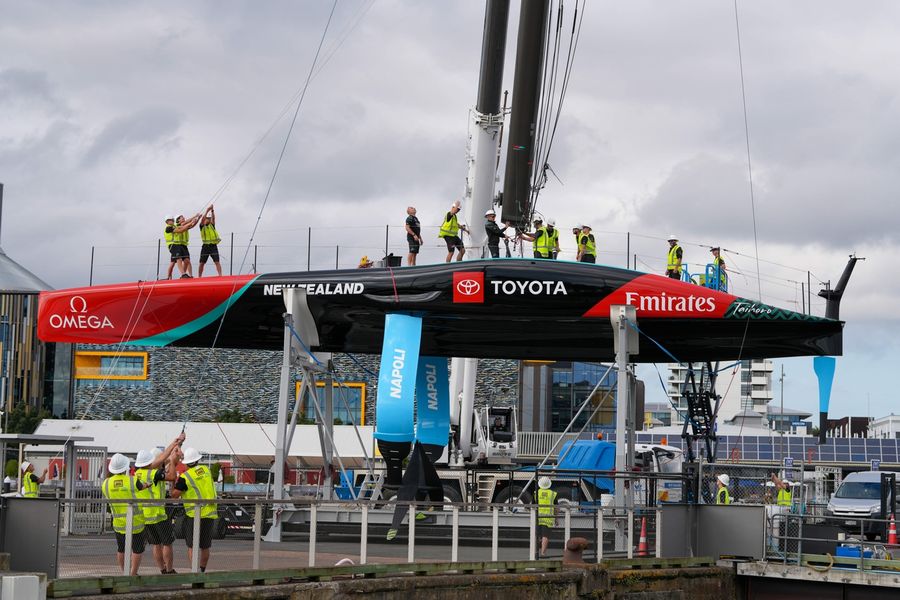
Under the AC75 Class Rules, this area is governed by rule 13.6, which states that foil arm fairings shall not be capable of transmitting any significant bending, shear or torsional loads between the foil wing and the foil arm. The volume reduction visible on Taihoro today sits squarely within that context, and it will be something to watch closely as the team progresses through early sea trials and commissioning of the new setup. The anvil shapes were themselves a very late addition to the Barcelona configuration.
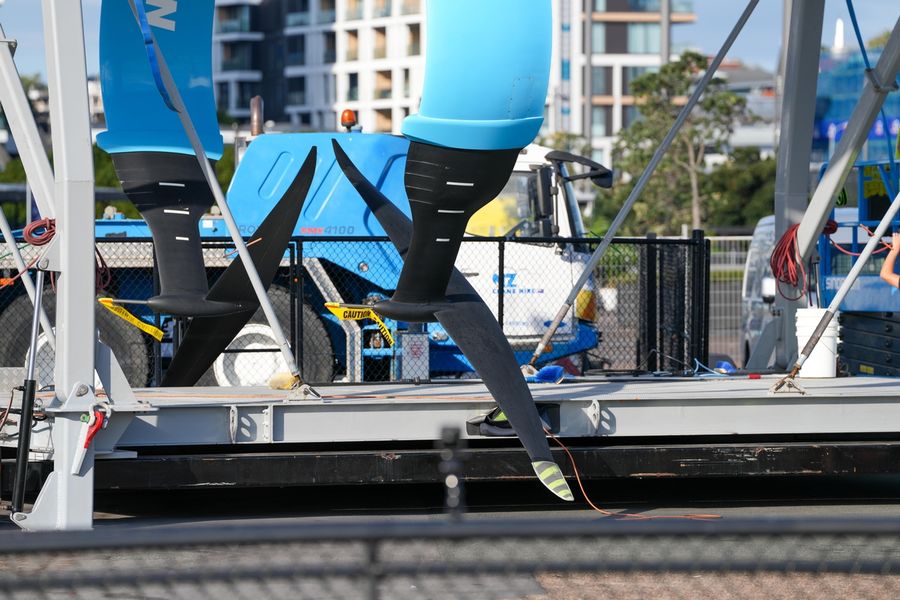
Another detail appearing on Taihoro for the first time, at least as far as can be established, is pitot tubes attached to the front of the foil bulb. These fittings are non-permanent and would be removed before any racing, but their presence is informative. Borrowed directly from aviation, pitot tubes in an America's Cup context are used primarily to measure the boat's precise speed through the water rather than speed over ground, a distinction that matters considerably when managing the flight and performance of a foiling yacht across varying speeds. That measurement is important for calculating actual hydrodynamic forces on the foils, particularly given the tidal currents that can be a factor during Auckland training sessions.
The data from pitot tubes gives the crew insight into when Taihoro is approaching or maintaining the take-off speed required, and that same data feeds the analytics teams aboard the chase boats, enabling real-time performance monitoring comparable to Formula 1 telemetry. Pitot tubes are also rumoured to offer substantially higher accuracy in speed-through-water measurement than GPS alone, with test data suggesting GPS can carry errors of up to 20 per cent in conditions of high tidal flow, exactly the sort of environment ETNZ may regularly encounter in Auckland.
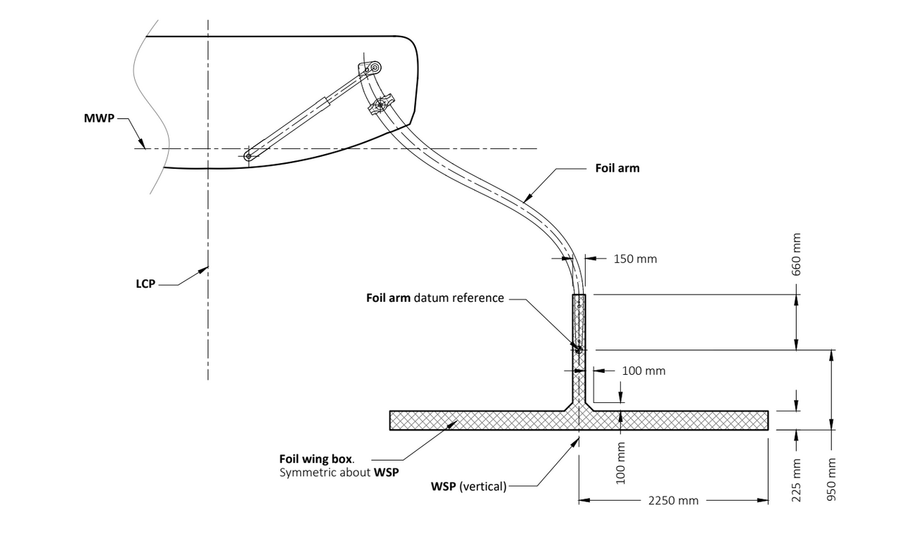
Component regulations for the 38th America's Cup are strictly controlled with cost reduction firmly in mind. Every team carried four foil arms through the last cycle and all are mandated to carry those same arms into this one. The scope for modification is limited, and significant new foil development across the AC75 fleet is unlikely to emerge until much closer to the racing in Naples.
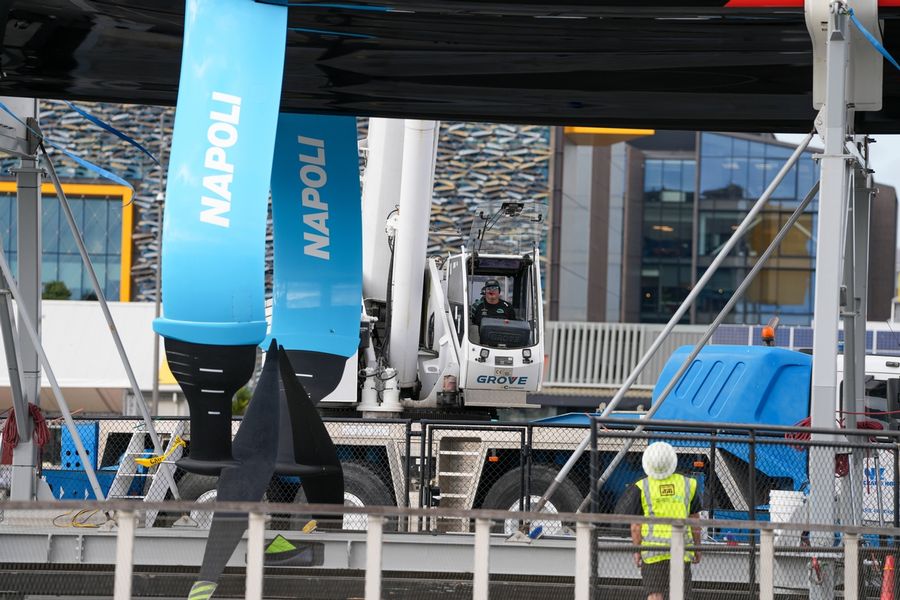
Comparing Taihoro's foils between 2024 and 2026 suggests the team is running the same foils used in the last Match. The fairing arrangement remains cleverly executed: viewed from above, the foil presents as a single continuous piece of linear carbon, yet from underneath it becomes clear there are in fact two controllable flaps. The slight anhedral nature of the tips at both ends produces an almost perfect gull-wing profile. When Taihoro first sails, the recon teams will be gathering detailed photography of this area.
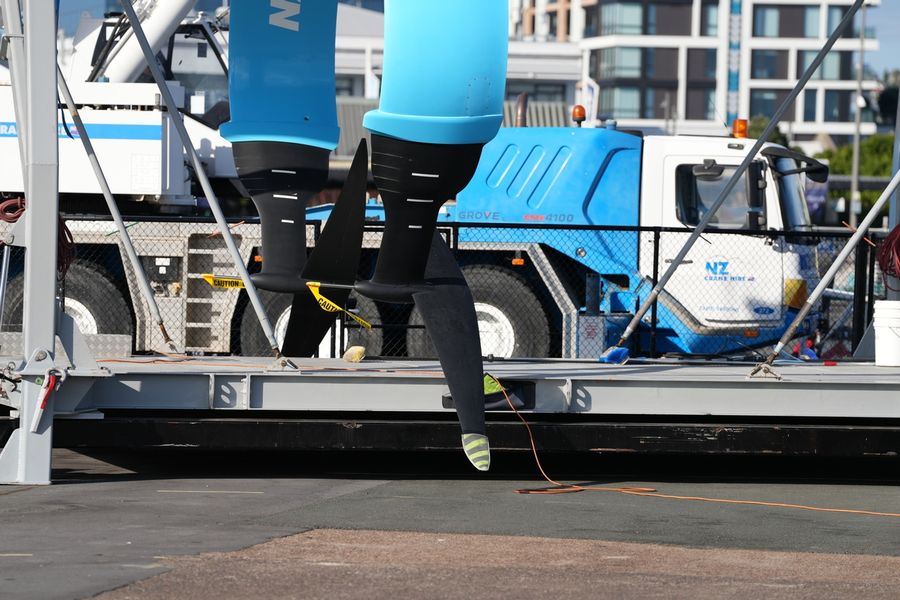
Finding the differences that will ultimately decide the Louis Vuitton 38th America's Cup is going to be a lesson in detail. The recon teams are on it.