Few chapters in New Zealand boatbuilding history carry quite the weight of the Rayglass story. It stretches well beyond trophy cabinets and award citations, reaching into territory most companies never survive: catastrophic loss, extraordinary generosity, and a stubborn refusal to quit.
Tony and Vicki Hembrow took control of the Auckland-based builder in the late 1980s, and what followed was anything but smooth sailing. Between 1994 and 1996, at the very moment demand for the newly launched Legend 730 was climbing sharply, fire swept through the production booths and destroyed every mould in the Legend range. Seven years of careful development vanished in the blaze.
What happened next says a great deal about the marine industry at its best. Rather than watching a competitor disappear, rivals, suppliers, and customers showed up with tools, resin, moulding materials, and in some cases cash. That collective response gave Rayglass the lifeline it needed, and within a year the team had fought its way back to the factory floor, determined to build more ambitiously than before.
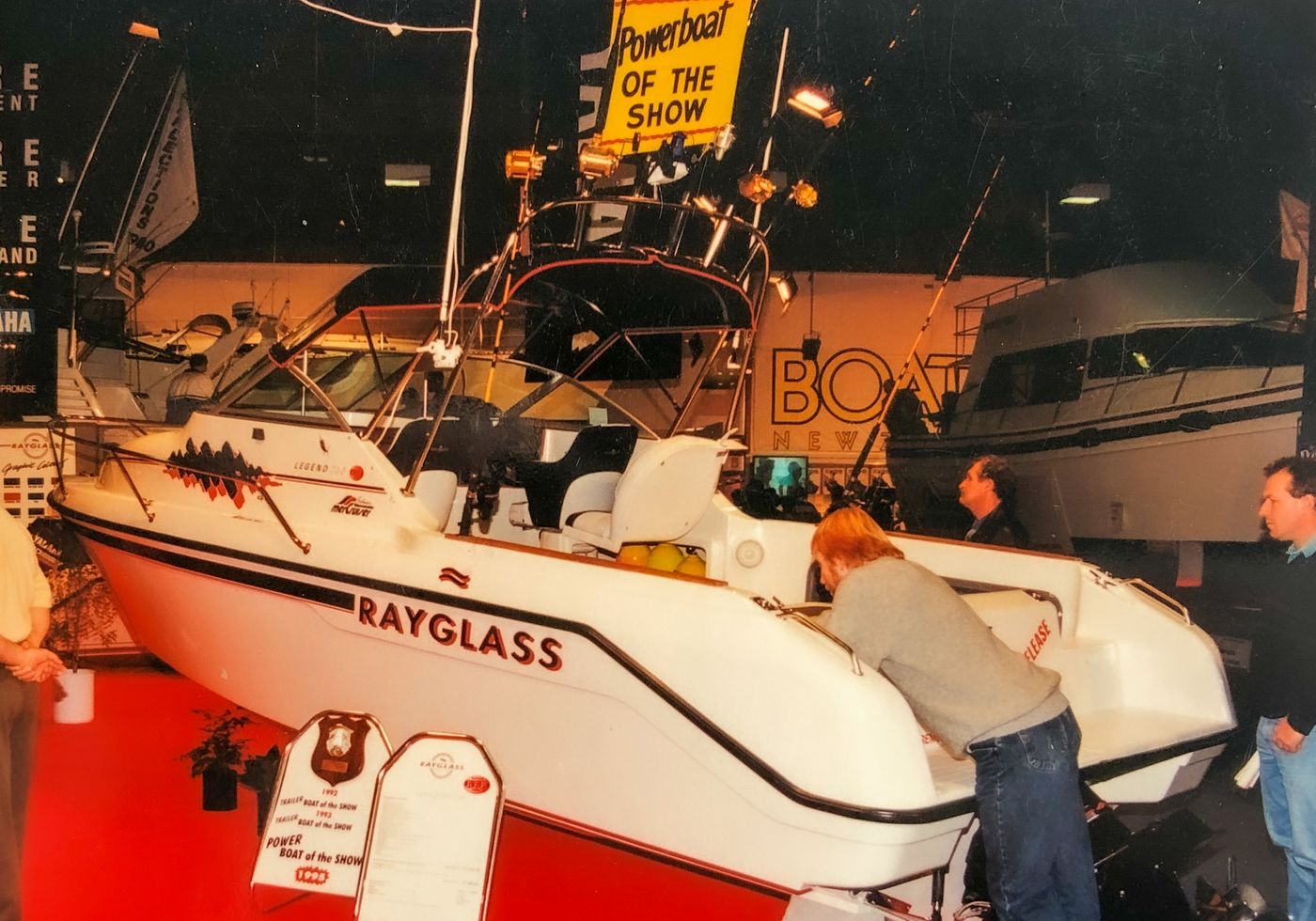
The company's origins reach back to 1988, when Tony and Vicki joined forces with founders Ray and David Morse. Those early years were tight, but momentum gathered with the 1989 purchase of Performance Marine in Pakuranga. The Legend 620 arrived in 1992, shortly followed by the 520, and the 620 promptly won the National Boat Show award that year. It was the first of more than 50 such honours to follow.
The real turning point came in 1995 with the launch of the Legend 730. Stretching to 7.3 metres, it was the largest production trailer boat New Zealand had produced. Recreational fishers rated its ride, families appreciated its comfort, and buyers committed quickly. Almost overnight it became an icon, a model that still occupies a particular place in Kiwi boating memory.
{{MEDIA_1}}
The momentum carried into the late 1990s and beyond. The Legend 850 followed in 1997 and added another national award to the shelf, while the Protector series of rigid inflatables opened a new chapter by positioning Rayglass firmly in international waters. Coastguard adopted the Protector range, and the boats were selected for official duties at the 1999 America's Cup.
Through the 2000s the model lineup continued to broaden. The 1950, 2150, 2300, and the 4000 sports cruiser all found their audiences, and overseas agreements grew alongside them. Brunswick Corporation's 49% stake in the business, taken in 2004, pushed Rayglass into markets it had not previously reached. Staff numbers rose, and by 2006 annual turnover had climbed past $20 million, with exports matching domestic sales.
Through all of that growth, the Legend 730 never lost its pull. In May 2020, the 200th hull came off the production line, a milestone that prompted reflection on just how enduring the model had proven to be. Even today, many who look at newer boats such as the Legend 2500 find themselves tracing lines back to the 730, recognising in it the blueprint for a genuinely versatile Kiwi trailer boat: equally suited to a fishing ground, a family cruise, or an overnight anchorage.
For Tony Hembrow, the 730 represents something larger than strong sales figures. It stands for the resilience of the people who built it, the determination that carried Rayglass through its darkest period, and the instinct of a marine community to look after its own when circumstances turned difficult.
Thirty years on, the boat continues to inspire that kind of loyalty, not only to the model itself, but to the company that refused to let the fire have the final word, and to the industry that made sure of it.