When six IMOCA yachts leave New York on 1 September, they won't just be racing for line honours. They'll be turning themselves into floating laboratories, gathering data from one of the planet's most important, and most fragile, ocean systems.
The inaugural Ocean Race Atlantic will send the fleet roughly 3,000 nautical miles across to Lorient, France, tracking the Gulf Stream for much of the way. Along that route, the boats are expected to collect more than 800,000 ocean measurements.
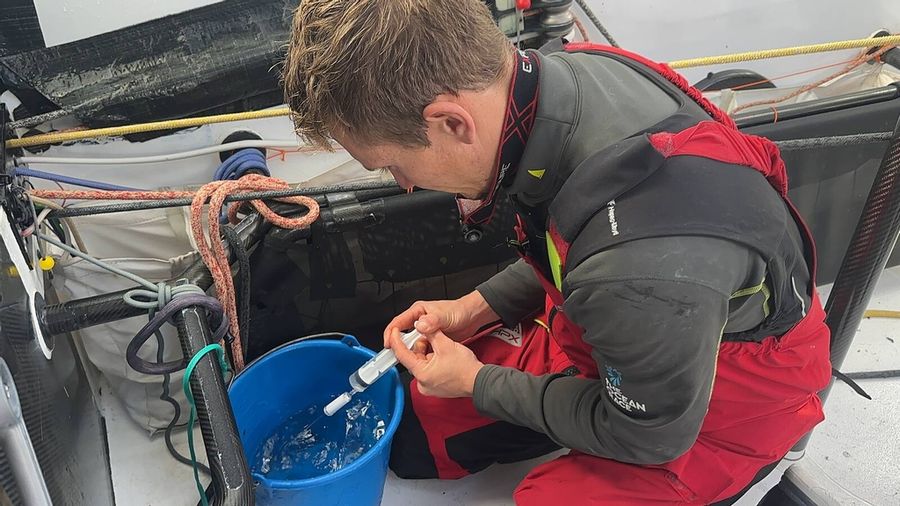
That's not a typo. Fitted out with scientific instruments and supported by Impact Partner 11th Hour Racing, each boat will gather readings on sea surface temperature, salinity and dissolved carbon dioxide as the crews race flat out. Water samples for microplastics analysis will be collected too.
The timing matters. Scientists have warned that the Atlantic Meridional Overturning Circulation, the vast system of currents that includes the Gulf Stream, is at its weakest point in over 1,000 years. Warmer oceans and freshwater from melting ice are believed to be behind the slowdown, affecting how heat moves around the planet.
Researchers have linked shifts in Atlantic circulation to the 2015 European heatwave, and some believe it may be contributing to heatwaves happening now. There's genuine concern the Gulf Stream could be nearing a tipping point, with consequences for weather, sea levels and marine ecosystems worldwide.
Getting good data on all this isn't cheap or easy. Traditional research vessels are limited in number, and scientists mostly rely on satellites and floats, both of which have blind spots. Racing yachts moving fast across the ocean, in numbers, fill some of those gaps rather neatly.
"The fleet of racing yachts in The Ocean Race Atlantic offers a unique opportunity to contribute valuable data that complements the limited data scientists are able to collect themselves," said Toste Tanhua, senior scientist at GEOMAR Helmholtz Centre for Ocean Research Kiel. "The ongoing collaboration between science organisations and The Ocean Race has proven valuable to fill some of the large gaps in the vast, and under-measured, ocean. Scientists cannot gather as much data as we need by ourselves, but with The Ocean Race sailors, we are working together to understand what is one of the most important ocean systems. This data will increase our understanding of the global climate system, and its engine in the North Atlantic. As the heart of the global ocean circulation, where salty waters cool down and sink to large depths, locking away excess carbon dioxide from the atmosphere, understanding how this process is changing is of utter importance."
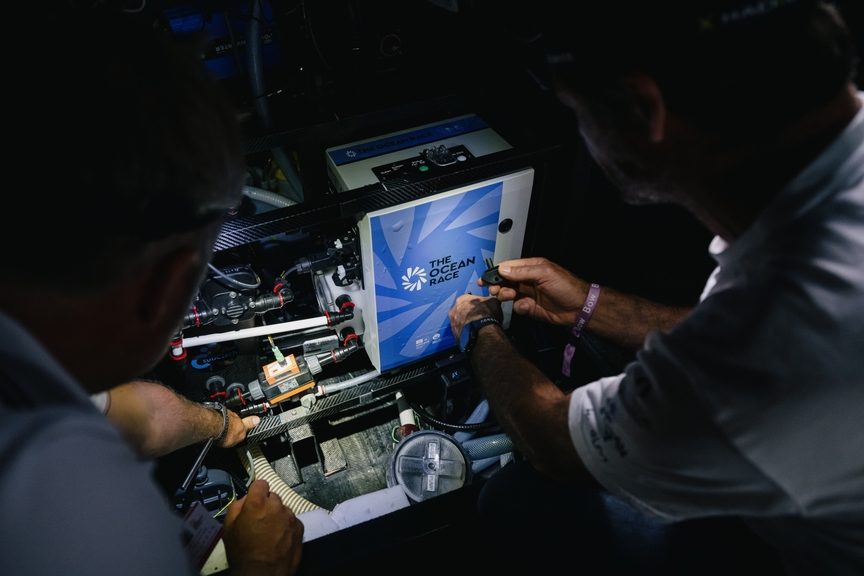
DMG Mori Sailing Team and MSIG Europe will each carry Microplastic Sampling Units. Four other boats, Team Malizia, Team Francesca Clapcich Powered by 11th Hour Racing, United by the Ocean and Embrace the Challenge, will run The Ocean Race's Essential Ocean Parameter Unit, an automated instrument measuring sea surface temperature, salinity, dissolved carbon dioxide, dissolved oxygen and atmospheric pressure.
A single unit can log around 21,600 measurements a day. Over ten days at sea, that adds up fast. The data gets sent on to science partners including GEOMAR, Ifremer and CNRS (Centre National de la Recherche Scientifique).
Four teams also dropped drifter buoys along the Gulf Stream on their delivery trip to New York, ahead of the race start. Those buoys will keep sending data by satellite, supporting climate research and helping scientists better understand how ocean circulation is changing.
"The Ocean Race has been contributing to advancing ocean science for over 25 years," said Stefan Raimund, Senior Science Advisor at The Ocean Race. "Today, our science programme is the most comprehensive environmental data collection initiative undertaken by any sporting event and we're proud to be helping researchers build a better understanding of our changing ocean and climate."
There's a practical racing reason for hugging the Gulf Stream too. It's the fastest route northeast across the Atlantic, and the weather systems it generates tend to produce the strong winds crews need for a quick crossing.
The Ocean Race Atlantic 2026 marks the first point-to-point race in the event's 50-year history. It's backed by 11th Hour Racing as Impact Partner, and will run with the first-ever mandatory 50-50 gender-balanced crew requirement across the fleet.