Race World Offshore's 2025 season is well underway, and with two hard-fought events on Lake Michigan now in the books, attention turns sharply southward. Clearwater, Florida, is next on the calendar, hosting its annual nationals on the Gulf coast before the sport's greatest prize, the Key West World Championship, brings the season to its conclusion.
Race World Offshore has established itself as one of the leading names in American offshore powerboat racing. Operating out of Key West, RWO functions as both promoter and sanctioning body, setting the framework, rules, and safety standards that govern its events. For decades, championship week in Key West has represented the pinnacle of offshore competition, a race woven so deeply into the fabric of the sport that no serious competitor can ignore it. Previously aligned with the APBA, the traditional domestic sanctioning body for US offshore powerboat racing, RWO chose to chart its own independent course for 2025, creating a cleaner, more racer-focused structure. Fellow producer has taken a similar step.
That decision has been driven by a desire to unify the rulebook, raise safety standards, and broaden offshore racing's appeal. GPS enforcement, updated technology, and a push toward more sustainable practices all speak to RWO's commitment to keeping the sport modern and relevant.
The season's opening chapter has been written on Lake Michigan, where freshwater rollers and unpredictable winds have tested every team. Michigan City opened proceedings, with Chicago following a few weeks later against a backdrop of downtown skyscrapers and swirling lake breezes. Both events rewarded consistency and punished those who guessed wrong on set-up, and the results have already shaped the form guide heading into Florida.
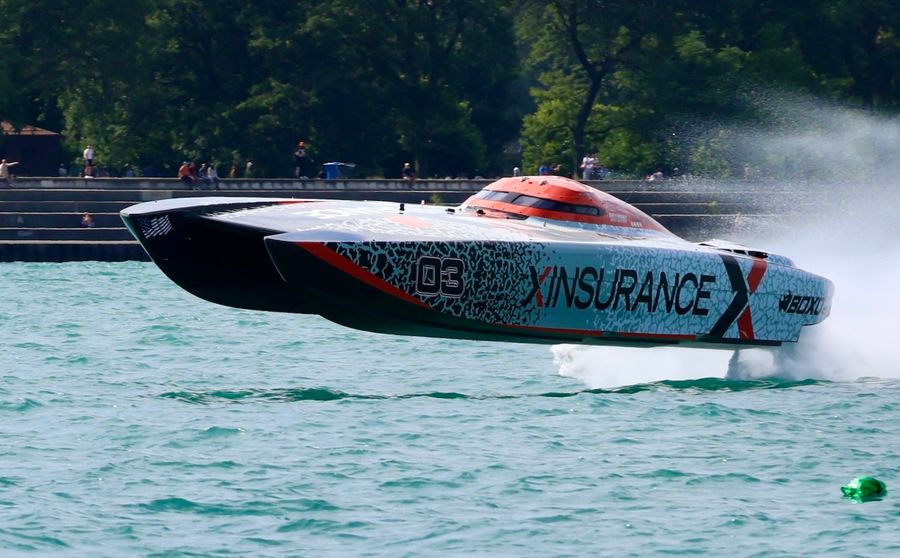
At the very top of the order, Pro Class 1 has been dominated by a single outfit. XINSURANCE South has been flawless across all four races, their 45-foot (13.7-metre) Victory catamaran, weighing in at 11,800 pounds and powered by Mercury inboards, carrying Bill Pyburn and Brit Lilly to an unblemished record at the head of the standings. GC Racing's new 48-foot (14.6-metre) MTI has shown the pace for second places, and Monster Energy/M•CON's 40-footer (12.1-metre) has kept both teams honest, but neither has found a way past the leaders.
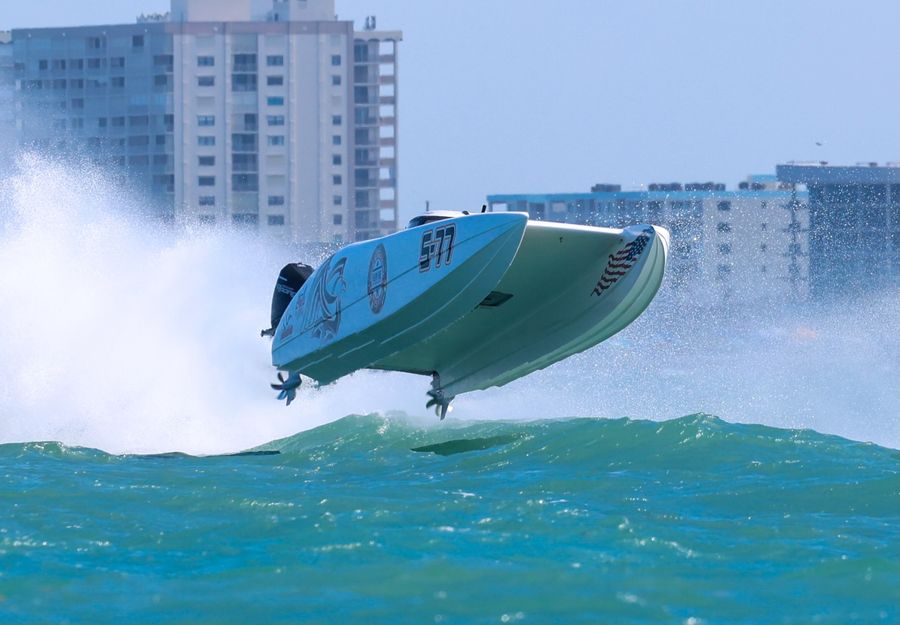
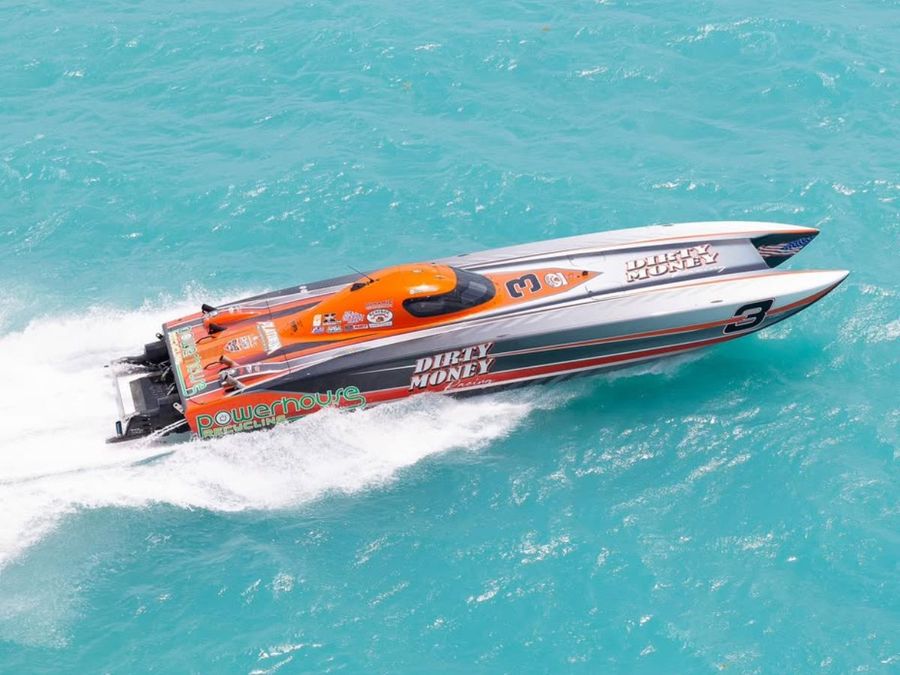
Super Cat racing has unfolded with considerably more drama, which is precisely what the class regulations are designed to produce. These 38- to 44-foot catamarans weigh around 9,500 pounds and run twin 850-horsepower inboards, with tight controls on propellers and ballast keeping the field closely matched. On paper the boats look near-identical, yet in practice the character of each team comes through clearly. C.J. Grant's Graydel crew struck first in Michigan City, but Chicago proved to be a different story. Dirty Money, a 38-foot Douglas Marine hull based out of Stuart, Florida, surged to back-to-back wins in Chicago with Brit Lilly on the wheel and Bill Pyburn on throttles. CR Racing's Skater, Rollin Transport's Outerlimits, and EWB Racing have featured throughout, though none has yet managed to step onto the top step.
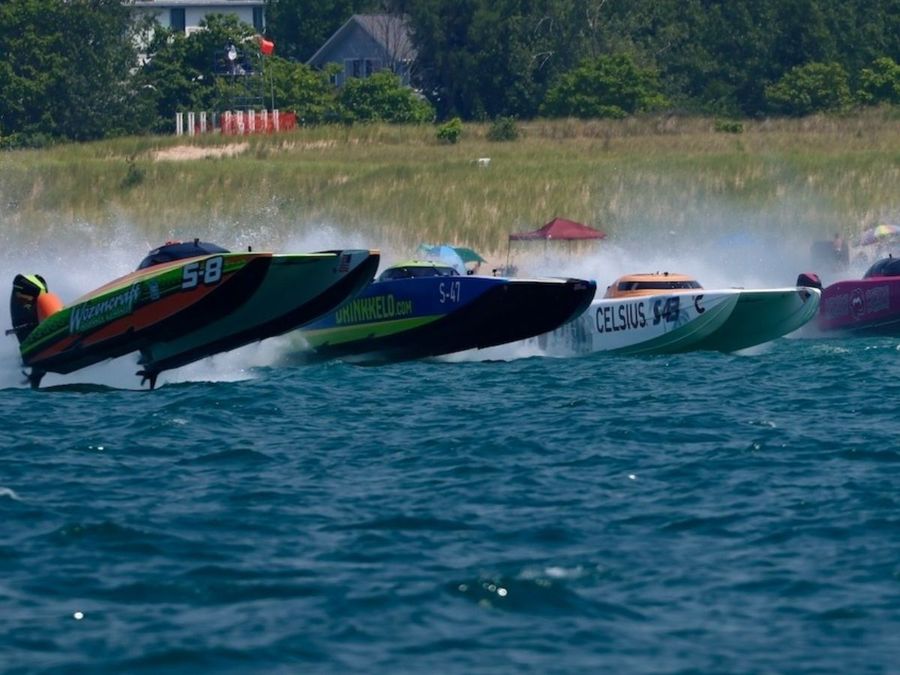
Super Stock is quickly establishing itself as the sport's fastest-growing class. Fleets of near-identical 32-footers, each weighing between 4,600 and 4,900 pounds and powered by twin Mercury 300 outboards, produce racing that is frantic from the moment the starts go off. The close regulation means margins are wafer-thin. At Michigan City it was Hi-Tech Deck, an STR Powerboats hull with Shaun Torrente on throttles, that found the decisive edge over Coco's Monkey and Raymarine/Big East. The class did not feature in Chicago, making Clearwater the next opportunity for these stock cats to settle their differences.
Factory Stock, entering its first season as an official category, narrows the margins even further. Running 38- to 39-foot MTIs fitted with Mercury outboards in strictly OEM configuration, there is virtually no room for creative interpretation. GC Racing MTI has been the benchmark outfit, sweeping both rounds to date, though it was the sole entry in its class in Chicago. That clean record leaves the team well positioned heading into Florida.
The Bracket classes bring a different discipline altogether, functioning as offshore racing's equivalent of precision driving. Rather than simply chasing maximum speed, competitors in these classes, racing boats ranging from 21 to nearly 40 feet in length across mostly vee-bottom hulls, must stay beneath a capped top speed enforced by GPS monitoring. Breakouts bring penalties, and the art lies in running as close to the limit as possible without exceeding it. In Bracket 200, Cade Herbott and his father Keith improved from third in Michigan City to a win in Chicago aboard their 38-foot Fountain, though they were the only team in the class for that round. Bracket 400 saw Saris Racing Engines take the opener before Simmons Marine responded on Lake Michigan. Pump It has accumulated points in the 500s, while Moderation leads the 600s following their Michigan result. Chicago also saw Bracket 700 make its debut, with RedRum's 22-footer claiming the honours.
The move south to Clearwater shifts the racing environment considerably. The course runs parallel to the white-sand Gulf coast beaches, where long straights tempt crews to trim hard and push their limits, but the sea can build rapidly into steep swells that demand respect. For the big Pro Class 1 catamarans, rhythm and precise throttle management become critical. The Super Cat fleet must weigh outright pace against the demands of running reliably in heavier water. Super Stock competitors, where fractions of a second decide outcomes, will find every gust and every trim adjustment carries real consequence.
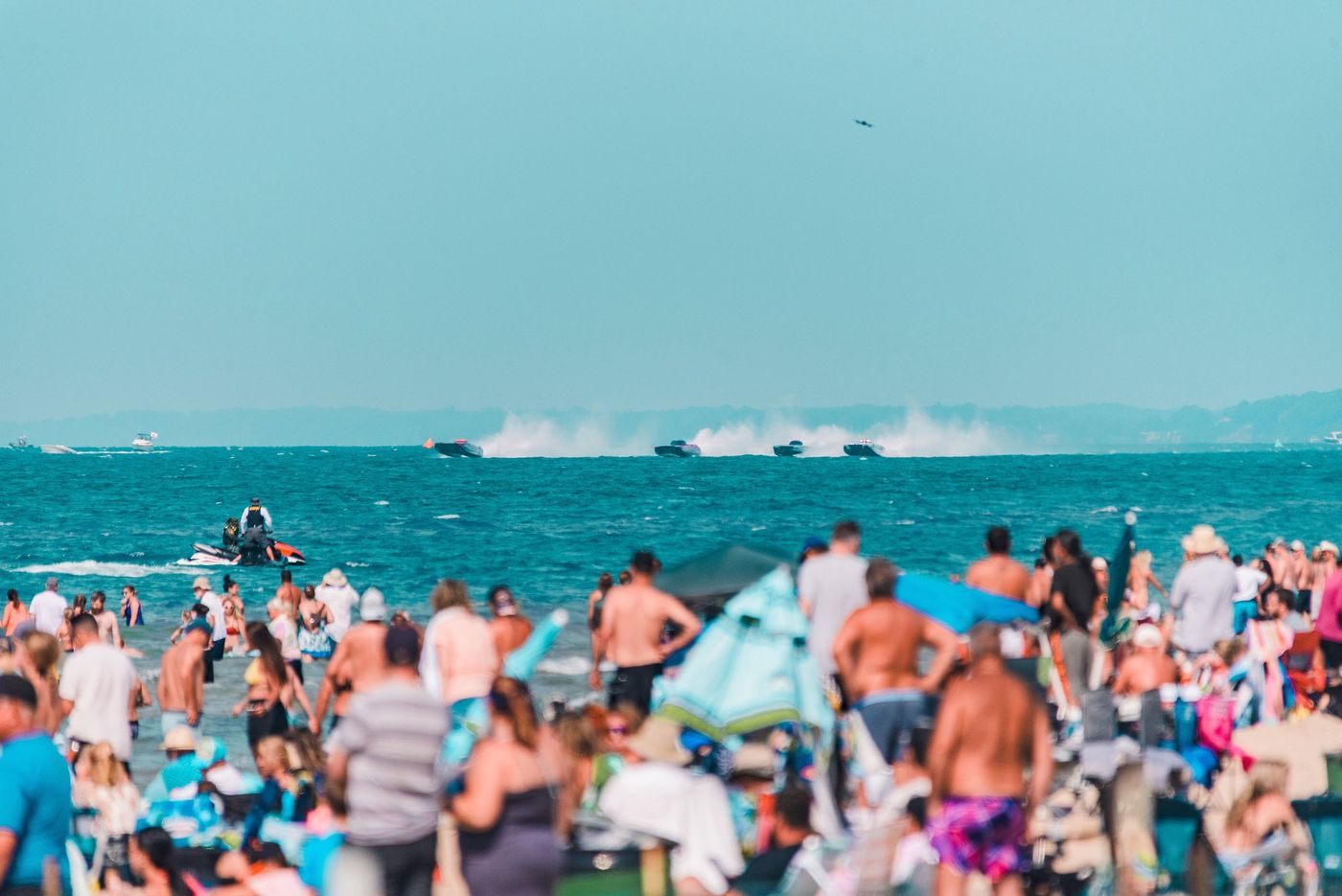
Clearwater has long been popular with spectators, but for those competing, it functions primarily as a stepping stone. The Key West World Championship follows just two weeks later, played out across the Florida Straits where tide, current, and shifting breezes test boats and crews more severely than any other venue in the sport. That race remains both the toughest and the most prestigious offshore event in the world, and for RWO it represents the season's ultimate destination.
The questions going into Florida are straightforward enough. Can XINSURANCE South maintain their perfect record in Pro Class 1 through to the end? Will Dirty Money's Chicago surge translate to form in Florida waters? Can Hi-Tech Deck reproduce its Super Stock performance, or will Coco's Monkey and the rest find something extra? Across the Bracket classes, who will hold their nerve when the GPS is watching every mile per hour?
Two rounds down, two remaining. Lake Michigan has delivered its verdict, and now the Gulf coast and the Florida Straits will settle the argument.