Boats are being bought, crews are forming and host port agreements are close, as Guy Chester confirms the 2028 Race Around Australia will go ahead.
The 2028 Race Around Australia will go ahead, with 11 expressions of interest already lodged and prospective crews buying boats for the 7,000 nautical mile challenge.
Race Director Guy Chester says some crews are already deep into preparing their yachts, while others are still searching for co skippers.
"The preparation for the Round Australia race is going really well," Chester told Go Boating New Zealand.
"We've now got 11 expressions of interest. People are buying boats, so it's a serious interest.
"Others are deep into preparation of their own boats. We've had a number of Zoom calls and comms with all the skippers and they're all really keen."
Not all 11 will necessarily make the start. Chester knows that from experience. His recent Solo Trans Tasman attracted 23 sign ups, 15 starters and 11 finishers.
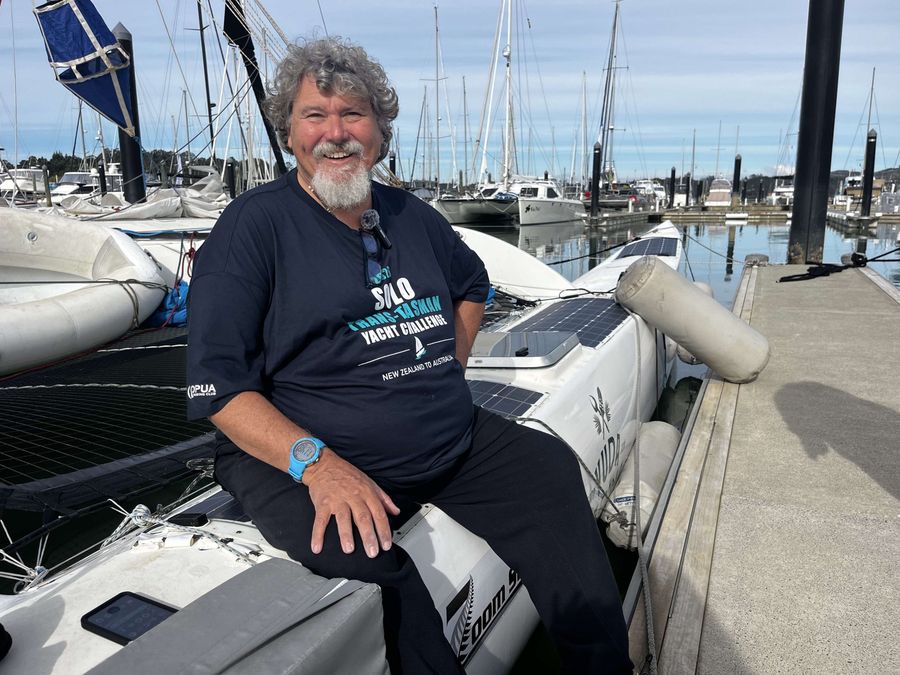
But there is no longer any question, he says, about whether the Australian race itself will happen.
"The event is going to happen. If those 10 entrants all turn up on a start line, we will run the race."
Then came the less formal version.
"We will run the event if it's like with a tinny and a shotgun. I will go to the start, the finish, and we'll send people off, go racing, and we'll say hi when they get home."
The ambition, of course, is considerably bigger than that.
Host port negotiations are in their final stages and Chester expects that work to be wrapped up within about six weeks. PredictWind is already backing the PredictWind Navigation Challenge, while talks with other potential sponsors have begun.
"We have all the host ports now in final stages of negotiation," Chester said. "So we're well advanced with the logistics for the race in each of the ports."
For now, ports come first.
"The next thing is to finalise all the logistics at the ports. And that is the biggest priority for me right now."
Sponsorship will follow, including support Chester hopes to secure around individual legs and stopover ports.
"We're looking for targeted sponsorship for the legs, which then promotes something about the leg," he said.
"We are looking for signature overall sponsors. But a big fish is a lot harder to catch."
The race is planned for around August 2028, although the exact start date has yet to be announced.
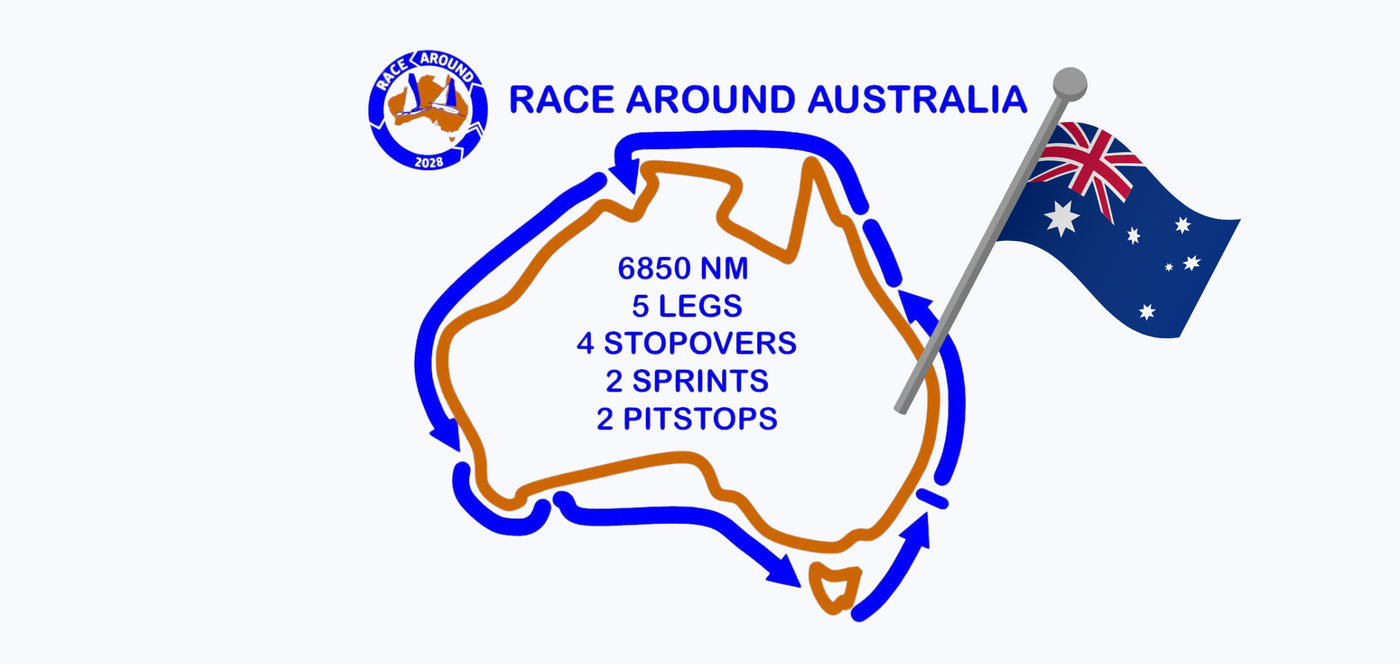
The proposed course sends double handed crews roughly 7,000 nautical miles around Australia, broken into five legs. Airlie Beach, Darwin, Fremantle and Hobart are planned as stopovers before the fleet returns to Sydney.
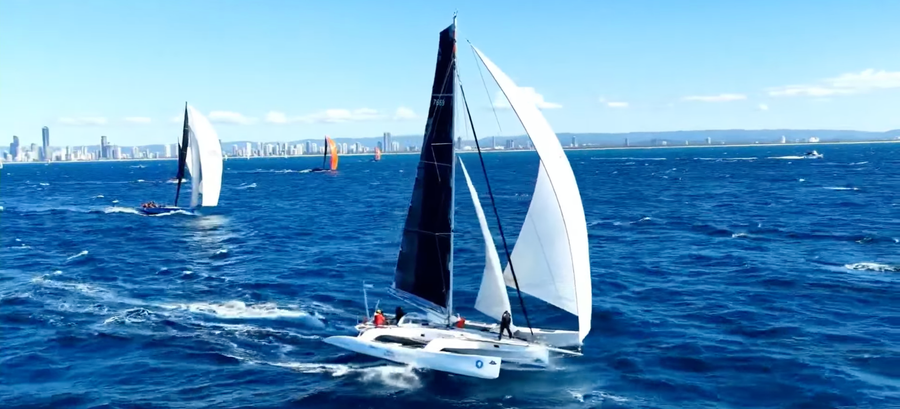
Both monohulls and multihulls can enter. The main hull length range is 40 to 60 feet, excluding bowsprits, bumpkins and davits. Proven seaworthy monohulls under 40 feet may also be considered if they meet the required performance threshold.
Every boat must satisfy stringent Category 1 safety requirements. An independent panel will also consider whether each yacht is suitable for the race.
Chester is keen to dispel any idea that competitors need a Grand Prix yacht to take part.
"We don't just want Grand Prix boats," he said.
He is particularly interested in sailors with modern monohulls around the lower end of the size range.
"The folk with the slightly smaller boats that are only a bit under 40 or only just 40, they really should consider entering because modern monohulls are pretty quick.
"They're still going to have a good showing in the race."
IRC will not be the only measure. Chester says the race will also use a performance handicap, opening the door for a broader range of boats to compete for results.
"Everybody's in with a chance."
His advice to those already preparing is simpler still. Sail the boat.
"I say to everybody that's getting their boats ready now, it's the crews that do the most miles together between now and the start, on their boat, that will be the ones that win."
New Zealand sailors are firmly on Chester's radar.
He says the race has deliberately been timed to avoid clashing with major New Zealand double handed events, and there are already connections to prospective entrants on both sides of the Tasman.
"We all know that the centre of double handed sailing, or one of the centres of double handed sailing, is New Zealand," he said.
"We've timed the event so it doesn't coincide with a Round North Island or Round New Zealand event."
Then came the invitation.
"We hope to get a few of you bloody Kiwi double handers to come out and show the Aussies."
Chester was speaking from Airlie Beach, where he was competing after finishing the Gold Coast to Mackay Yacht Race. He says conversations with other sailors suggest the idea is getting traction.
Boat owners have been approaching him with practical questions. Would their boat work? What would they need to change? Should they look for something larger and faster?
"Lots of people are talking about it and thinking about it."
There are still two years of preparation ahead, and Chester is realistic about how much can change before the fleet assembles.
But the question has shifted.
It is no longer whether someone will organise a Race Around Australia.
It is who will turn up to race it.