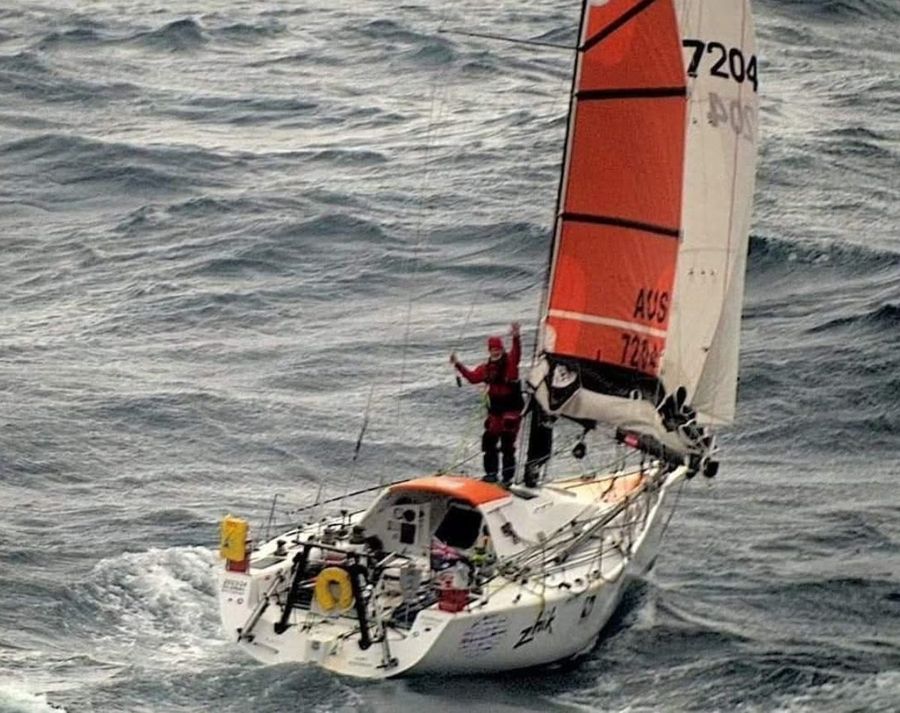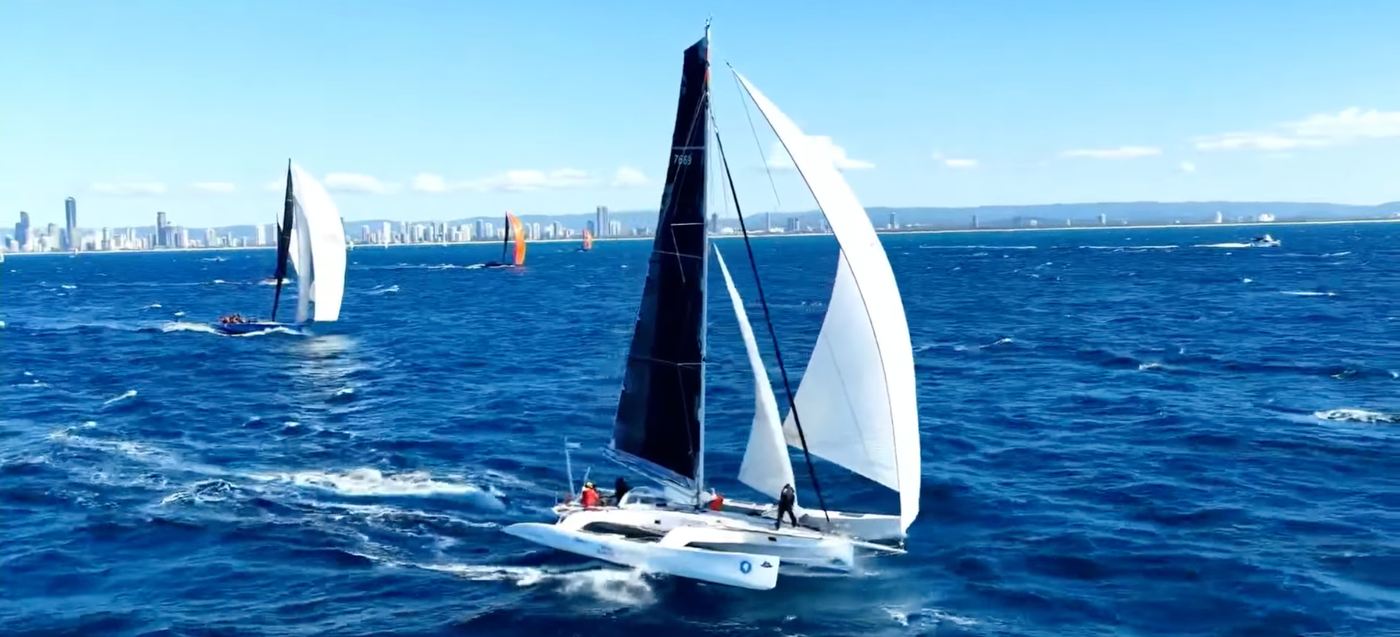
When Oceans Tribute joins the starting line for the Race Around Australia 2028, shet will carry more than just a crew and an inventory of sails. She'll carry a direct genetic link to one of the greatest underdog stories in modern ocean racing. Forty years after 25 boats first attempted the grueling Bicentennial lap of the continent, the 2028 edition is shaping up to be a profound bridge between generations; honoring a gritty, hand-built era while enforcing the uncompromising safety realities of modern offshore racing.
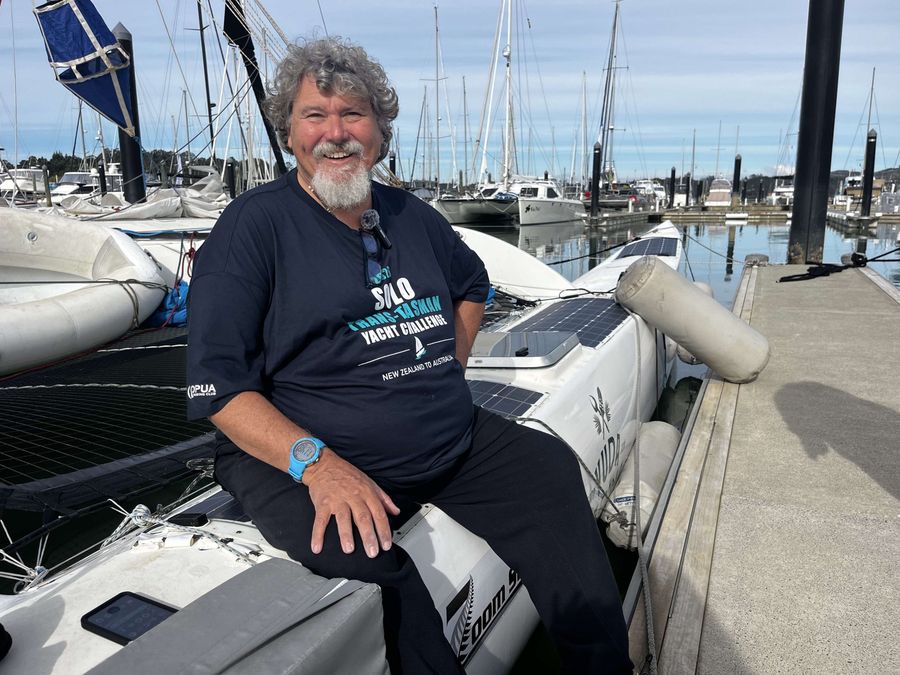
Guy Chester, the Race Director for the 2028 edition, has done something rare in modern sports administration: he has put himself on the very course he is organising. But Chester isn’t just entering any boat. Oceans Tribute is the direct sister ship to Bullfrog Sunblock (later renamed Verbatim), the iconic 40-foot Lock Crowther trimaran that captured the sailing world's imagination during the original 1988 Bicentennial race. Built in a sugarcane paddock by Ian Johnston and Cathy Hawkins while they lived out of a tiny caravan, Bullfrog Sunblock defied the odds to finish second overall in the multihull division. They were beaten only by Sir Peter Blake’s purpose-funded, professionally crewed 60-foot giant, Steinlager 1.
It was that exact David-and-Goliath performance that originally sparked Chester’s desire to lap the continent. By entering Oceans Tribute, he is invoking the spirit of an era where intimacy with a boat – knowing every bulk-head, laminate, and quirk – was the ultimate competitive advantage.
The return of the veterans
Chester won’t be the only one chasing ghosts around the 7,000-nautical-mile course. Gavin Le Sueur, who claimed third place in 1988 aboard the Crowther trimaran John West alongside his now-wife Catherine, has officially signed up for the 2028 lap. Forty years later, LeSueur returns as the first entry in the 2028 race, this time racing with his son Fletcher. Earlier Le Sueur was weighing his options, calculating whether to campaign his Roger Hill 52 multihull, Favourite Child, or another multihull better optimised for the grueling, tide-ripped northern legs. The latest from the organisers sees him racing aboard a sistership to Verbatim.
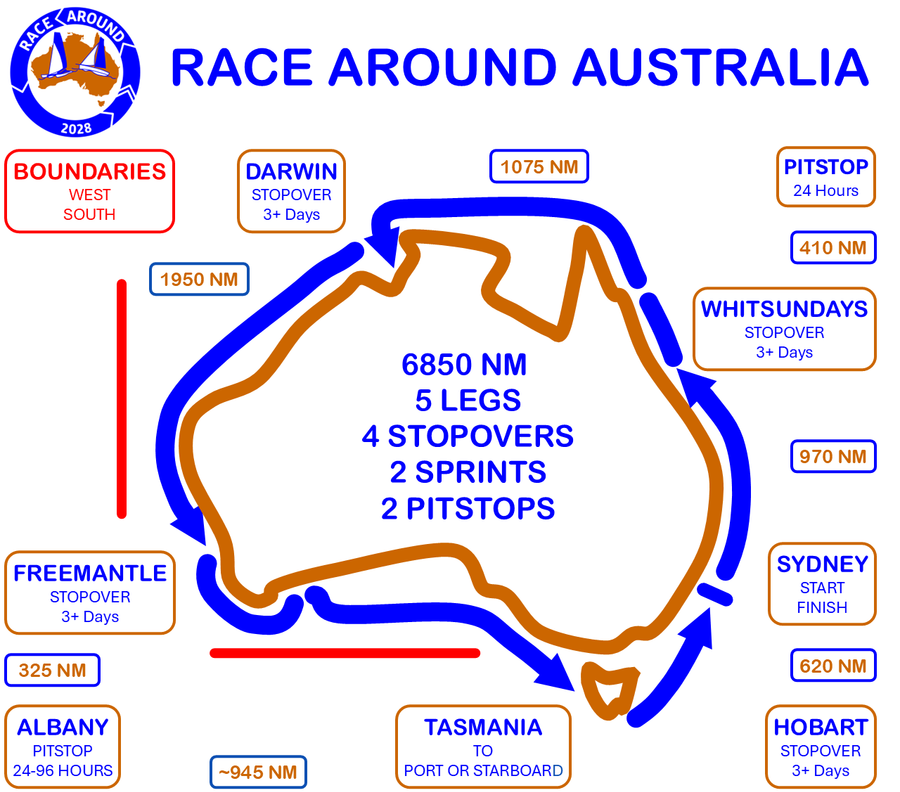
Le Sueur’s return brings an invaluable repository of institutional knowledge to the fleet. He understands the psychological toll of the five-leg, four-stopover route – from the treacherous reef navigation of the Whitsundays and the blistering heat of Darwin, to the punishing swells of Fremantle, the Southern Ocean, and Hobart before the final run home to Sydney.
A staggering evolution in safety
While the geography of the Australian continent remains unchanged, the reality of racing around it has evolved radically. The generation shaping the 2028 fleet’s safety brief looks at the ocean through a completely different lens than the pioneers of 1988.
Serving as the committee’s safety advisor is Bruce Arms, the legendary sailor who in 2011 set the still-standing solo, non-stop, and unassisted around-Australia record of 38 days, 21 hours, and 41 minutes. Armed with that harrowing firsthand experience, Arms’ requirements for the doublehanded fleet are uncompromising.
In 1988, survival was largely a matter of grit, luck, and makeshift engineering. When Hawkins and Johnston struck a sandbank behind the Great Barrier Reef, fatiguing their rudder shaft to failure, they simply rigged a drogue and bridle to steer the rest of the way home. When 70-knot winds screamed across the Great Australian Bight, they streamed drogues and held on.
In 2028, such romanticism is replaced by strict redundancy. Arms is mandating that every boat carry two active, running autopilots, with a third stashed under a bunk. In modern shorthand or doublehanded racing, sleep deprivation is the silent killer; losing your steering system is effectively a death sentence for a campaign. Furthermore, every sailor must be equipped with personal locator beacons (PLBs), Automatic Identification Systems (AIS), genuinely small storm sails, and survival suits that are actively worn on deck – not buried in a locker. None of this technology existed in any serious form during the 1998 Bicentennial race, or even during Arms' own record-breaking run.
Skin in the game
This stark contrast between past and present is precisely what makes Guy Chester’s dual role as Race Director and competitor so compelling. In an era where sports regulations are often criticised as being written by bureaucrats behind desks, Chester is quite literally putting his skin in the game. The very safety standards he is overseeing and enforcing are the ones he will have to live by in the middle of the Great Australian Bight.
When the already 10-strong fleet sets sail in 2028, it will be a celebration of how far offshore racing has come. But as they all carve through the swells, their hulls will serve as a reminder that no matter how advanced the tracking, safety gear, or autopilots become, success still relies on the timeless principles demonstrated in 1988: brilliant routing, structural respect, and an unbreakable bond between a sailor and their boat.