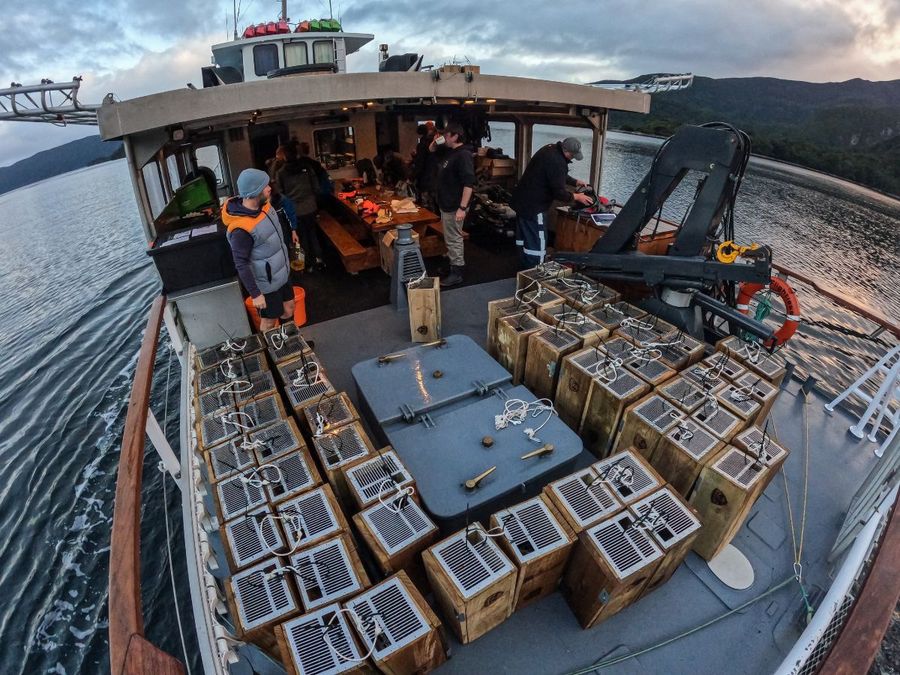
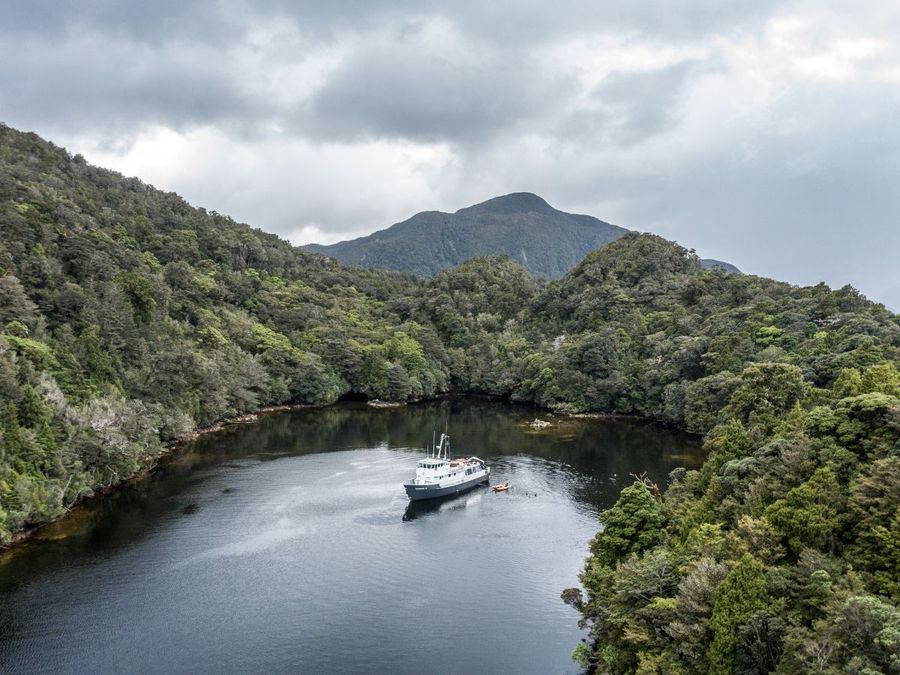
Dusky Sound keeps its secrets well. The fiords rise steeply from dark water, rainfall is relentless, and the silence carries a weight of its own. Getting there takes effort. Once there, weather, distance, and sheer remoteness set the terms. Nothing moves quickly.
[video width="960" height="540" mp4=" autoplay="true"][/video]
Pure Salt operates year round in this environment, without concession to easier conditions.
Founded by Maria Kuster and Seán Ellis, Pure Salt has built its operation inside one of New Zealand's most demanding marine environments. The experience accumulated across seasons of navigating Fiordland has done more than sharpen their seamanship. It has produced a deep and practical understanding of what responsibility looks like inside a World Heritage area.
Pure Salt is structured as a social enterprise, with conservation not appended to the business model but embedded within it. The work is not a gesture toward balance, and it is not marketing. It is part of how the charter runs from one day to the next. That integration is the reason Pure Salt has been named a semi-finalist for the 2026 Sustainability Leader of the Year award, presented as part of the Kiwibank New Zealander of the Year Awards.
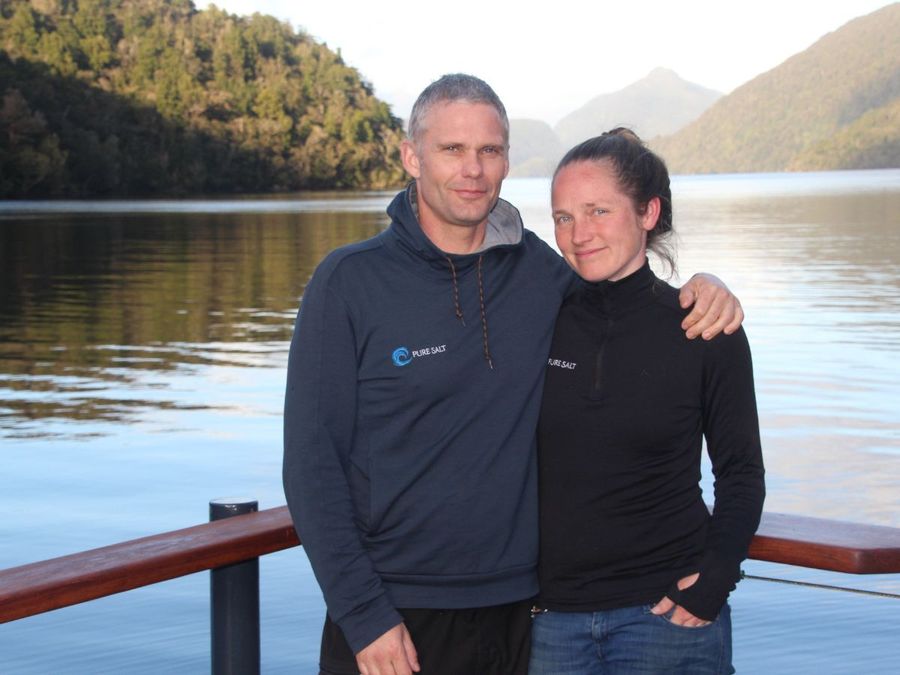
The conservation involvement grew from a direct and practical question put to the Department of Conservation: where was help actually needed. Initial efforts centred on predator trapping at Mamaku Indian Island. As gaps emerged, the scope widened to take in Long Island, Pickersgill Harbour, and surrounding islands.
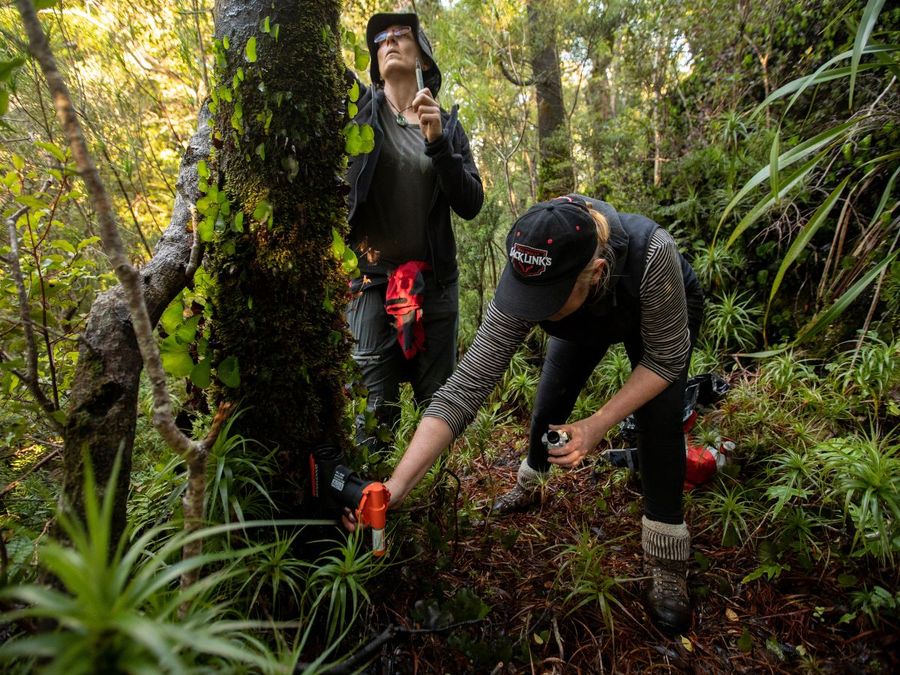
What began in one location has since expanded considerably. Pure Salt now contributes to predator control across substantial areas of Dusky Sound, among them Mauikatau Resolution Island, the fifth largest island in New Zealand. That contribution involves transporting field teams, assisting with trap checks, supporting monitoring work, maintaining camera networks, and helping run regular trips into steep and densely forested terrain where access is awkward and the conditions rarely cooperate.
The operation also plays a role in trialling new approaches to predator detection and monitoring, providing vessel time and practical assistance to projects evaluating cameras, sound lures, and other emerging methods. None of this happens in isolation. DOC staff, iwi, scientists, and volunteers all work alongside Pure Salt across the fiord. In Dusky Sound, that kind of collaboration is not an aspiration. It is simply how things get done.
Conservation in Fiordland does not end where the land meets the water. Below the surface, the environment becomes, if anything, more vulnerable.
Rainfall carries tannins through forest soils and into the fiord, where the stained freshwater sits atop the saltwater beneath, reducing light penetration and replicating deep-sea conditions in surprisingly shallow zones. Species that would ordinarily require considerable depth to reach exist here within a diver's range.
Black corals, glass sponges, and other slow-growing organisms are found throughout these waters and are easily disturbed. Anchoring, sediment displacement, and the risk of invasive species all represent ongoing concerns.
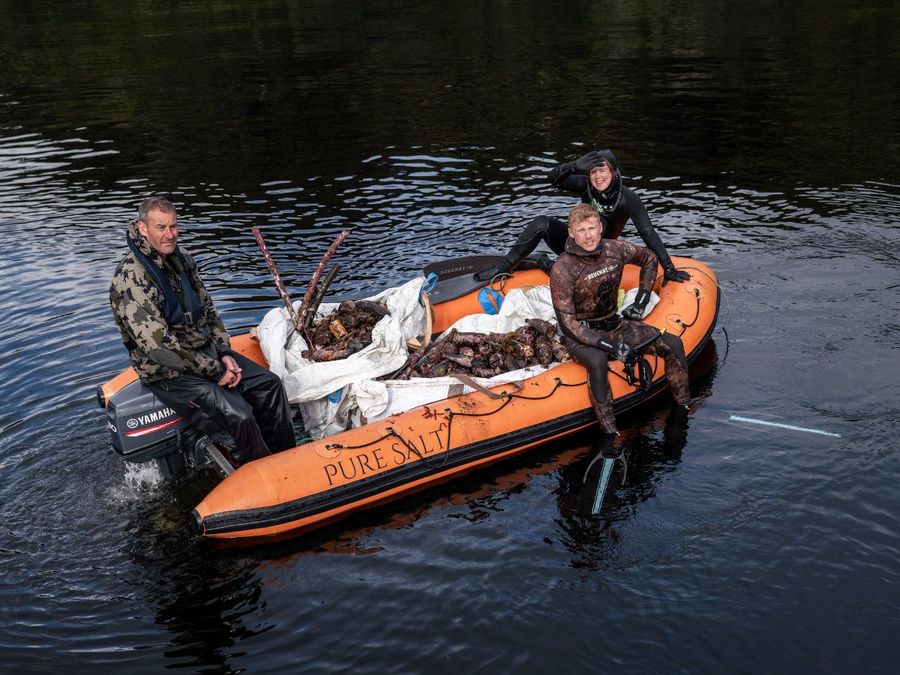
Pure Salt contributes to marine conservation through underwater clean-ups, biosecurity awareness, and fishing practices calibrated to the sensitivity of the surrounding environment. In Dusky Sound, how people move through the fiords is every bit as consequential as what they remove from them.
The nomination reflects conservation worked into the fabric of everyday operations, delivered trip by trip in a place that has no patience for shortcuts and no interest in appearances.
In Dusky Sound, that is often the only approach that produces anything worth keeping.