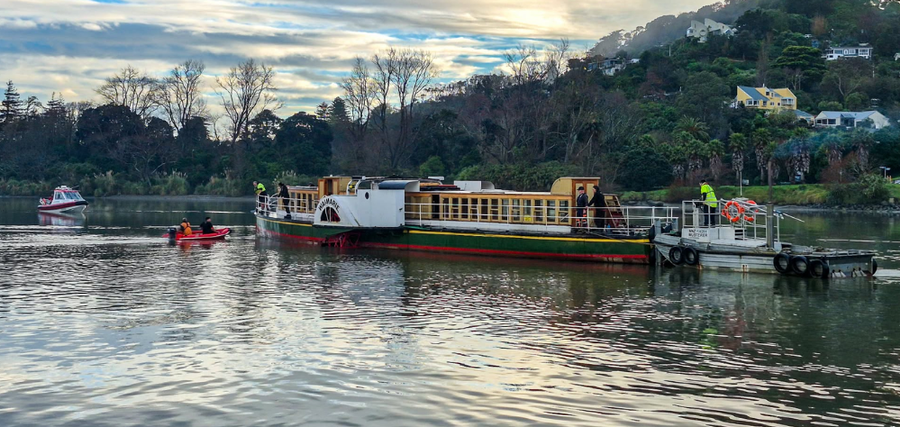
Whanganui’s iconic 1899 riverboat, the PS Waimarie, undergoes an engineering-first hull lift for essential deck maintenance and inspections.
Current operations and maintenance
Ever since her grand return to service at the turn of the century, the historic 100-foot vessel – originally constructed in 1899 – has transported thousands of travellers along an 88-kilometre river route. This scenic journey runs between the town of Whanganui and Pipiriki, an isolated historic outpost today celebrated for jetboating and which marks the southern entryway to Whanganui National Park.
Yesterday, the 80-tonne riverboat completed a downstream journey to the historic Whanganui Port in Castlecliff, navigating beneath the Victoria Street Bridge. The voyage was successfully executed with technical help from Johnson Brothers Ltd who have been dredging the Whanganui River and navigational monitoring by Coastguard Whanganui. Upon arrival, the massive boat was hauled out of the river by the engineering team at Q-West Boat Builders.
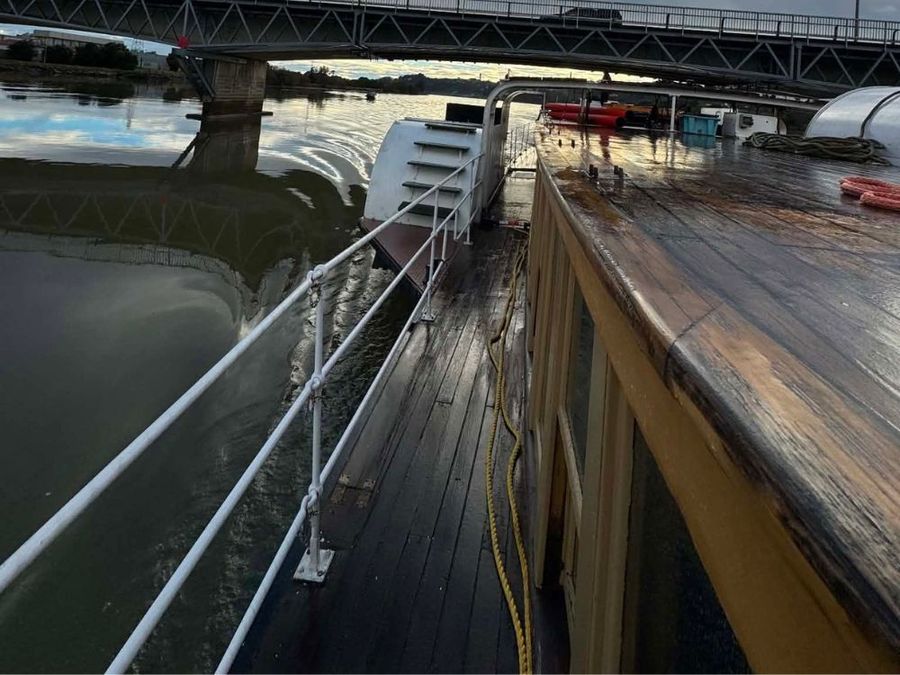
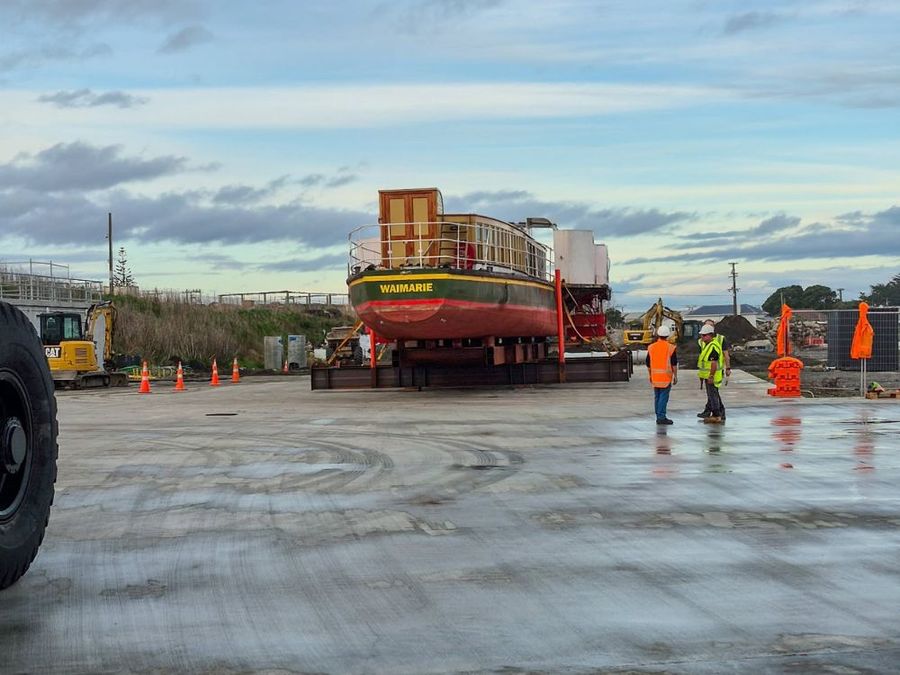
PS Waimarie is scheduled to remain with Q-West for approximately five months while it undergoes comprehensive servicing. This intensive maintenance period features a major structural replacement of her timber decks alongside essential hull, preservation, machinery, steam and safety work, and a mandatory out-of-water safety inspection.
This logistical phase presented unexpected hurdles, as the Waimarie Company was forced to rapidly secure a new dry-dock site last month. The organisation coordinated with a local business to utilise an empty industrial yard, quickly pouring a temporary concrete hardstand for the vessel. Furthermore, the standard industrial travel lift proved unfeasible for this specific job. To accommodate these limitations, the steamer completed her transit to the port with both her upper roof and steam funnel detached. Team members from Commercial Dive Services NZ Ltd managed the underwater rigging, positioning heavy lifting straps to guarantee a secure pull. In what is believed to be a global engineering first, the ship was hoisted directly by her side paddle wheels using specially engineered lift beams built for this inspection cycle.
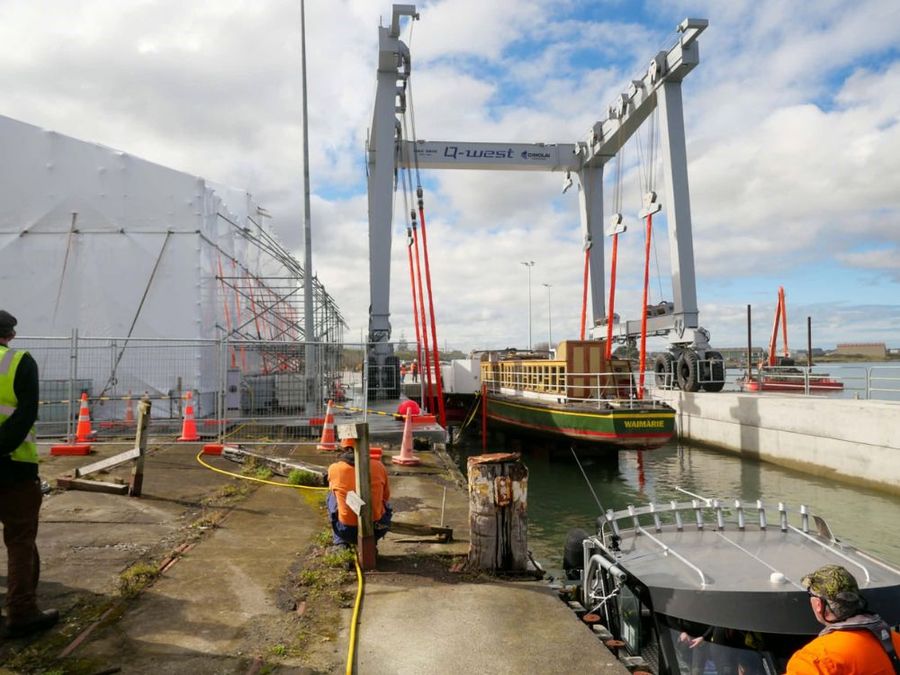
"The process involved far more political hurdles and unexpected complications than we ever bargained for, but our team remained resolute in utilising every available resource to see this project through," the operating company shared in a social media update.
Industrial origins in London
The vessel originally arrived in New Zealand as a giant assembly kit. Her creators, London’s Yarrow & Co. Shipbuilders, were world-renowned for crafting specialised shallow-draft riverboats at their shipyards in Poplar. The firm followed a strict production method: fabricating the hulls in England, marking every component for reassembly, dismantling the structure for oceanic freight, and finally rebuilding the vessels once they reached their destination countries.
When she first hit the water, the boat was named the Aotea and was run by the Whanganui Settlers River Steamship Co., serving as a vital link for regional mail, cargo, and passenger transit. A major ownership shift occurred in 1902 when she was purchased by rival businessman Alexander Hatrick. Originally from Australia, Hatrick had moved to New Zealand in 1875 and built one of the young nation's most formidable shipping and trading empires. He quickly re-christened the Aotea as the Waimarie, a Māori name translating to "peaceful waters" or "good fortune." An exceptionally skilled marketer, Hatrick was the driving force behind turning Whanganui’s river cruises into an international tourist phenomenon, sending travellers up to Pipiriki and linking with his broader fleet toward Taumarunui. In 1910, his promotional efforts extended to sponsoring the global film studio Pathé Frères to shoot an 18-minute documentary highlighting the river and his twelve-strong fleet of riverboats.
Navigational demands and ship architecture
Steering a vessel along this waterway was an ongoing challenge. Anyone who has navigated the Whanganui River knows the dangers of its rocky, shallow rapids – which explains why the Waimarie was engineered with an exceptionally shallow 360mm (14-inch) draft – and the floating debris that choked the channels after heavy rains. Mirroring the design of her sister ships, the vessel relied on a dual side-paddle wheel setup for propulsion.
Boasting the widest hull design of any work boat on the river, the Waimarie Company tells us she successfully negotiated 239 separate rapids to deliver essential mail and freight to isolated communities. Alongside daily transport runs, the steamer hosted public holiday excursions, followed competitive rowing regattas, and occasionally ventured past the port boundaries under moonlight into open ocean waters, travelling toward South Beach just below the river's mouth.
Obsolescence and decades underwater
The completion of the local River Road in 1935 fundamentally altered regional transit, allowing motor vehicles to displace water transport and rendering the steamer obsolete. The ageing vessel was pulled from active duty in 1949 due to a failing boiler system. Left moored and ignored at Hatrick's Wharf, she fell victim to severe vandalism, causing the hull to take on water and list sharply. Before emergency crews could intervene, a massive river flood inundated the damaged hull with heavy silt. Left to the elements, the Waimarie remained submerged and decaying on the riverbed for the next forty years – abandoned by her owners but kept alive in local memory.
Salvage and community restoration
In 1992, a group of dedicated local maritime enthusiasts established a community heritage trust with the ambitious goal of raising, repairing, and operating the historic paddle steamer once more.
The company further tells us that the initial extraction from the river mud yielded numerous historical artefacts, including her original starboard running light, a brass lamp, and the ship's whistle. The massive restoration project was eventually designated as Whanganui's official Millennium Project, demanding seven years of intense physical labour and community passion. The ultimate triumph of the rebuild highlighted the profound volunteer spirit of the town's residents, who contributed over 67,000 hours of unpaid labour to solve every technical challenge that arose.
Rebirth into the new millennium
She was officially returned to service in 2000. Today she is New Zealand's only remaining authentic paddle steamer. Work is expected to take about five months and PS Waimarie should be back in service early next year.
A night to remember: A Toast to PS Waimarie