Portimão delivered more than medals this year. For a group of emerging sailing nations, the 2026 World Sailing Inclusion Championships were a doorway into international Para Inclusive Sailing, built on three days of coaching, education and support that didn't stop once the racing started.
The event also showed how far World Sailing's Inclusive Development Programme (IDP) has travelled since its earliest days. It began life as the Para Development Programme, created by Dan Jaspers, and has since grown into a far broader pathway linking Foundation and Performance coaching, specialist education, national programme building and genuine opportunities to race internationally.
Seeing that vision realised in Portimão, with Jaspers himself back on the coaching team, carried real weight. It was a reminder of the distance travelled, and proof of what's still possible.
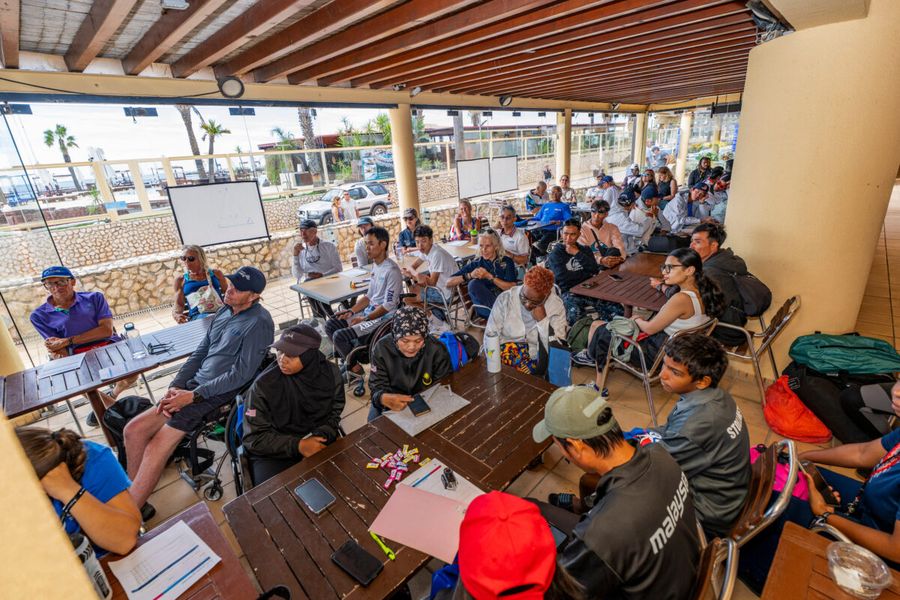
Forty-four participants, sailors, coaches and support staff, took part in the three-day IDP ahead of the championships. The programme combined practical coaching with specialist education and shared learning sessions.
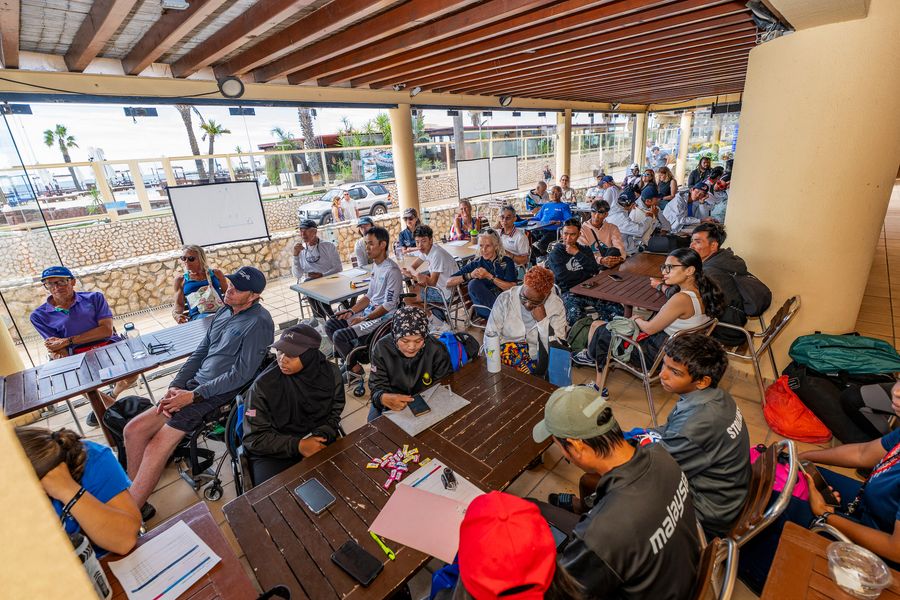
Crucially, the support kept going once the regatta began. Running the IDP directly alongside the championship meant development flowed straight into competition, with continued guidance for those who needed it most.
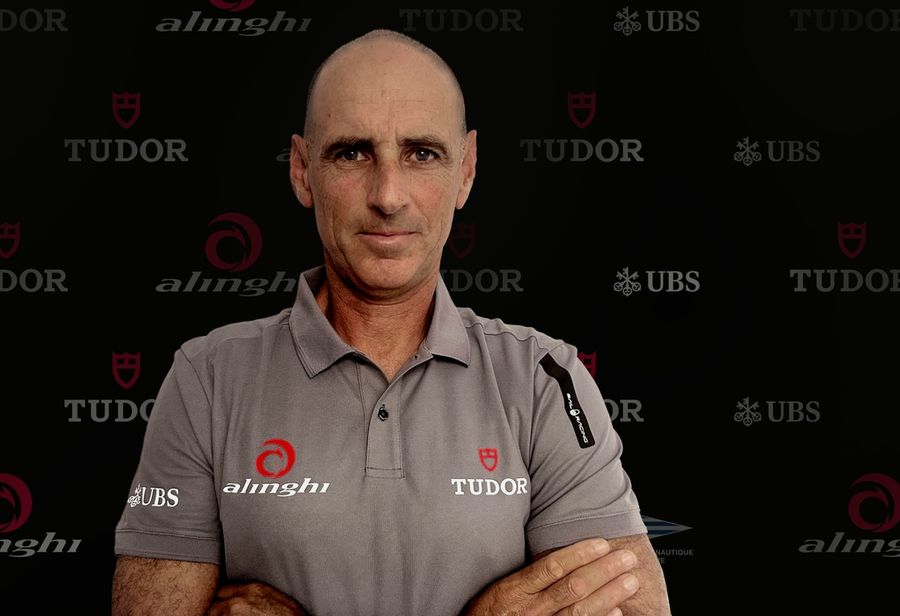
Five coaches anchored the programme. Dan Jaspers (GER) led Foundation-level coaching and wider national programme development, helping emerging nations build both sailor skills and the structures behind their own Para Inclusive programmes. As the architect of the original PDP, having him back brought things full circle.
Simon Rosier (AUS) and Grant Anderson (AUS) handled Performance-level coaching, sharpening racing technique and championship preparation. Logan Bell (GBR) continued his own development as an apprentice coach, leading support for sailors in the Intellectual Impairment and Cognitive Impairment disciplines. Guillaume Colin (FRA) led coaching in Para Wing, one of the sport's newest and most closely watched growth areas.
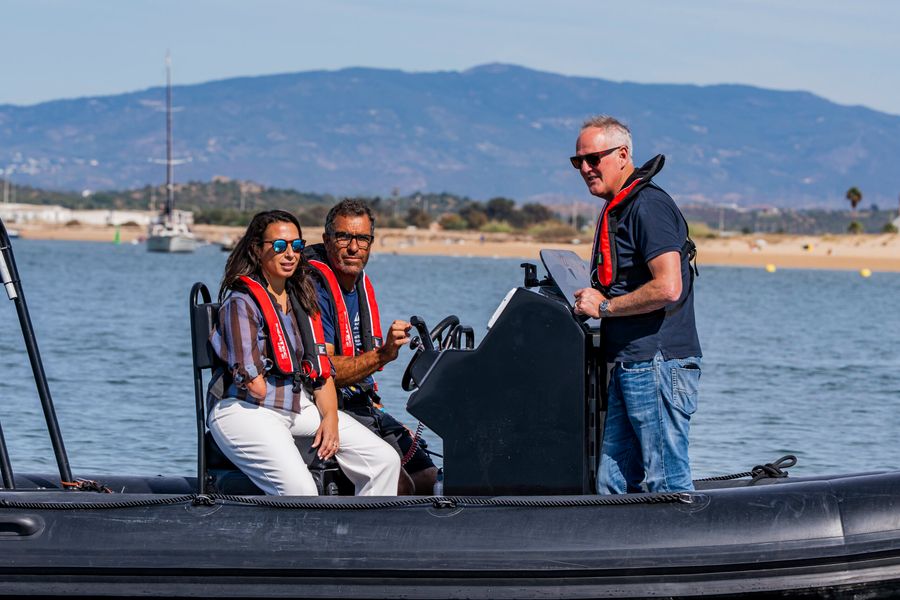
That coaching support carried on well beyond the IDP itself. Coaches stayed on hand through the championships, particularly valuable for sailors from emerging nations who had travelled without their own support teams. For many, having an experienced international coach to talk through race preparation, or simply offer reassurance, is rare. It can shape an entire championship.
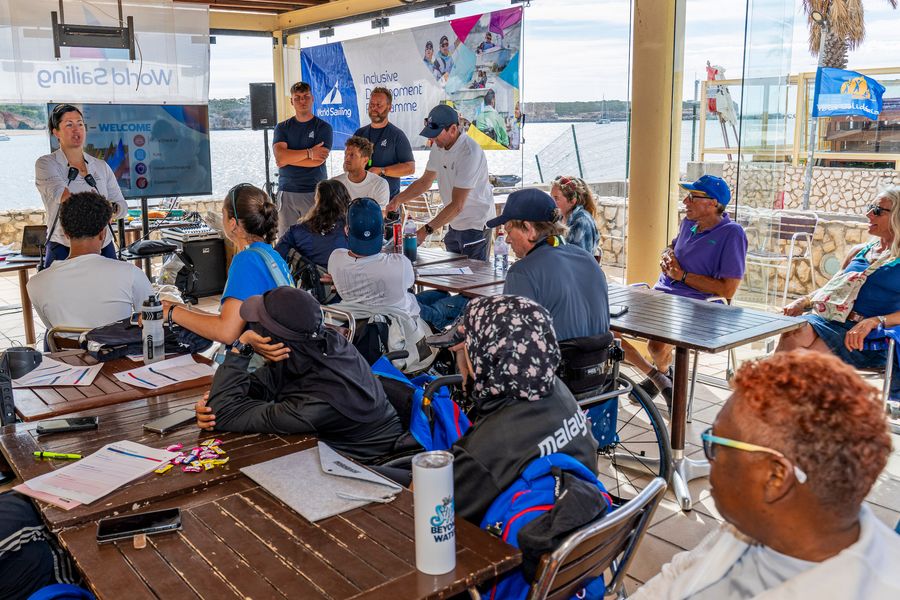
One of the more striking developments this year was the link with the Challenger Class, whose backing opened doors for sailors from India, South Africa, and Trinidad and Tobago. Bringing the Challenger fleet into the championships, alongside equipment and coaching, turned development opportunity into real participation.
FoilDrive's support was notable too. Four units were made available to Para Wing sailors for training in lighter winds, giving them extra time on the water and showing how equipment innovation can help a developing discipline grow.
Education off the water mattered just as much. Helen McKenzie, World Sailing's Head of Classification, ran classification education sessions, including briefings on upcoming rule changes aligned with the IPC Code. Gillian Sanders OLY, World Sailing's Integrity Manager, delivered anti-doping education.
Special Olympics' Iris Brettschneider led a session on coaching athletes with intellectual and cognitive impairments, and also flagged a new partnership between World Sailing and Special Olympics aimed at widening pathways for athletes with intellectual disabilities. Lynne Beal, Chair of the International Jury, covered racing rules, while Chief Umpire Manuel Huensch ran a session on visually impaired umpired fleet racing, a format still finding its feet in international competition.
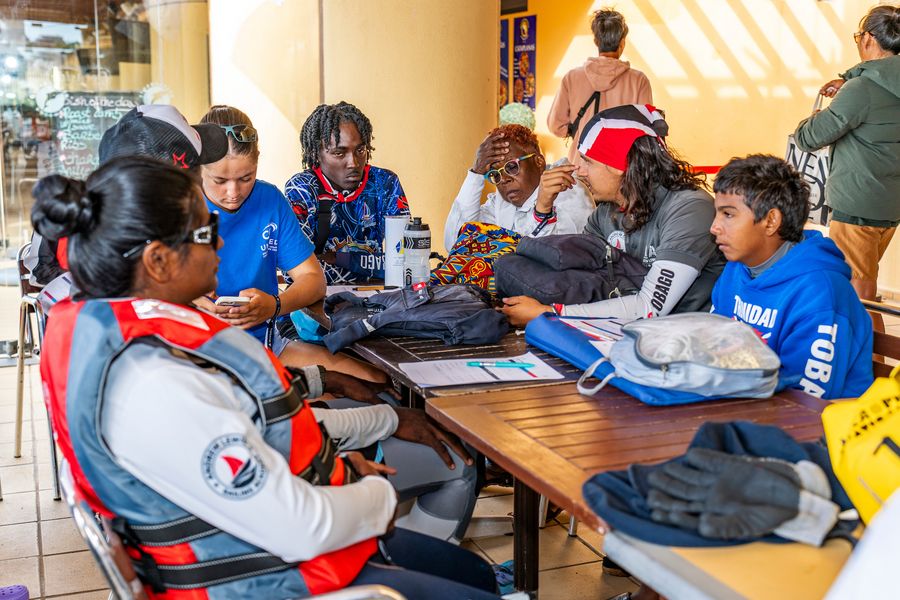
Funding mattered as much as coaching. World Sailing's America's Cup funding helped ease the financial load for emerging nations, for whom international travel with specialist equipment is often the real barrier to entry. Sometimes it's the difference between watching from home and standing on the start line.
From Foundation programmes in Antigua and India through to Portimão, the pathway is starting to join up properly. Sailors who built skills regionally are now racing internationally, and national programmes are gaining the knowledge to sustain that growth themselves.
Looking to 2027, the aim is to build on that momentum.
Because the real measure of an IDP was never just those three days. It's what sailors, coaches and nations do afterwards.