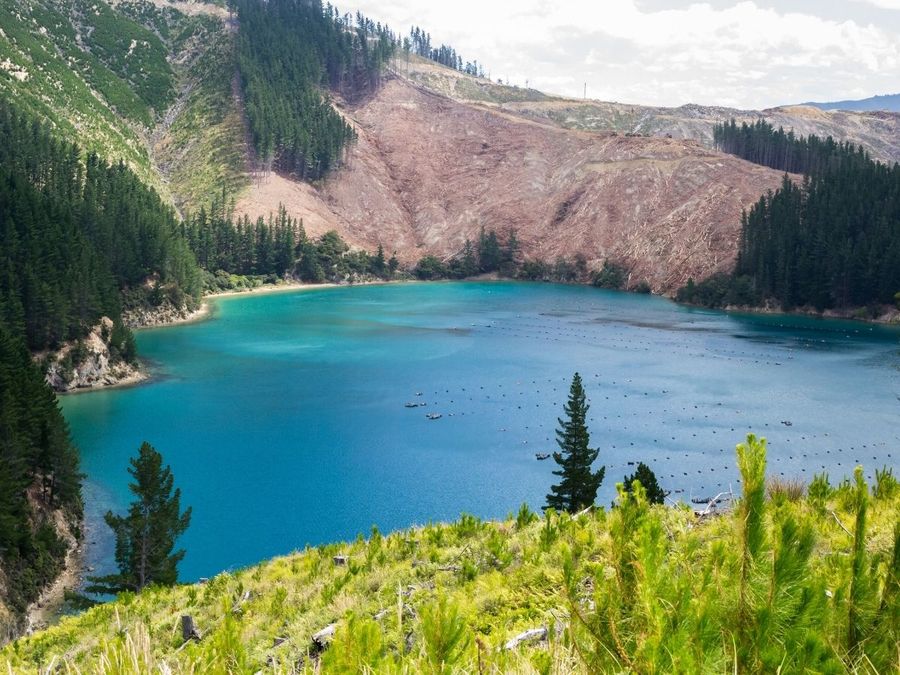
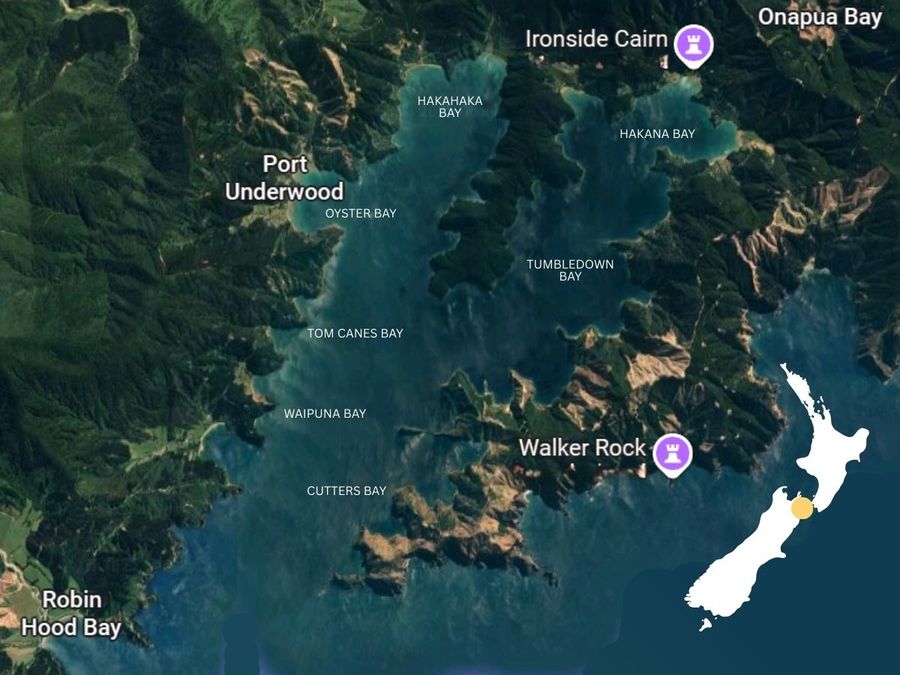
Te Whanganui sits at the south-eastern fringe of the Marlborough Sounds, its narrow mouth opening just north-west of Cloudy Bay. The harbour faces south, which means most conditions leave it reasonably sheltered, though a strong southerly can roll straight through the entrance and announce the proximity of the open sea.
The inlet runs 9.3 kilometres from end to end and stretches 3.5 kilometres across at its broadest point. Forest and pine plantations cloak the steep hills that climb sharply from the water's edge, giving the whole place an enclosed, almost secretive quality. Channel depths range from 10 to 20 metres, shoaling as the water nears shore. A tongue of land splits the harbour into two distinct arms, each with hidden bays folded into their margins.
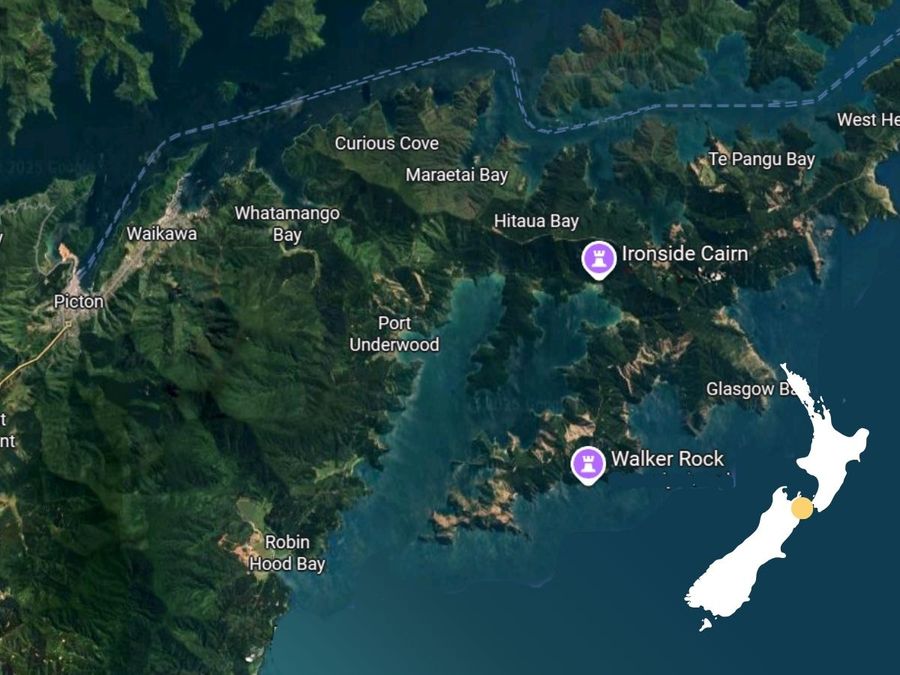
It lacks the grand scale of Queen Charlotte or Pelorus Sounds, but that does not mean room is tight. Port Underwood is in fact larger than Bon Accord Harbour on Kawau Island, where 50-footers move around without difficulty. There is plenty of sea room here, yet the harbour never loses its sense of intimacy. Along the foreshore, quiet beaches punctuate the shoreline, most of them reachable only by tender or a boat of shallow draught.
The layers of history at Port Underwood run both ashore and beneath the waterline. Whaling stations appeared along its shores in the 1820s and 1830s, with John Guard establishing one at Kakapo Bay. By 1840 around 150 Europeans had settled here, making it arguably the largest European settlement in the South Island at that time.
Some of that maritime past now rests on the seabed. Between Oyster Bay and Whangataura Bay lies a wreck site that can only be reached by water. A short distance south at Blackball Point, the remains of the Blackball can still be found in the shallows. The vessel's story is a curious one: towed from Wellington in 1923 to serve as a coal hulk for river protection at the Wairau, she never cleared the Wairau Bar. She drifted into Port Underwood on an inadequate anchor and eventually grounded on the point. Kauri planks and iron were salvaged from the hull, which was later burnt, and remnants of her structure remain visible to this day.
The harbour carries the imprint of modern industry as well. Mussel farms occupy several bays, exotic forestry dominates the ridgelines, and the commercial wharf at Hakahaka Bay serves the aquaculture industry. Beyond these working pockets, though, the harbour settles into a quieter register: baches tucked into the bush, campsites near the foreshore, and a coastline that feels far more like retreat than industry.
Port Underwood sits roughly 29 nautical miles from Waikawa and Picton marinas, a run of just under five hours in a yacht cruising at 7 knots and considerably faster in a motor launch. Many skippers prefer the sea passage to the demanding roads, and holding throughout the harbour is good. For those arriving by trailer boat, Oyster Bay is the main access point, complete with a wharf, boat ramp, Diesel BSP Fuels, and limited parking. Smaller craft can also launch at Tom Canes Bay near the harbour entrance, where a sheltered beach makes for easy water access.
The road to Port Underwood is scenic but demands patience. From Picton, Port Underwood Road passes through Waikawa, skirts Whatamango Bay, climbs steeply, then drops down into Oyster Bay. Coming from Blenheim, the route rises sharply out of Rarangi, winds past Whites Bay and Robin Hood Bay, then loops north. This Blenheim approach was closed for some time following slips and flood damage and has only recently reopened. Heading further east, Tumbledown Bay Road pushes deeper into the harbour, though its narrow gravel surface makes progress slow and it is not suited to launching trailer boats.
The harbour is generous with anchorages. Ocean Bay, with its mud bottom, has a reputation for excellent holding. Oyster Bay and adjacent Hakahaka Bay are both well regarded, and Opihi Bay, Ngakuta Bay, Tumbledown Bay, Jerdans Bay, and Pipi Bay all offer reliable overnight stops. Most of these seabeds are sand or mud, and depths drop quickly to 10 to 15 metres, so carrying excessive chain is not the priority. What matters more is managing scope carefully. Scope refers to the ratio of anchor rode deployed to the vertical distance from the bow down to the seabed, and in gusty conditions a generous scope is what keeps the anchor biting. Experienced skippers tend to up-anchor early when a southerly starts building rather than wait for a forecast to confirm what the conditions are already suggesting.
Snapper may not be abundant, but the fishing is far from disappointing. Blue cod work the outer reefs, and in summer kahawai erupt on the surface in free-feeding schools, usually announced from a distance by flocks of wheeling seabirds. Butterfish, moki, tarakihi, and rig sharks add further variety. The regulations here are strict and should be treated seriously: blue cod carry a 33 cm minimum size and a two-fish daily bag limit per person, with additional seasonal closures during spawning periods. Respecting these rules is what keeps the fishery worth having.
Beneath the surface, Ocean Bay has earned a name for crayfish, and freedivers also find kina, pāua, and butterfish in the shallows. Snorkellers and divers generally find the harbour rewarding.
Ashore, the harbour holds its share of small discoveries. Ngakuta Bay is home to the Ironside Cairn, a memorial to Reverend Samuel Ironside and the first Methodist mission, established here in 1840. South of Port Underwood, Whites Bay is valued for swimming as well as its place in history as the site of New Zealand's first telegraph cable, laid in 1866. Robin Hood Bay, also to the south, offers surf and a DOC campsite. To the north, Walker Rock marks the Cook Strait cable protection zone, its sandy beach and sheltered water popular with kayakers. Beyond these named spots, the simpler pleasures carry their own appeal: walking the beaches, picnicking, snorkelling in clear shallows, or drifting from bay to bay by dinghy.
Port Underwood brings together history, diving, fishing, and anchoring in a combination that sets it apart from much of the wider Marlborough Sounds. For anyone prepared to make the passage from Picton or Waikawa, or willing to commit to the gravel roads, what waits on the other side justifies the effort: dependable anchorages, productive fishing, rewarding diving, and quiet DOC campsites with very few neighbours.
Carry enough chain, think through your anchorage choice before you arrive, and keep a watchful eye on the southerly. Whether you are poking around the wreck of the Blackball or exploring the coastline by dinghy, Port Underwood offers a rugged, intimate alternative to the more polished cruising grounds of Queen Charlotte and Pelorus Sounds, a harbour with genuine character and plenty still to discover.