New Zealand's Cook Strait ferry network is under renewed strain this week, with two vessels simultaneously out of action, prompting a Green Party warning about the long-term viability of the crossing and leaving freight operators, contractors, and tourists stranded on both sides of the strait.
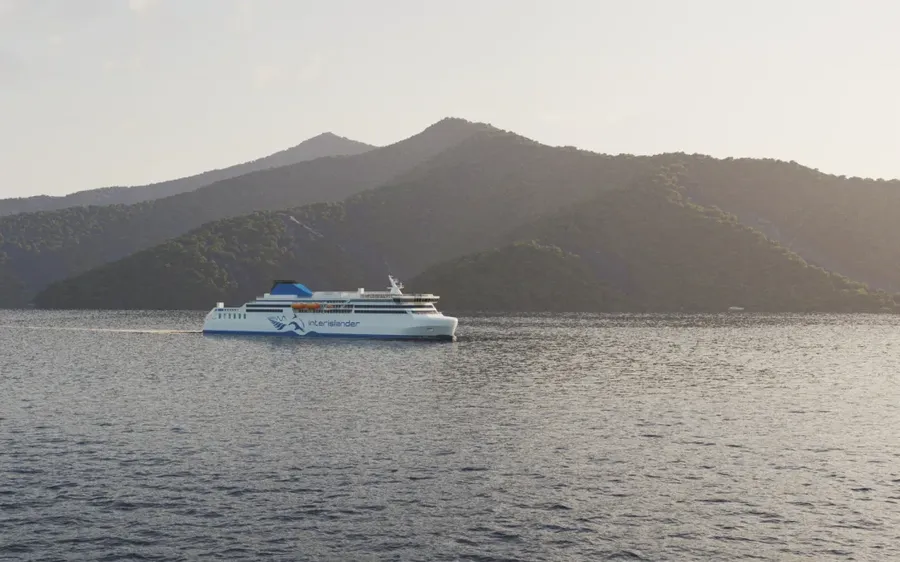
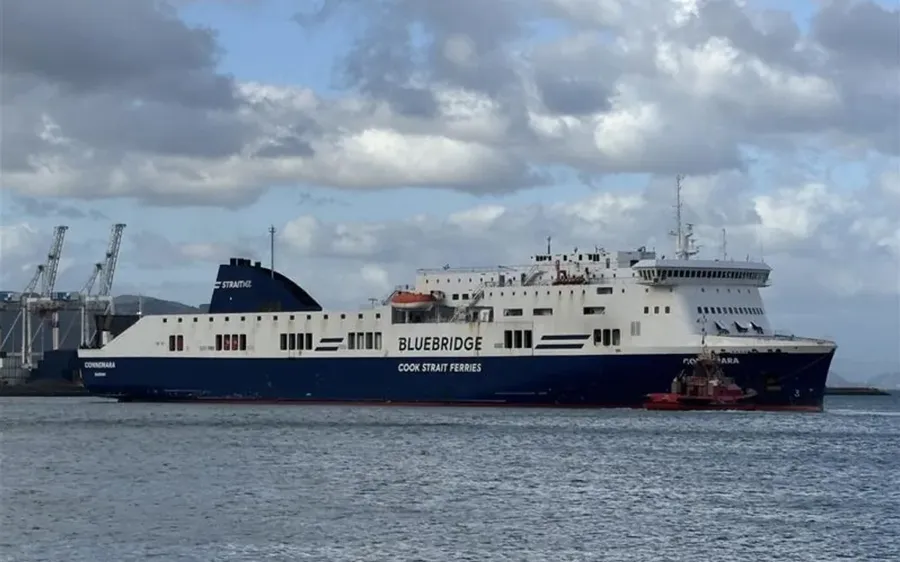
The Interislander's Kaiārahi has been offline since Tuesday night following a technical fault, with an Interislander staff member travelling overseas to source the necessary parts. Separately, Bluebridge's Connemara was withdrawn from service on both Thursday and Friday after a distinct mechanical problem. Bluebridge confirmed its Picton to Wellington run was due to resume early Saturday morning.
"All customers affected by this cancellation have been automatically transferred to an alternative sailing and will receive an updated e-ticket with revised sailing and check-in time," Bluebridge advised passengers. "If your re-scheduled sailing time doesn't suit your needs, standby lists will be operating from each direction for affected passengers across subsequent sailings."
With Kaiārahi and Connemara both out of service at once, Greens transport spokesperson Julie Anne Genter said the combined fleet serving the strait had effectively fallen from six ships to four within a matter of days. For Genter, the situation is not simply bad luck. She argues the government's decision to cancel a previously ordered pair of new Interislander ferries has left the country dangerously dependent on an ageing fleet.
Genter raised the matter during Parliamentary question time on Thursday, asking acting Prime Minister David Seymour whether he accepted that cancelling the new ferries would keep generating disruptions for passengers and freight. Seymour was unmoved.
"On behalf of the Prime Minister, no, I don't accept that, because there have been long-documented problems with the existing ferries," Seymour replied. "That does not mean that the unaffordable and unviable solution that the previous government put in place was the best answer for New Zealand. Yes, the ferries break down from time to time. Now, I've heard about politicians that bark at every car, but I've never heard of one that barks at every ferry."

Genter labelled the contract cancellation "irresponsible" and said the government had created a transport crisis on Cook Strait by choosing not to replace vessels that were already showing their age. "We're seeing massive disruptions to supply chains and also passengers' ability to get between the North and South Island because yet another Interislander ferry has had to be taken offline," she said.
Her broader concern is what she calls a "perfect storm" of converging pressures: rising and volatile oil prices weighing on airlines, increasingly severe weather affecting both air and sea travel, and an ageing ferry fleet being pulled for unplanned maintenance at precisely the moment when replacement vessels should already have been in service.
"We have potentially an extended period of high and fluctuating oil prices affecting airlines, more severe weather affecting both airlines and ferries, and ageing ferries being taken offline for unplanned maintenance when there should already have been replacement ships here this year," she said.
Because of the cancellation, Genter said replacement vessels would not arrive until at least 2029, prolonging the uncertainty for everyone who depends on the strait. "That's going to mean huge cost and disruption to freight and passenger movements between our two islands until we can get replacement ferries," she said. She added that the government appeared unwilling to face its own role in the situation. "The government is clearly unwilling to admit that it made a mistake," she said. "They cancelled the ferries that were on order and the wharf upgrades that were underway. Now they need to come up with some sort of interim solution."
The human cost of this week's disruptions was visible at the Picton terminal on Thursday, where British tourist Stephen Edwards and his wife were caught out by both operators in turn. After learning his Interislander sailing had been cancelled, Edwards arranged an alternative booking with Bluebridge, only for that departure to be delayed and then cancelled as well.
"We were on our feet for three hours trying to rebook," Edwards said. "You've never seen chaos like it." Hundreds of passengers crowded the terminal searching for new sailings, while vehicles queued in the boarding lanes. The couple ultimately had no option but to check into a hotel and try again on Friday. "We were utterly exhausted," Edwards said.
Dave Rees, a friend who had driven the couple to the terminal, witnessed the scenes firsthand and said the experience left a damaging impression on visitors. "It was just very crowded, people coming in all the time," he said. "Information was scant and had to be sought rather than given." For Rees, the episode reflected poorly on New Zealand as a destination. "It gives the impression of a very disorganised place and a place that's kind of operating on a shoestring," he said. His assessment of the crossing's importance was plain: "The Cook Strait is like a bridge between the two parts of a motorway and the bridge is forever closing."
The disruption reaches well beyond tourism. Michael Casey, a contract electrician based in Nelson who works regularly in the North Island, said unreliable ferry services were becoming a genuine professional hazard for tradespeople and freight businesses alike. "If I can't travel, I can't work," he said. Flying is no substitute, as his tools require his vehicle and transporting them by air would mean multiple bags at unworkable cost. Sailings are routinely booked out days in advance, so when a vessel drops out of service the knock-on effects are immediate and hard to absorb. "When one ferry goes down that's 25 percent of the market gone," Casey said.
Minister for Rail Winston Peters offered a different reading of events, framing the current government's actions as remediation rather than negligence. Peters described the government's record as cleaning up the "Cook Strait iReX mess" and said the legacy of the Greens could be seen at Moa Point.
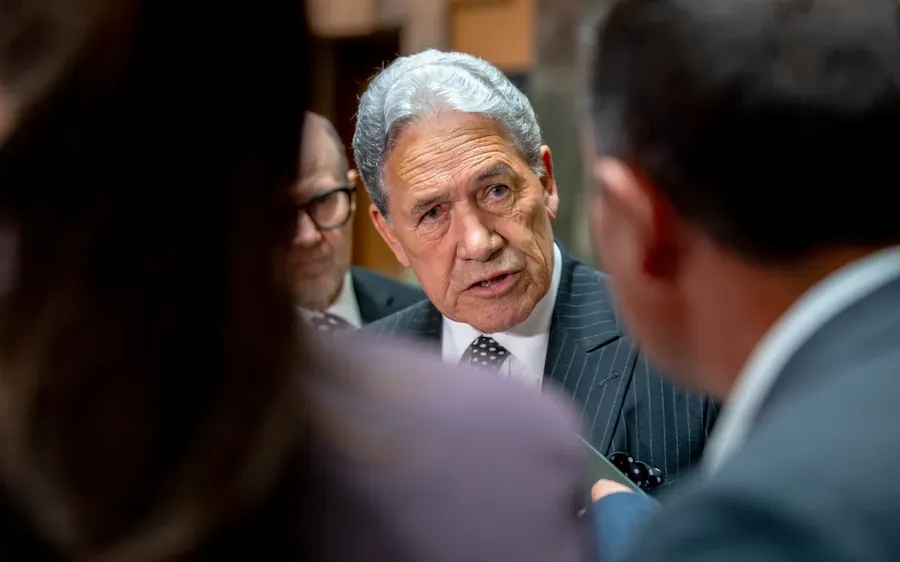
"The previous government turned a simple ferry and port project into a $4 billion blow out, which we turned around and saved the taxpayers $2.3 billion without compromising on what New Zealanders expect," Peters said. He said two state-of-the-art ferries would arrive in 2029 to serve road, rail, and passengers, and that marine infrastructure at Picton and Wellington would be rebuilt without what he called the "expensive frippery introduced by the last government." Peters said the previous project had featured "Taj Mahal level" passenger buildings and sought to completely rebuild functioning road and rail marshalling yards, adding billions to the total cost borne by taxpayers.
On the immediate situation, Peters said taking Kaiārahi out of service had been a deliberate, precautionary decision rather than a failure, with a replacement part arriving on Friday and the vessel expected back in service on Sunday. He pointed to reliability figures to support his position. "We have a firm expectation for high Interislander reliability, which has been near 100 percent over the past year, thanks to a significant lift in asset maintenance and management," he said.
Peters added that Interislander had expanded its spare parts inventory in response to government expectations around reliability, and that the government was now asking whether additional parts could be stocked to speed up future repairs. He said freight had been kept front of mind throughout the disruption. "In the end, our focus is on freighters and families and Interislander has assured us it is prioritising freight bookings, put on eight additional Kaitaki sailings, and has offered refunds to any passengers with vehicles booked to 'make way for freight' which may suit some customers."