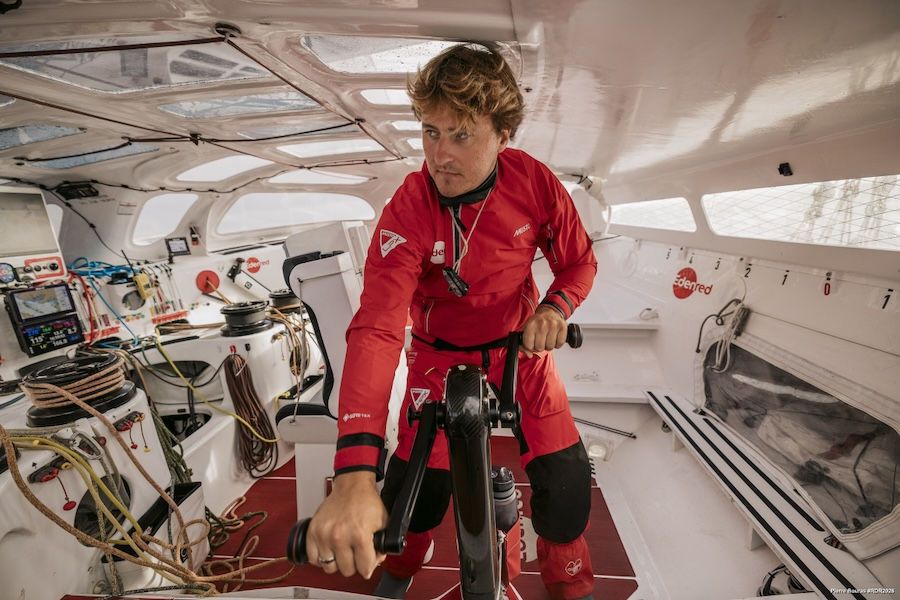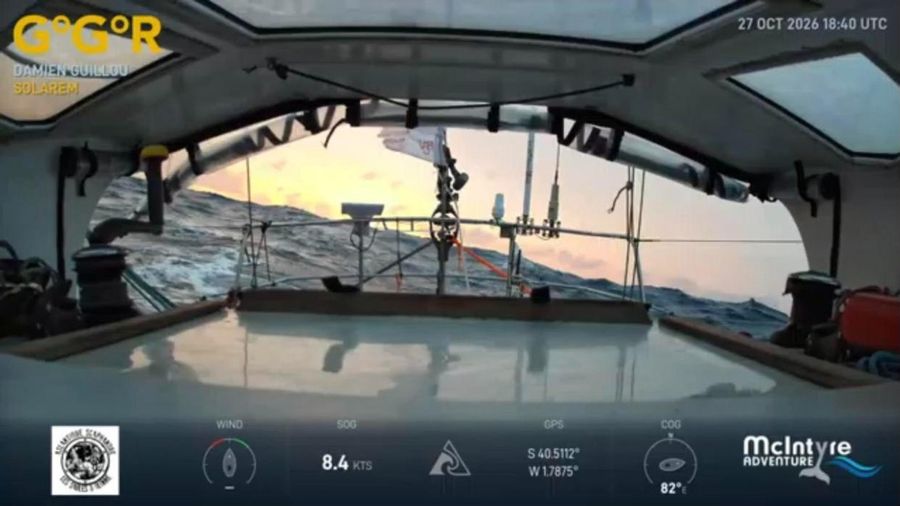
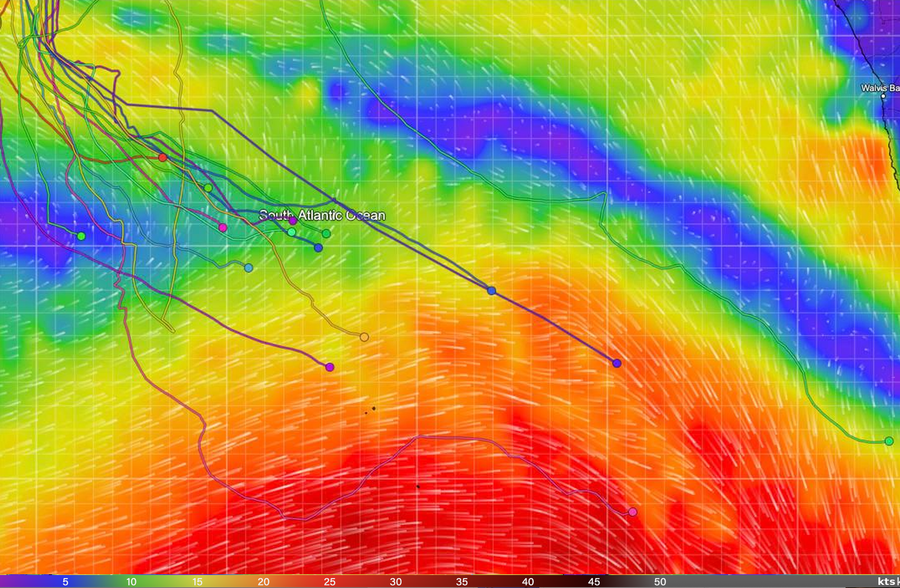
Damien Guillou has come through the second South Atlantic gale, and the Golden Globe Race fleet now has the opposite problem: hardly any wind. The leader, 19,860 nautical miles from the finish at Les Sables d'Olonne on the 20:00 UTC tracker, was forecast to meet 35 knots sustained, gusting 50 to 55, with seas of five to six metres. Those are race-office forecast numbers, not readings from Solarem, and they were milder than the 40 knots and 60-knot gusts predicted a day earlier. His lead over second-placed Ertan Beskardes is 567 miles. Positions and distances are from the 20:00 UTC tracker on Wednesday 28 October unless stated.
Golden Globe Race 2026: distance sailed
Tracker snapshots, start to Day 52
Source: Golden Globe Race live tracker (Yellow Brick)
Guillou comes out the other side
Race chairman Don McIntyre told his Wednesday briefing that the system had shifted and slowed, leaving Guillou little room to avoid it, although its intensity had eased.
Guillou rang in while the briefing was on air. McIntyre told him the worst of the wind would pass within about six hours, that the sea would linger through the day, and that a big high was building behind him. His verdict on the routing was two words: good job. Guillou has also filmed the storm and sent the footage in, and the race office says it will go through it and release it.
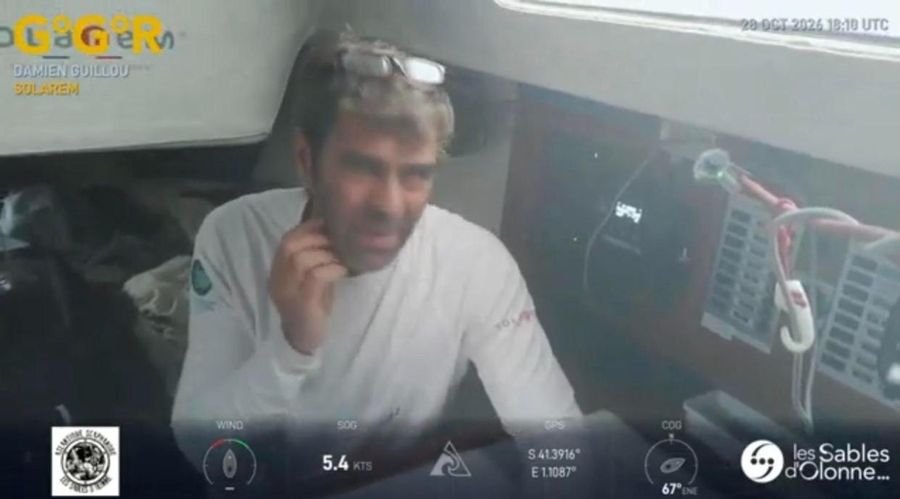
By Wednesday evening UTC he was back on the stream from about 41 degrees south and one degree east of Greenwich, and the tone had changed. The worst of the wind had passed. A day with no sun had left his batteries low, he had eaten very little, and he cut the live early to save power, leaving the camera outside for a spell.
A recording from the height of the blow gave a clearer picture of the night. He was down to three reefs, with waves that regularly swept the deck and cockpit. Damp, not wind, was now the enemy, he said, and the contest of the coming months would be keeping dry clothes apart from his wet-weather gear. In the sleeping bag, he said, the elements were furious and he felt tiny, caught between admiration and terror.
Pinsky's night at the helm
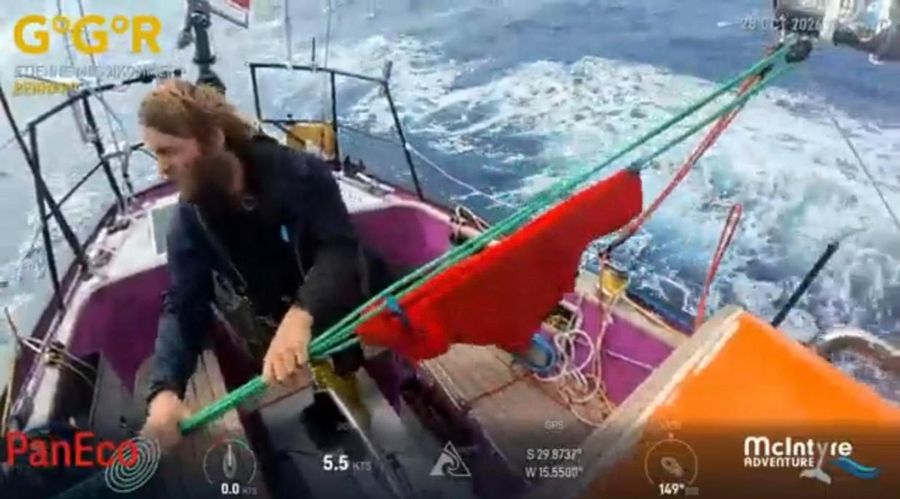
Daniel Pinsky spent the night hand steering in a heavy, confused sea, part of it under bare poles. He called in during the broadcast to say he was safe. He was wet, cold and exhausted, and some water had come below. He carries no wind instrument, so the number is his own estimate: in the 50s, touching 60 at times.
He reported no injury and said the boat was sound. A heavy blow broke the plywood vane on his self-steering gear, and several hanks on the storm jib failed. He has not yet taken the jib down to inspect it and has let out a little more furling headsail instead. McIntyre said the hanks are a familiar casualty. A storm jib that backs and fills all night, he said, works the hanks and the cloth until something lets go. Pinsky made 89 miles on the day and was doing about 3.5 knots north-east when the report went out.
The race office says he received an earlier weather message but missed a later update. It does not know why, and it has not suggested a fault in his communications. The forecast McIntyre gave him on the call was kinder: wind easing within about six hours, then a few calm days under a high forming to the north-west. Pinsky did not welcome the calm. His plan was to go south and stay south for the westerlies, and he fears the light patch will cost him ground.
Messikommer and Christensen in the gap
Etienne Messikommer made 144 miles in Bernard, the second-best run on the board, and moves to fourth on the tracker with 20,881 miles to go. He is four miles clear of Mara Kveseth in Showgirl, whose position is four hours old, so the order may well swap.
His Window LIVE slot on Wednesday afternoon UTC opened with a quick status report: no breakages, a bit wet, tired and cold after an intense night, and a reef to shake out before the boat could be pushed harder. He worked the foredeck in a lively sea and planned an hour with the Yankee up to see whether it bought any speed. The sea, he said, was still a minefield, and nothing was ever going to dry.
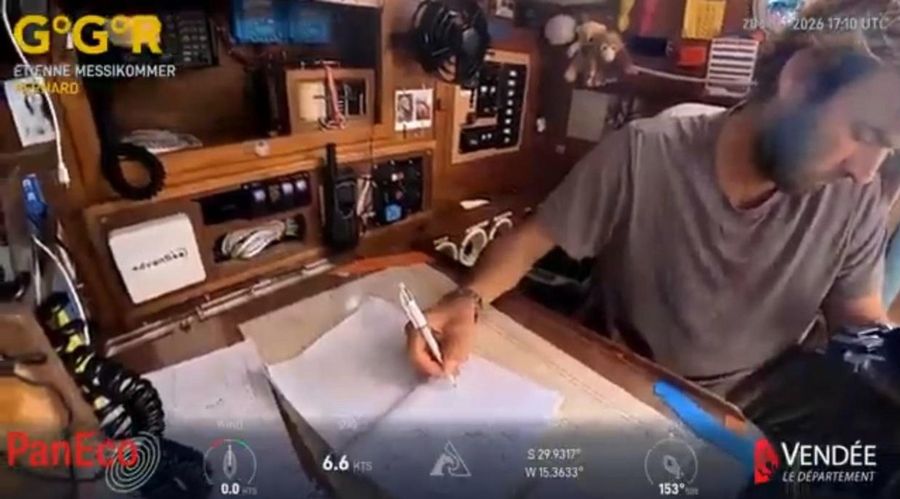
Later he sat down with the paper chart and plotted the afternoon by hand. He knew where he was, he said, and thought he knew what the weather would do for the next few days. Then he changed into a fresh T-shirt, because it had turned cold.
Gunnar Christensen in Pompoen has been rationing his power. He has cut back his live coverage, and the race office has no report of a new electrical fault. McIntyre said flat batteries are a management problem, not a safety one, since a portable solar panel can keep the trackers and satellite phones alive. On his midday stream the cloud was thick and his voltage had slipped to 12.7 volts. Christensen said the last two days had flattened him. Sunday night meant a storm jib and a triple-reefed main with gusts around 50. The wind then came round through west to due south, and he is pounding to windward again, heeled hard over.
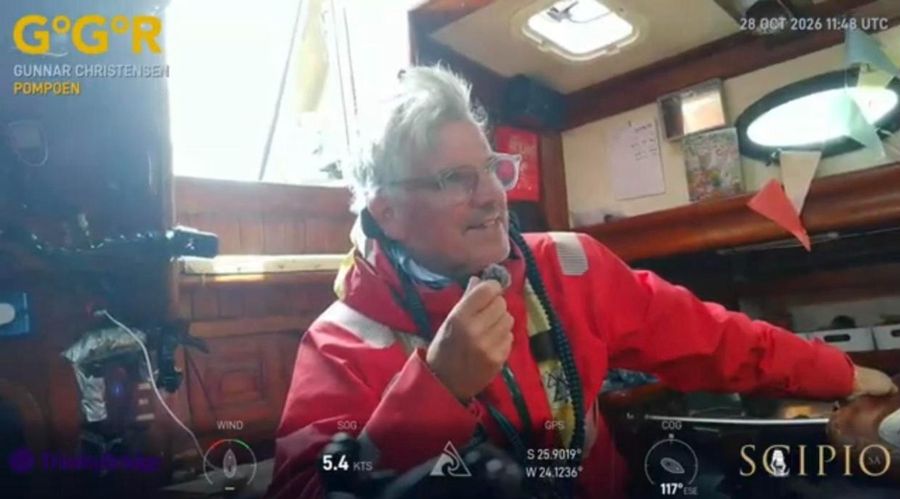
At six that morning, a slack aft downhaul let the spinnaker pole swing into the headstay and left a dent in the pole. He had wrapped plenty of turns of jib round the stay and hopes that protected the foil. Lunch was chickpeas with olive oil and balsamic, eaten while he waited for the radio call. The barograph, down near 1,000 hPa, has climbed steeply over 24 hours as the high builds, and he has been reading Patrick O'Brian's Post Captain to keep his mind occupied.
The sailing, he said, is not the hard part. Two months alone is.
Across the fleet
Beskardes made the best run on the board, 153 miles in Miss Beagle, and the race office has him at about 6.3 knots as the weather moves off. He is 20,427 miles out. Andrea Lodolo in BiBi is third at 20,650 and was making 5.7 knots after turning east when the wind went south-west, though his tracker position dates from midday.
Guido Cantini in Hannah of Cowes reported 35 knots gusting 50 to 55 when the system reached further north than forecast. He had not been sent an advisory because his position looked clear. Race management told him no further strengthening was expected, and he is making about 5.3 knots. Henry Wootton in Privateer had been advised to stay north of a certain latitude, and the report does not establish whether the message reached him. He ran on through the night before bearing away. His 24-hour run fell from 172 miles to 120.
Further back, Pär Nyman in Lazy Otter and Isa Rosli in Olleanna avoided the worst and are heading north while the wind sorts itself out. Nyman is 21,128 miles out and Rosli 21,225. Matt Woodside's Tipi Haere is down to about two knots in light air after a 61-mile day.
Guy deBoer in Spirit is enjoying the trades at 6.4 knots towards Trindade. The tracker did not list him again, so that figure comes from the race office. He is about 870 miles behind Christensen. Pat Lawless is making 5.7 knots north on his return passage.
What to watch
From Thursday the high takes over. The race office expects smoother seas and far less wind across much of the fleet, with the breeze moving forward of the beam, and light conditions through Friday. Some of the middle group, Messikommer among them, may reach the southern side of the high before the boats behind, and Christensen above all faces a longer wait for pressure. Guillou may keep a separate band of westerlies into Saturday, which the race office says could help him recover some of the ground lost in his weather diversions. McIntyre reckons deBoer needs two or three weeks to reach Christensen. Our last report covers the build-up to this gale.
Follow the whole race on our dedicated Golden Globe Race 2026 page.