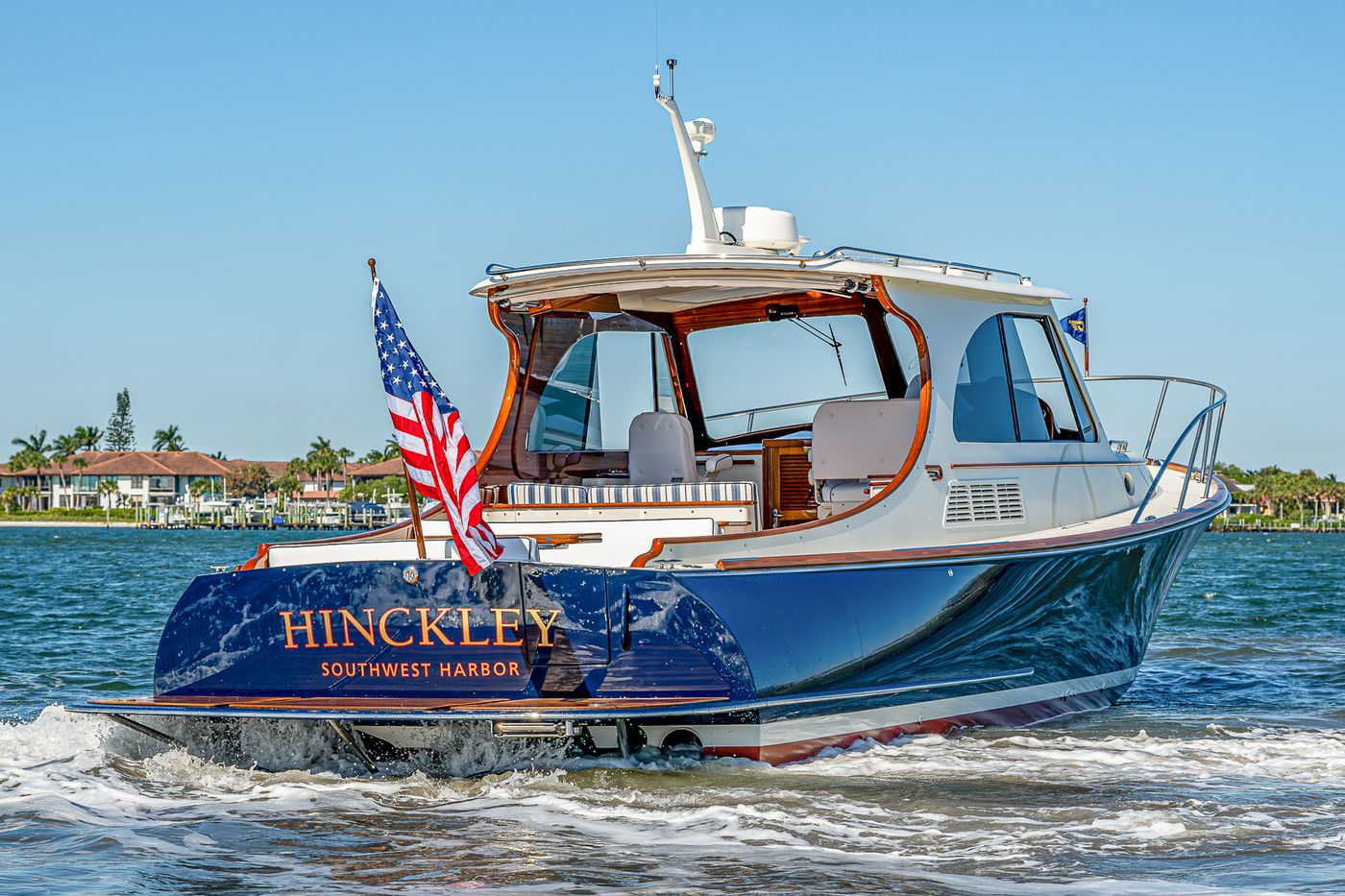
When Hinckley launched its first Picnic Boat in 1994, it changed the way people thought about day boats. Drawing on the seaworthy lines of Maine lobster boats and layering in the refinement of a thoroughbred yacht, the design had to tick every box: safe, stylish, simple to handle, and equally at home on a family outing, a regatta spectator run, or an afternoon exploring a quiet coastline.
The key innovation was the jet drive. With no exposed propeller beneath the hull, the boat could push into just 18 inches of water, opening up beaches, coves, and sandbanks that would otherwise be off limits. Add joystick control and the whole experience became effortless.
One of the shrewder decisions Hinckley made in those early years was adopting SCRIMP, the Seemann Composites Resin Infusion Moulding Process. Originally developed for wind turbine blades, this vacuum-assisted technique pulls resin evenly through layers of glass and core material rather than relying on hand lay-up and rollers. The difference shows in the finished hull: lighter, stronger, and more consistent, with far fewer voids or weak spots. For Hinckley, boats built this way were stiffer, more efficient, and better suited to the demands of powerful jet drives. At the time it was genuinely novel technology, and it did a great deal to cement the company's reputation for innovation.
Hinckley still builds only 35 boats a year, around 10 of them Picnic Boats. The latest addition to that line, the Picnic Boat 39, carries both tradition and a clear sense of progress forward.
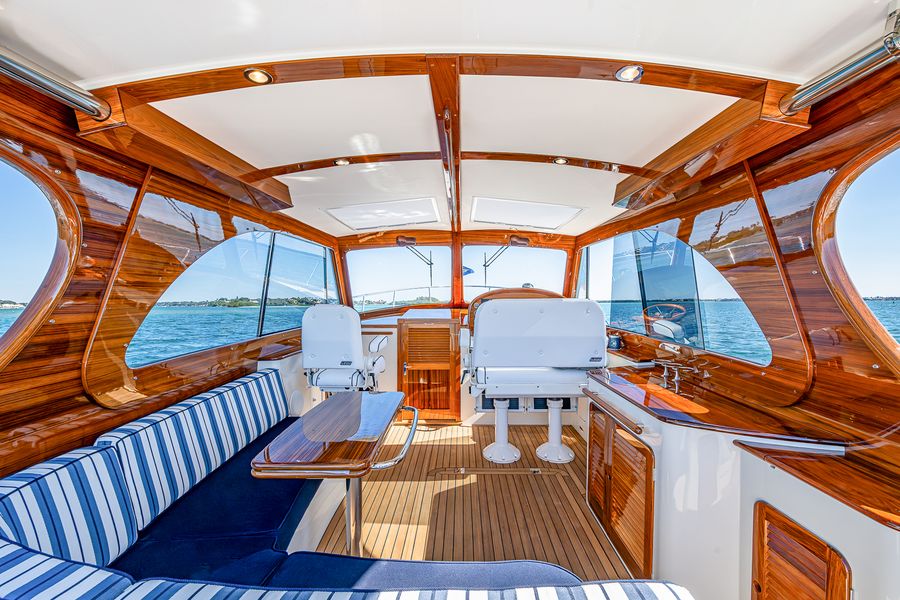
Three linked seating zones flow through the cockpit, supported by an improved galley with refrigeration and thoughtful storage. A sleek single-curved windshield ties the profile together, while forward seating and a sliding window make reaching the foredeck straightforward, with no scrambling along narrow side decks required. Technology runs through every system: JetStick 4 with Dockhold® and G-lock® reduces docking or holding station to a matter of button presses, shallow-draft Hamilton HTX jets keep things nimble close to shore, and twin Volvo D6 diesels push the boat to a 34-knot cruise.
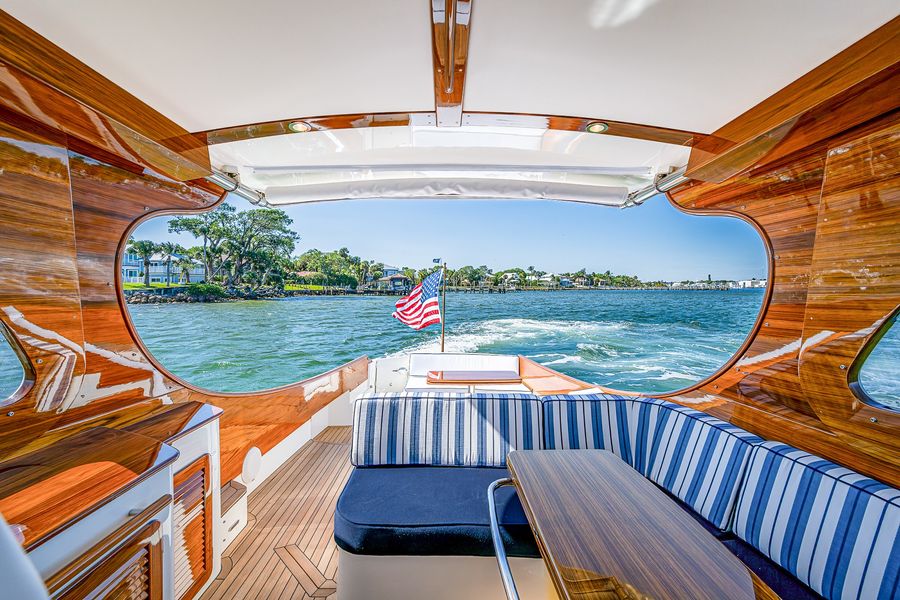
Hinckley's VP of Marketing, Scott Bryant, puts it simply: "Every seat is the best seat in the house."
The concept has found its way to New Zealand, even if examples here remain genuinely rare. In 2012, Dibley Yacht Design produced the P25 Picnic Boat for a South Island owner who wanted to explore the region's lakes in style. Classic 1920s curves sat over an efficient hull, and the brief called for family-friendly practicality with the option of a cuddy cabin.
Further north, artist and sailor David Barker took a different route, reimagining a Logan 33 into Feather. Built across two yards in Whangārei and Kerikeri, Feather traded diesel power for a quiet outboard and leaned heavily on lightweight composite construction. The outcome was a sociable, efficient cruiser ideally suited to day trips around the Bay of Islands, an approach that echoes Hinckley's own blend of artistry and practicality.
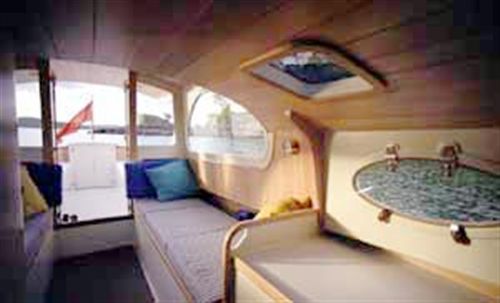
What actually separates a picnic boat from any other day boat? A day boat, broadly speaking, is any vessel used for short passages, but a picnic boat is a more deliberate creation. It brings together luxury fittings, shallow-draft propulsion, and layouts built around entertaining into a single coherent package: covered helm, galley, heads, and open social spaces. Think floating patio with lobster-boat ancestry.
In a market shaped by trailer boats, bluewater yachts, and traditional launches, picnic boats occupy an unusual corner of New Zealand boating. Their appeal, though, is hard to argue with: forgiving handling, genuinely beautiful lines, and the ability to make an ordinary afternoon on the water feel like something worth remembering.
Much like a good picnic itself, the best examples are really about the company you keep, the spot you choose, and the pleasure of keeping things unhurried. The difference here is that the basket arrives with jets, carbon composites, and a quiet nod to classic yacht tradition.