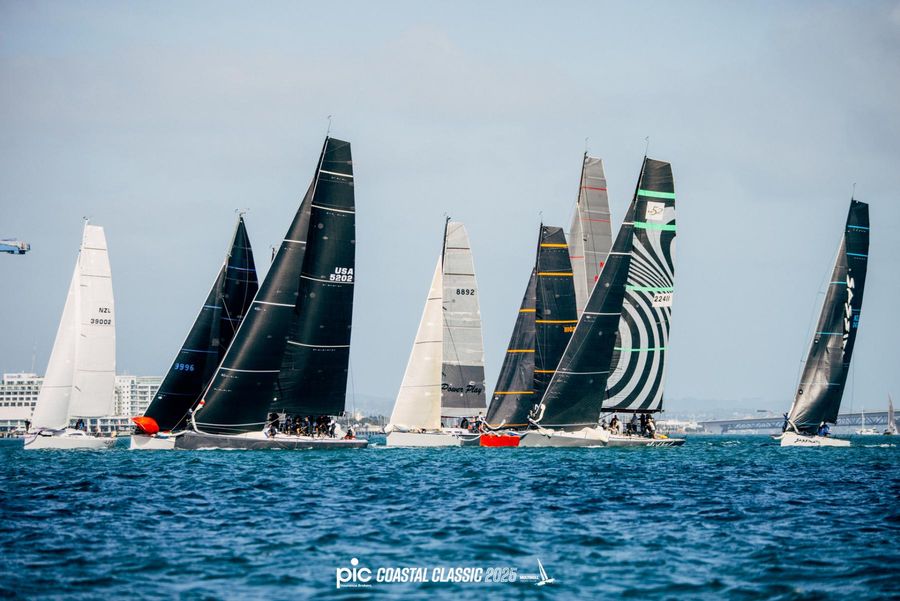
The Sydney to Auckland Ocean Race settled the argument: fast boats deliver big drama and even bigger fun. This Labour Weekend's PIC Coastal Classic, with more than one hundred yachts already on the entry list, promises generous helpings of both. Entries remain open until 20 October, and more boats are certain to join before the gun. As with every edition of this race, the appeal runs deeper than pure speed. Camaraderie counts as much as competition, and for many sailors the thrill of finishing rivals the thrill of winning.
At the head of the fleet is Lucky, the record-breaking winner of the trans-Tasman race, completed in almost half the previous best time. Her arrival in the lineup raises the stakes for every boat behind her and sends a current of anticipation through the whole start.
The PIC Coastal Classic covers 119 nautical miles from Auckland's Waitematā Harbour north to Russell in the Bay of Islands. The race record of 5 hours and 37 minutes was set by the MOD70 trimaran Beau Geste in 2019, a year that delivered near-perfect offshore racing conditions: steady south-westerlies around 20 knots, gusts touching 30, and moderate seas. Beau Geste has not returned since, leaving both the record and the finish line wide open.
That 2019 edition pushed fast times deep into the fleet. Cat+Ion, a Roger Hill 18.5-metre multihull, placed third in 7 hours 42 minutes 49 seconds. The TP52 Mayhem finished tenth in 9 hours 4 minutes 4 seconds, followed closely by Attitude, Wired, and Freedom, all of which are back on the start line this year.
Fez, last year's handicap winner, returns with owners Casey and Justine Bellingham aiming to better their own time and hoping for a classic sou'wester. A recent check of PredictWind's weather models for 24 October shows something close to that: a south-westerly of 10 to 14 knots, gusting into the low twenties, with short contrary seas from the north-west at five to six seconds apart. Those readings apply at Waitematā, with more variable conditions expected further north. It falls short of 2019's gift of a day. The forecast points instead to a messy reach up the coast, the kind of conditions where skill matters at least as much as raw speed.
Lucky, the Juan K maxi skippered by Bryon Ehrhart with Brad Butterworth calling tactics, is the line-honours favourite. Given a clean start and a steady breeze through Kawau, she should average around 14 knots to Bream Bay, then hold 11 to 12 knots past Bream Head. That pencils out to roughly eight and a half hours to Russell, quicker if the breeze builds, though still well short of Beau Geste's sub-six-hour mark from 2019. Comparing a maxi monohull to a trimaran is always a stretch, yet the record remains the benchmark to chase.
Behind Lucky, the trio of fifty-footers, Mayhem, Wired, and Callisto, all look sharp. Callisto brings a New Zealand-American mixed crew stocked with grand-prix experience: Transpac, Bermuda, and the Caribbean 600 are already in the logbook, along with this year's Admiral's Cup, where they won the Channel Race and competed in the Rolex Fastnet. The Callisto lining up for the PIC Coastal Classic is the team's Pac 52, not the Botin 42 they campaigned at the Admiral's Cup, though the core crew remains the same. If the south-wester holds, this trio could be posting times near nine and a half hours or better, snapping at Lucky's wake and firmly in the handicap hunt.
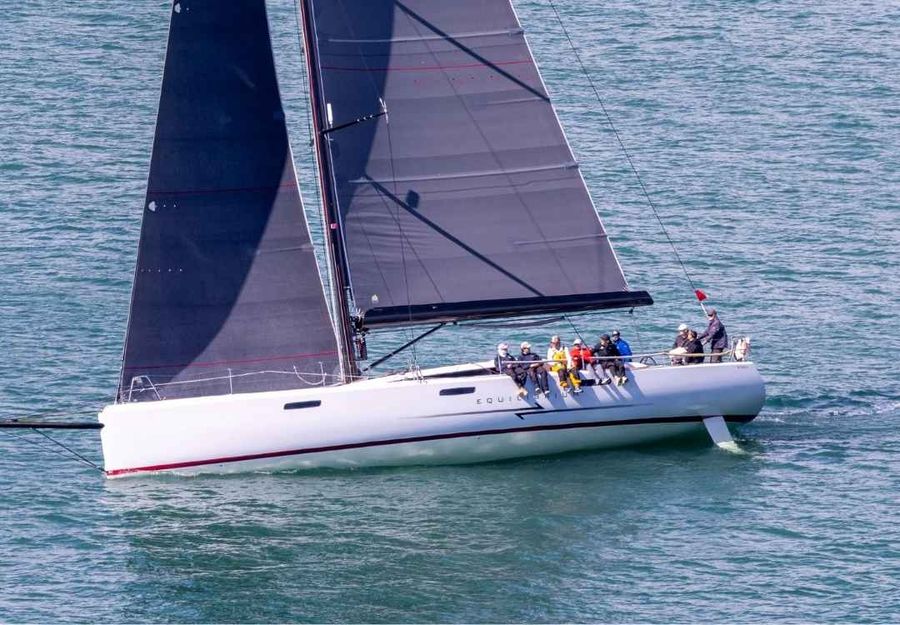
Close behind sit the long-waterline contenders. Equilibrium carries a Botin-Carkeek pedigree, Rum Bucket is a globe-trotting More 55, and Wave is a Grand Soleil 50 fresh from a 19,000-mile family delivery from Italy, arriving only days before the start. Should the breeze soften north of Whangārei, these three could fill the second-place frame on elapsed time.
If the sea-state turns kinder, the fast-forty class could become the deciding factor in who reaches Russell second on elapsed time. Clockwork, Steve Mair's Shaw 12, carries an impressive logbook: the Round North Island, Fiji, Nouméa, and Groupama races are all accounted for. Vixen Racing, Sharon Ferris-Choat's Verdier 40, arrives with Olympic-level polish, serious offshore experience, and a tight race plan. The contest between them should be a close one.
Sassinate, the Melges 40, and Alegre, the Soto 40, will come into their own if the sea-state pipes up. Add Power Play, the Cookson 12 that thrives on a reach, and you have five crews each capable of averaging 10½ knots. In the current forecast, that translates to roughly 11 to 12 hours elapsed, not far behind the fifty-footers if conditions ease.
Twelve multihulls have entered so far, and several carry genuine pedigree. Attitude, an 8.5-metre box-rule boat, holds multiple course records, including Auckland to Tauranga in 10 hours 11 minutes 10 seconds and the 8.5 Coastal record in 8 hours 1 minute. Smooth water could see her troubling the bigger boats again. Cat+Ion is back for another Coastal. Konbreo, a Freydis 46 cat headed for Alaska after a recent refit, will be quick offwind. Ocean's Tribute, a Crowther 40 trimaran with OSTAR and Solo Tasman history, and Superbad II, a Grainger Barefoot 40, both carry the pace to upset the order. If the waves stretch to seven or eight seconds, this group could average in the low teens and press the monohull leaderboard hard. If the sea stays short, they'll sail to what's available, still fast, but more measured.
Four Elliott 1050s line up, with Kick celebrating its 31st birthday and Motorboat II, Second Nature, and Day Tripper in pursuit. Elapsed times of 15 to 16 hours are the expectation, with a finish before dawn if the wind holds.
Five Young 88s bring the biggest one-design battle in the fleet. Babe, Driving Force, Smokey, Paddy Wagon (the first Y88 ever launched), and Young Mischief could log 18 to 19 hours on the water. The class rarely finishes far apart.
Four Ross 930s, Grunt Machine, Hotdogger, Drop Dead Fred, and Wasted Away, keep old-school Kiwi pace alive. Six-knot averages point to 19 to 20 hours elapsed, still proud sailing in a sloppy sea.
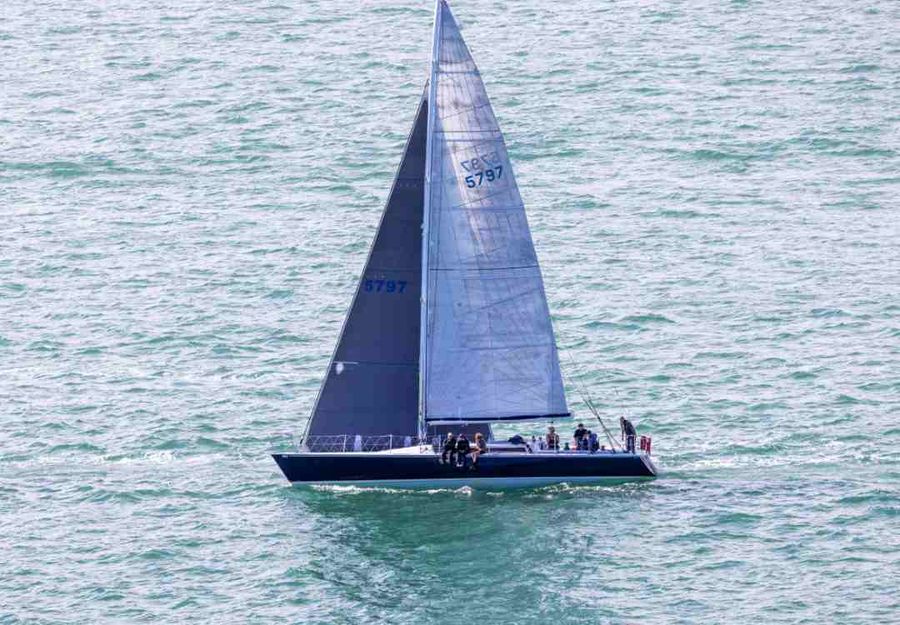
The mid-fleet is where character flourishes. Akonga, Nick Roberts' Dehler 41, arrives straight from victory in the RNZYS Three Kings Two-Handed Race. Indis, the Verdier-influenced Sun Fast 3300, is purpose-built for exactly this kind of weather. Kaizen and Rehab, both Farr 36 ODs, are proven campaigners. Katana, a Sun Fast 3600 veteran of the RNI, races fully crewed this time. Alongside them come Savante, a Beneteau 44.7 crewed, it is said, by Young 88 sailors who prefer to stay dry; Pretty Boy Floyd, a Murray Ross 12m; Radix, a Farr X2 described as fresh and fast; Noumenon, a Dehler 37 competing in its first-ever race in New Zealand; and Legacy, whose logbook entry simply reads "back for a promised downwind joyride."
The cruisers, classics, and heart-boats are the storytellers of the fleet. Ilex, a Brin Wilson kauri sloop, makes the passage alongside Shimmer (Townson Talent Mk2), Starmaker (Farr 1020), La Camargue, Highline (Dufour 455), SV Thistle (a Lambert 52 ketch racing with a live-aboard family who recently circumnavigated the North Island), and Winslow (a Hanse 455 crewed by ex-1020 sailors now chasing a more comfortable ride). At around 5½ knots average, faster when the opportunity allows, this group should reach Russell late Saturday morning, assuming the dawn wind doesn't fade too soon.
Saturday's 10 a.m. high tide will give the whole fleet an ebb-assisted run out of the Gulf. Among the best spectator vantage points are the Devonport area and the North Shore coastline stretching up past the Whangaparāoa Peninsula. Getting out to Tiritiri Matangi is worth the effort, with action guaranteed as the fleet squeezes through the channel there and again further north towards Kawau Island.
The PIC Coastal Classic starts at 09:30 a.m., so securing your vantage point early is wise. It should be a warmish morning, so bring a flask and something to eat while the fleet works its way through.
Assuming the forecast holds, which forecasts famously often don't, here is a rough guide to expected elapsed times. You're welcome to disagree.
- Lucky: 8–9 hours - TP52s / Callisto: 9–10 hours - Fast forties: 11–12 hours - Elliott 1050s: 15–16 hours - Young 88s: 18–19 hours - Ross 930s: 19–20 hours - Cruisers / classics: 21–23 hours
Add up to three hours to any of those if a sou'easter sneaks in before 10 a.m. on Saturday morning.