
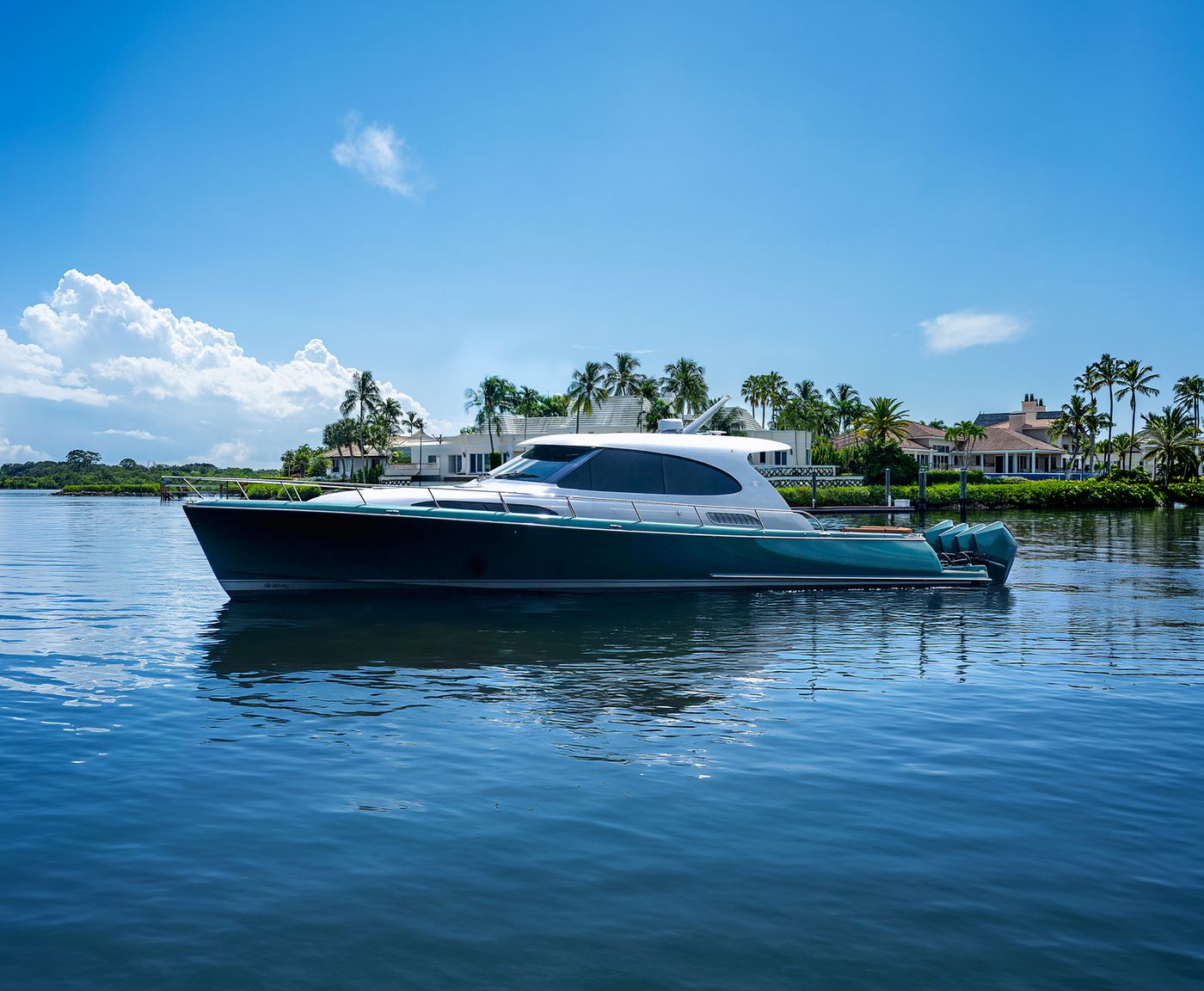
Four engines on the transom of a Palm Beach Motor Yacht will do that to you. The moment you register what you are looking at, something shifts. The GT50 RS is among the most arresting designs to appear in the premium boating world in recent memory, and Palm Beach has committed entirely to outboard power without letting go of the elegance that built the brand's reputation in the first place.
To be clear, this is not a modified GT50 with outboards bolted on. The two boats share a name and a bloodline, but beyond that the resemblance is largely superficial.
Where the original GT50 was designed around the qualities of a refined inboard cruiser, the RS rethinks that brief from the ground up. The new model fuses luxury weekender sensibility with the kind of performance you would ordinarily expect from a dedicated chase boat. A 50-knot top speed sits alongside proportions graceful enough to draw attention in any marina from Monaco to Waiheke. And then your eye lands on the four Mercury Racing 500Rs, and the whole picture snaps into focus.
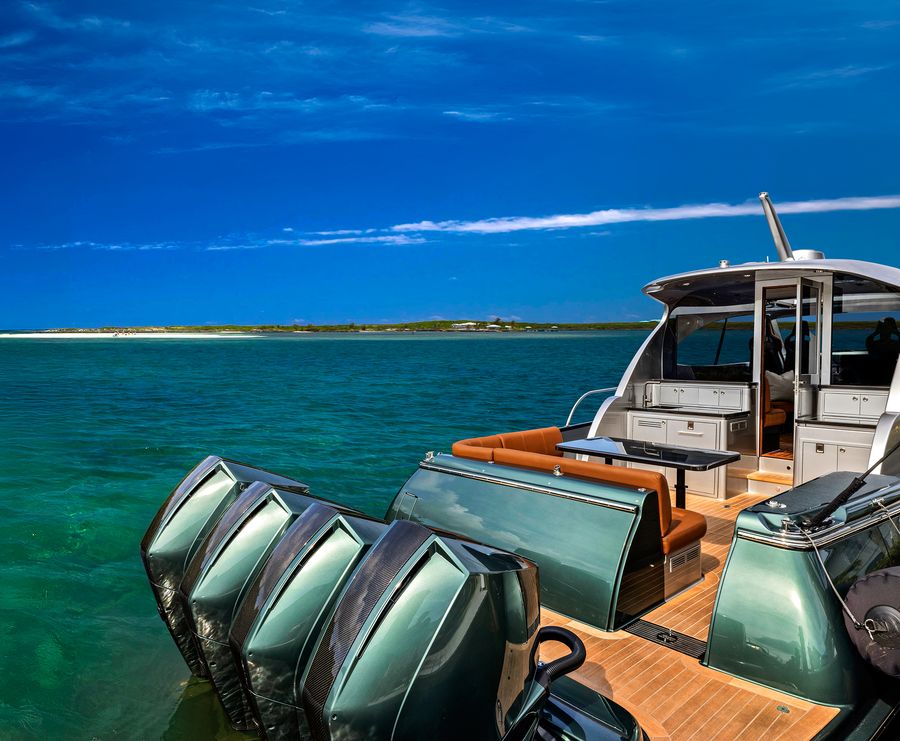
Seeing four high-performance outboards mounted to the stern of a Palm Beach is genuinely startling at first. The brand has spent years defining a particular corner of the market, one built on understated, classical luxury. The GT50 RS holds onto those sweeping lines and beautiful proportions, but the outboards introduce a rawer, sharper energy into the design, something that feels younger and very much current.
"The launch of the GT50 RS is another exciting new product and a strong sign of Palm Beach Motor Yachts going from strength to strength. As we continue expanding our global presence, advancing technology, and introducing increasingly innovative yachts, we remain focused on delivering an ownership experience unlike anything else in the world."— Mark Richards, CEO and Founder
At the heart of the GT50 RS story is the shift from twin Volvo Penta IPS inboards to quad Mercury Racing 500R V8 outboards, a change that carries consequences both mechanical and visual. Total output climbs from 1,200hp to 2,000hp, and top speed pushes well into the 50-knot range. The less obvious gains are the ones that matter on an everyday basis: servicing is simpler, draft is reduced, usable cockpit space increases, and the straight-line pace is, by any honest measure, seriously impressive.
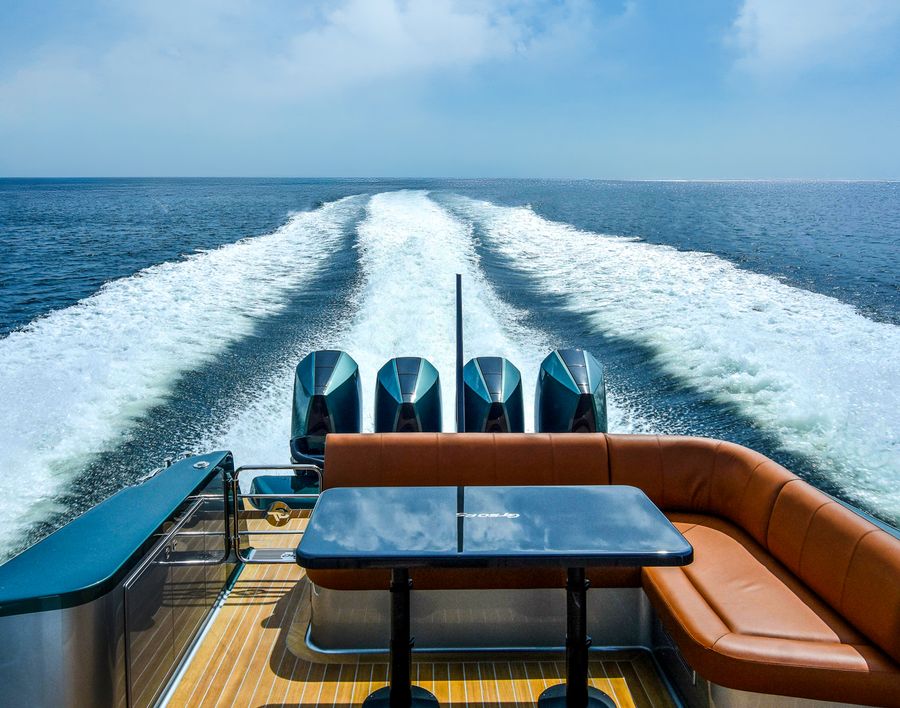
For owners who run fast coastal passages or thread between islands regularly, this configuration makes a great deal of practical sense. There is a strong American East Coast character to the whole concept, and that is no coincidence. Hull number one was commissioned specifically with fast runs between Connecticut and Long Island in mind. Yet despite the performance hardware across its transom, the GT50 RS never tips into muscle-boat territory. The discipline Palm Beach has applied in holding speed and luxury in balance is exactly what gives this package its long-term appeal.
Responsive Table Wrapper
| Specification | Inboard Baseline (2019) | RS Outboard Edition |
|---|---|---|
| Primary Propulsion | Twin Volvo Penta IPS 800 | Quad Mercury Racing 500R |
| Total Output | 1,200 Horsepower | 2,000 Horsepower |
| Maximum Velocity | 37–40 Knots | 50 Knots |
| Fuel Capacity | 396 Gallons (1,500 L) | 660 Gallons (2,500 L) |
| Structural Weight | 30,468 Lbs (13,820 kg) | 26,450 Lbs (12,000 kg) |
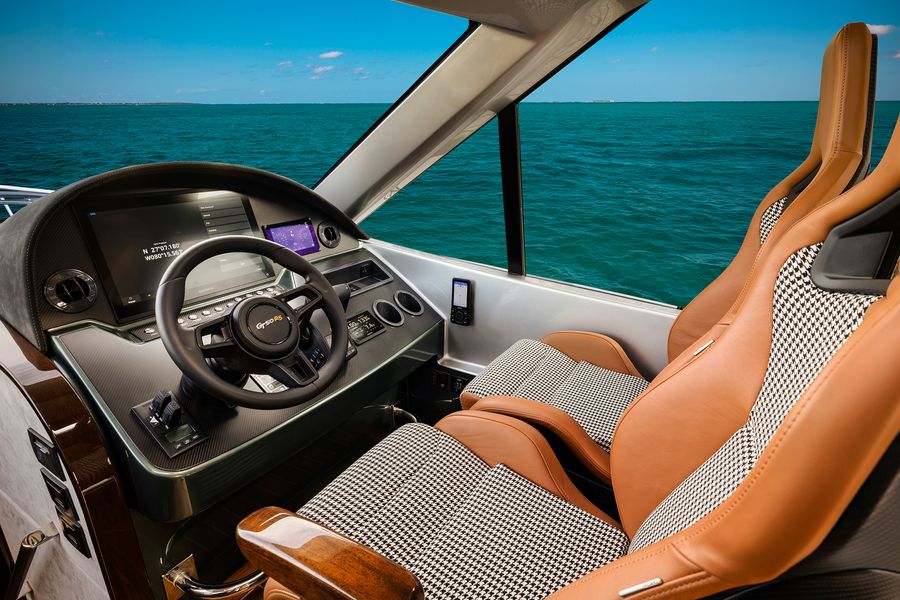
Nothing that makes a Palm Beach a Palm Beach has been sacrificed in the process. The lines remain clean and graceful, and the interior walks a considered line between performance-inspired styling and traditional yacht craftsmanship. Alcantara, carbon-fibre detailing, and sporting finishes appear throughout, but none of it has been pushed so hard that the cabin starts to resemble a supercar showroom. The GT50 RS feels unmistakably like a boat, and it offers an interior that sits apart from almost anything else currently available at this level.
One of the better decisions made during development was keeping the salon and cockpit on a single level. Rather than dividing the two spaces into separate zones, the shared plane draws them together, making the layout feel social and connected. The GT50 RS is, without qualification, a boat you would genuinely want to spend a full weekend aboard.
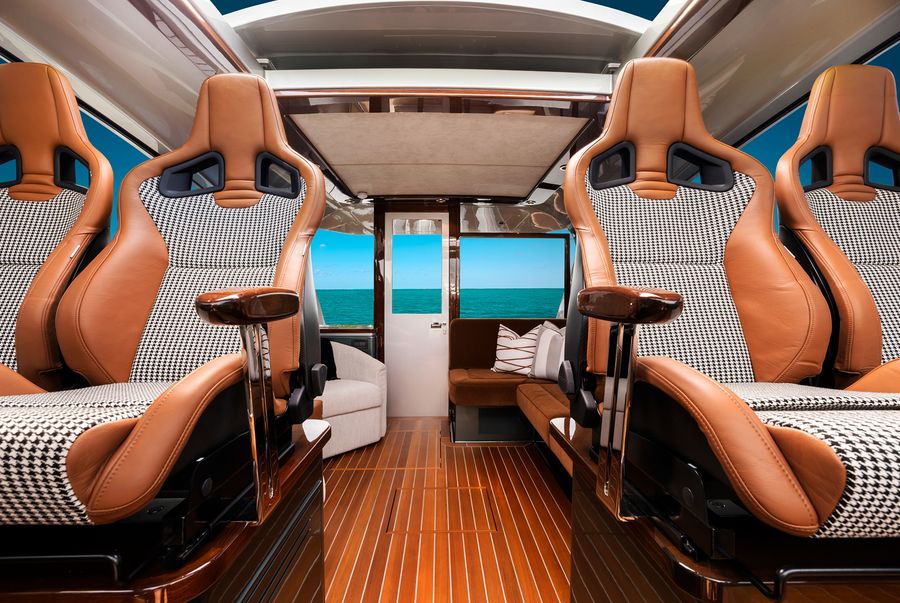
Among the details that make the strongest impression are the generous side windows and the electric sunroof. Together they change the relationship between the interior and the world outside in a fundamental way. With everything opened up, the GT50 RS delivers that light, connected-to-the-water feeling that enclosed performance boats so often fail to achieve. You get much of the sensation of being aboard an open boat without surrendering weather protection. When conditions turn or temperatures climb, the helm and salon can be sealed and air-conditioned with the efficiency of a well-appointed car. That dual character feels considered rather than accidental.
Beneath all the horsepower and visual drama sits Palm Beach founder Mark Richards' proprietary V-Warp hull design, which underpins everything the GT50 RS does once it is moving through the water. Palm Beach attributes genuine efficiency and a softer ride to this hull, without any blunting of the headline speed figures. The lightweight composite construction also explains how the boat keeps its weight in check despite carrying a substantial outboard package. At 56 feet overall and with a relatively shallow draft, the GT50 RS turns out to be a surprisingly practical platform for coastal cruising and island hopping.
The GT50 RS is more than a notable new addition to the Palm Beach range. It offers a clear indication of where premium boating is heading. For a long time, large luxury outboard boats existed almost entirely within the centre console and fishing platform segments. What is taking shape now is something different: established high-end builders treating outboards not as a practical concession but as a genuinely premium choice in their own right. Palm Beach appears firmly committed to this direction, with the GT60 RS and GT70 RS already confirmed as being in development.