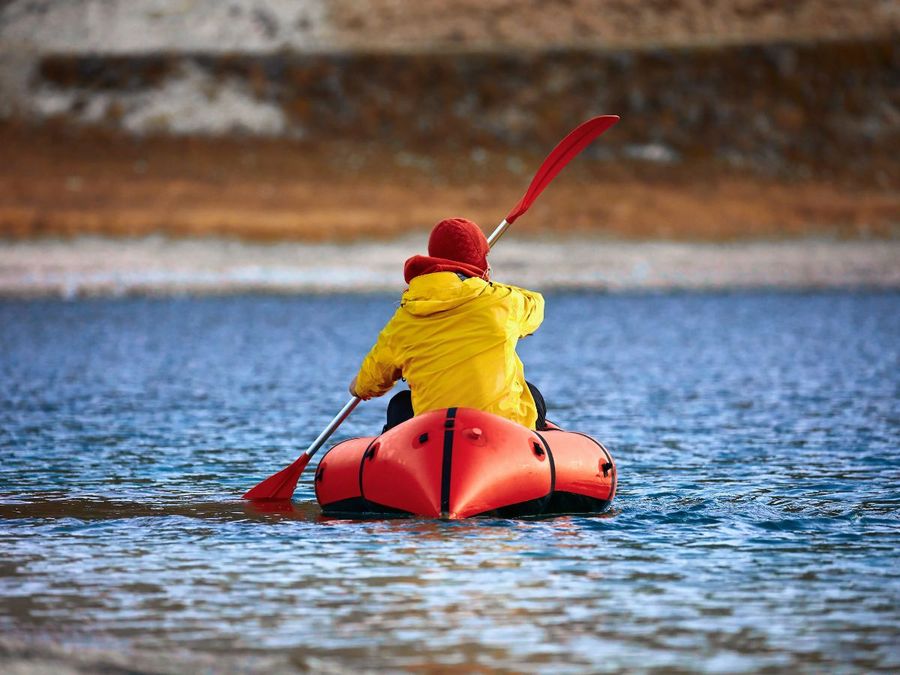
Standing at the end of a long tramp, staring at a river that blocks the route home, most walkers turn back. Packrafters inflate their boat and keep going. These compact craft weigh just a few kilograms, compress to the size of a sleeping bag, and can carry a person, a full pack, and even a bicycle across water that once marked the end of the trail.
The concept is simple: hike in, inflate, paddle out. Blending tramping, kayaking, and open-ended exploration into a single pursuit, packrafting feels tailor-made for New Zealand's backcountry.
Made for our backyard
New Zealand's rivers tumble from snowcapped ranges through vast stretches of public land laced with huts and tracks, making it easy to plan a weekend loop that combines walking and paddling. With warmer weather arriving and flows dropping into their best range, the timing is coming right.
The South Island offers some of the country's finest routes. Alpine classics like the Rees and Dart deliver jaw-dropping mountain scenery, while Fiordland and the West Coast serve up clear pools and technical boulder gardens. For distance, the Clarence is the standout option, running from the St James Range to the Kaikōura coast.
The North Island has its own strong lineup. The Whanganui River Journey provides an ideal introduction: a gentle three-to-five-day float through deep bush and historic pā sites. Those after more action will find it on the Mohaka, Rangitīkei, and Waioeka, rivers that mix remote wilderness with lively rapids and sit within easy reach for a long weekend.
Safety first, always
Know your river
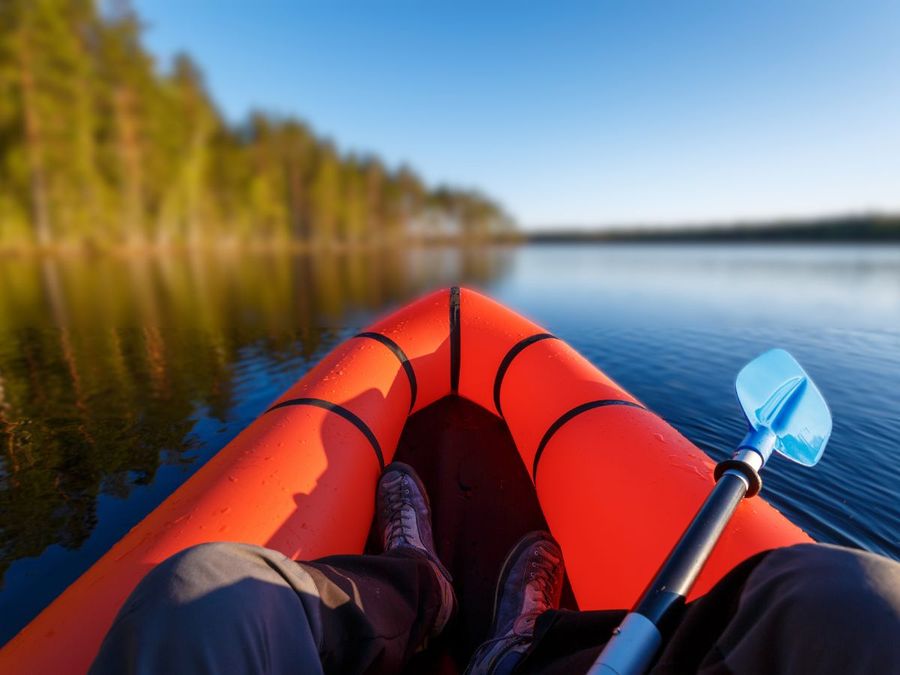
River conditions can shift dramatically overnight. Check the weather before you go, understand what the flows are doing, and never head out alone. The difference between a relaxed drift and a whitewater rescue can be a matter of just a few cumecs (cubic metres per second, m³/s).
Regional councils publish real-time flow data. For most packrafts, 5–10 cumecs represents friendly water. Once levels climb above 20 cumecs, the river demands serious respect.
Plan your trip around a dropping forecast, give flooded rivers a wide berth, and never underestimate how fast cold water drains your energy. In many catchments, late-spring snowmelt can push flows higher even under clear blue skies.
Skills
Because packrafting involves moving water, every paddler needs a foundation of core skills: swimming defensively in current, reading river features, and carrying out a basic rescue. A personal flotation device (PFD), helmet, throw rope, and communication beacon are non-negotiable. On overnight trips, add a repair kit and a spare inflation bag to that list.
The Packrafting Association of New Zealand (PRANZ), along with guiding companies based in Wānaka, Queenstown, and Taupō, run short courses covering river reading, group safety, and navigation. For anyone new to moving water, a course is the best possible starting point.
If you're just getting started, choose something forgiving, perhaps a float through the Whanganui valleys or a relaxed weekend in the Nelson Lakes, then build toward more technical rivers as your skills and confidence grow.
Packrafts
Construction and materials
The majority of modern packrafts are built from TPU-laminated nylon with welded seams for an airtight finish. Floors and high-contact areas use heavier fabric to handle abrasion, and inflation is typically achieved with a lightweight air bag rather than a pump. Optional extras commonly include self-bailing floors, spray decks, and internal cargo zips built into the tubes, a practical feature on multi-day trips where every bit of storage counts.
Choosing your packraft
Packrafts span a wide spectrum, from stripped-back tramping companions to purpose-built whitewater machines. Matching the boat to your intended terrain and acceptable carry weight is the key decision.
Flatwater / Touring
Wide-hulled, stable, and capable of handling a generous load, flatwater and touring packrafts suit families and first-timers looking to explore lakes, estuaries, and gentler rivers like the Whanganui or Mohaka. Size: 2.4–2.7 m. Weight: 3.5–5 kg.
Good examples available in New Zealand include the Alpacka Flatwater and Kokopelli Rogue-Lite, both of which have found a solid following among recreational paddlers here.
Ultralight / Expedition
Built with open designs, thin TPU fabric, and minimal fittings, ultralight packrafts trade weight for simplicity. They are the tool of choice for linking tramping routes, making alpine crossings, or any mission where the pack spends more time on your back than the boat spends on the water. Size: 2.1–2.4 m. Weight: under 4 kg.
Popular models for alpine tramping in New Zealand include the Alpacka Scout, Kokopelli Rogue-Lite, and MRS Microraft, all light and durable enough for short crossings and the braided rivers of South Island backcountry. On routes like the Rees–Dart Track in Otago or a Hopkins–Huxley valley crossing in Canterbury, trampers frequently carry an ultralight packraft to safely cross wide, cold braided rivers at the tail end of a trip, or to connect two remote catchments that would otherwise demand a long detour. In those situations, the raft might cover only a few kilometres, just enough to float gear across, avoid a dangerous wade, or stitch two valleys together.
Whitewater / Technical
Designed for paddlers who want genuine challenge, whitewater packrafts feature reinforced floors, self-bailing decks, and thigh straps. They are built to handle Grade II–III rivers, including the Waioeka and the upper Clarence, though only when levels are appropriate. Size: 2.3–2.6 m. Weight: 4–6 kg.
Well-regarded whitewater options in New Zealand include the Alpacka Gnarwhal, Kokopelli Recon, and MRS Alligator, durable self-bailing boats suited to runs like Ashley Gorge, the Waioeka, and the upper Clarence. The Ashley River / Rakahuri Gorge in North Canterbury is a good local example. At moderate flows of around 5–10 cumecs, it offers a fun Grade II–III run through short rapids and boulder gardens, with plenty of eddies for scouting, making it well suited to skilled packrafters with solid self-rescue ability.
Tandem / Load-carrying
For two paddlers, or a solo hunter with a full load of gear, tandem and load-carrying packrafts offer extended hulls, modular seating arrangements, and oversized tubes for added buoyancy. Size: 2.8–3.2 m. Weight: 5–7 kg.
Popular tandem options in New Zealand include the Alpacka Oryx and Kokopelli Twain, stable, high-capacity boats well matched to routes like the Whanganui River Journey or a Clarence River expedition.
The Clarence itself is one of Aotearoa's great wilderness paddles. Stretching roughly 200 km from the St James Range to the Kaikōura coast, this Grade II–III journey threads through remote high-country valleys and gorges over multiple days. A tandem packraft earns its place here by carrying two paddlers and a full week of camping gear through braided sections, mild rapids, and long flat-water stretches alike. Scenic, committing, and well suited to self-supported travel, the Clarence is hard to top.
Bikerafting
Bikerafting is a growing corner of New Zealand's backcountry scene, particularly among trampers, hunters, and bikepackers already comfortable exploring remote terrain under their own power. Packrafts set up for bikerafting feature reinforced bows, tie-down points, and an open deck configuration. Weight: around 5 kg.
The Kokopelli Recon and Alpacka Caribou are popular choices for bikerafters here, both reinforced and self-bailing, with lash points designed to secure a mountain bike to the bow. These boats commonly appear on Timber Trail and Whanganui River adventures, where riders pedal a section of trail before inflating the raft and floating down the Whanganui before continuing on two wheels. Tough enough for Grade I–II water and with the volume and stability needed to carry both rider and bike, they open up river and trail combinations that simply wouldn't be possible any other way.
Light touch, big reward
Packrafting leaves very little trace: no engine noise, no fuel, no scarring of the riverbank. Cleaning and drying your kit between catchments, respecting access points, and packing out everything you bring in will help keep these waterways wild for whoever comes next.
Walk in, paddle out, and see where New Zealand's rivers can take you this summer. The backcountry looks very different from the waterline.