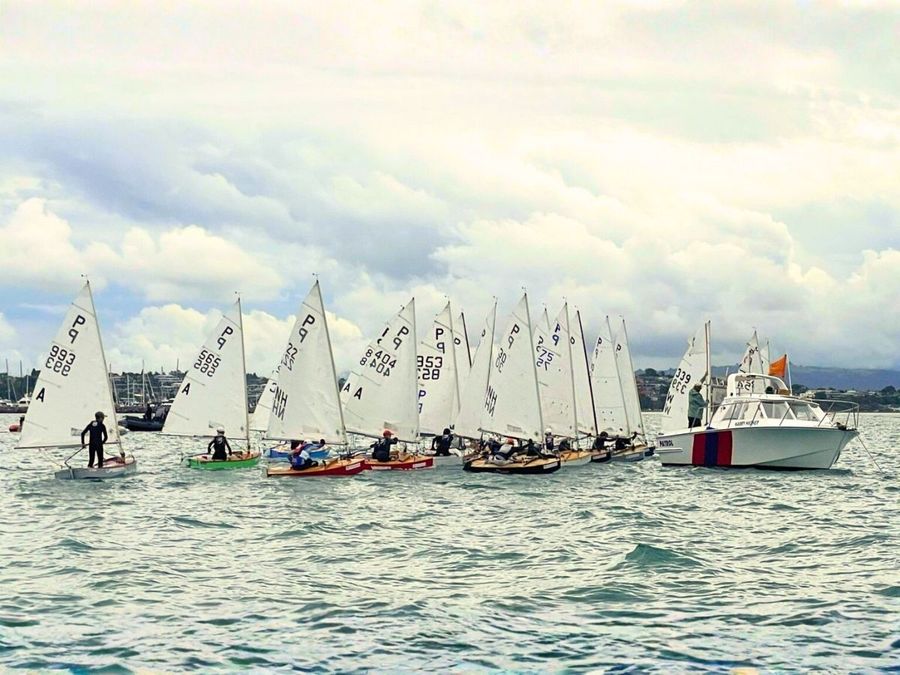
Three days from now, the PredictWind P Class Nationals return to the calendar for the 5–9 January 2026 event, one year on from the anniversary regatta. Both the Tanner Cup and the Tauranga Cup are on the line.
The P Class is worth understanding before the racing begins. Designed in New Zealand in the early 1920s by engineer and sailor Harry Highet, the boat was conceived as something small, economical, and buildable locally. At just over seven feet long, with a narrow beam and a simple rig, it was never meant to be easy. The earliest boats were timber-built with cotton sails, prized for being unsinkable and straightforward to right after a capsize. Construction has evolved considerably since then, moving through plywood and aluminium to carbon rigs and modern foils, but the core demand the boat places on its sailor has not changed.
The P Class is sailed almost exclusively in New Zealand and remains single-handed throughout a sailor's time in the class. It does not reward passive helming. Balance, timing, and judgement are non-negotiable, which is why the class has built its reputation as a demanding pathway for young sailors heading into higher-performance fleets.
The 2026 entry list reflects that pathway well. Strong representation from Auckland, Tauranga, and Wellington clubs is evident, and a good number of those entered are already active beyond the P Class. The fleet reads as a cross-section of New Zealand's current youth sailing scene, and the depth of talent points to highly competitive racing across the full event.
Two separate titles will be decided over the course of the regatta.
*The Tanner Cup and the Centenary Trophy*
The Tanner Cup is the inter-provincial title, run alongside the Centenary Trophy and open by nomination only. Boats not competing in the Tanner Cup are eligible for the Centenary Trophy. With just six races in the series, the margin for error is narrow from the outset. Poor starts, missed shifts, and misjudged situations carry real weight when there is so little racing left to recover in. The smaller fleet means errors are visible and their consequences immediate. Results in this format tend to be shaped by positioning, boat handling, and sound decision-making rather than the ability to pick through traffic. The Tanner Cup will belong to the sailors who can perform under that kind of direct, unforgiving pressure.
*The Tauranga Cup*
The Tauranga Cup is the open national championship, run across three consecutive days with a larger fleet and busier starts. Holding a lane off the line is harder, and the close scoring that tends to develop means single race results carry less individual weight. Consistency across the series matters more than any one standout performance. Titles are more often built on avoiding big scores than on chasing race wins, though wins certainly help.
A familiar pattern tends to emerge across both trophies. The opening races reward sailors who settle into the conditions quickly. The middle of the regatta reshuffles the fleet as conditions change. By the final day, it is often recovery races rather than dominant victories that decide where the results land.
With the quality of sailors expected at this year's event, the 2026 P Class Nationals should be a genuinely interesting championship to follow.