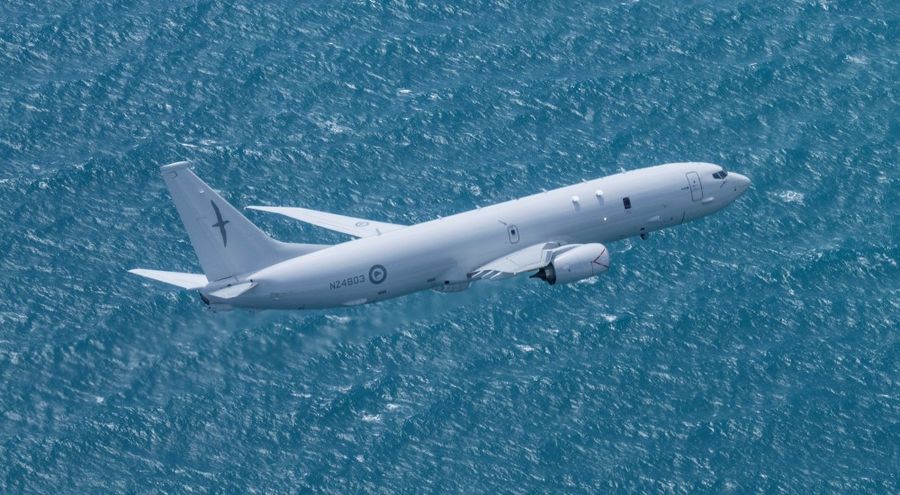
A Royal New Zealand Air Force P-8A Poseidon has located an overdue fisherman in the central Pacific, north of Tokelau, during a regional maritime patrol.
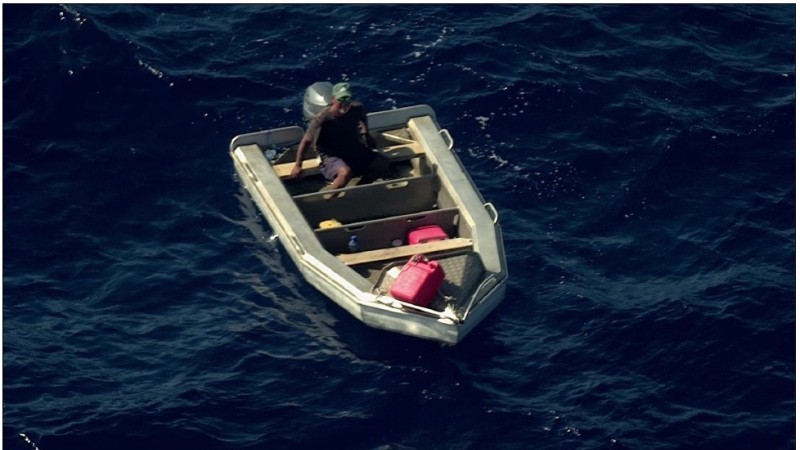
The man had departed Atafu atoll on 17 December in an aluminium dinghy and had not returned. When Rescue Coordination Centre New Zealand sought support, the Poseidon was already in the area conducting scheduled patrol work, making it well placed to respond. Using drift modelling supplied by RCCNZ, the crew focused the search south of Atafu and located the dinghy. The aircraft then held overhead, monitoring the situation until the local vessel Fetu o te Moana arrived to complete the recovery.
The P-8A Poseidon is most commonly associated with wide-area maritime surveillance and fisheries protection across the Pacific, but this mission illustrated a very different dimension of that capability. High transit speed, long endurance, and advanced onboard sensors allow the aircraft to cover enormous stretches of ocean in a short time, qualities that become decisive when someone's life depends on how quickly a search can be mounted.
Chief of Defence Force Air Marshal Tony Davies was aboard during the operation, having joined the flight as part of a visit to observe regional patrol activity. The rescue unfolded while the aircraft was going about its normal tasking, giving him a direct demonstration of how surveillance capability translates into safety outcomes at sea.
For those who boat in remote waters, particularly in small craft, the incident is a pointed reminder of how isolated these environments can be. It also brings into focus the breadth of the search and rescue infrastructure that supports Pacific maritime activity, much of it operating well beyond the horizon and largely unseen by those it protects.
Air Marshal Davies' time in the Cook Islands extended beyond the rescue mission itself. His visit included meetings with government representatives and a stop at Nikao Cemetery in Rarotonga, where he laid a wreath at the graves of military personnel.
The trip also followed Exercise Tropic Twilight, a humanitarian assistance and disaster relief exercise held earlier in the year on Mau'ke. Service members from New Zealand, Australia, Fiji, Tonga, and Vanuatu participated alongside local communities, completing repairs to water infrastructure, upgrading solar systems, and carrying out improvements at the island's school.
The rescue north of Tokelau reflects the broader purpose underpinning these patrols. Aircraft deployed to monitor fishing activity and maintain a maritime presence across the Pacific also serve as a safety net for everyone working or travelling on these waters, ready to shift from routine surveillance to search and rescue when the need arises.