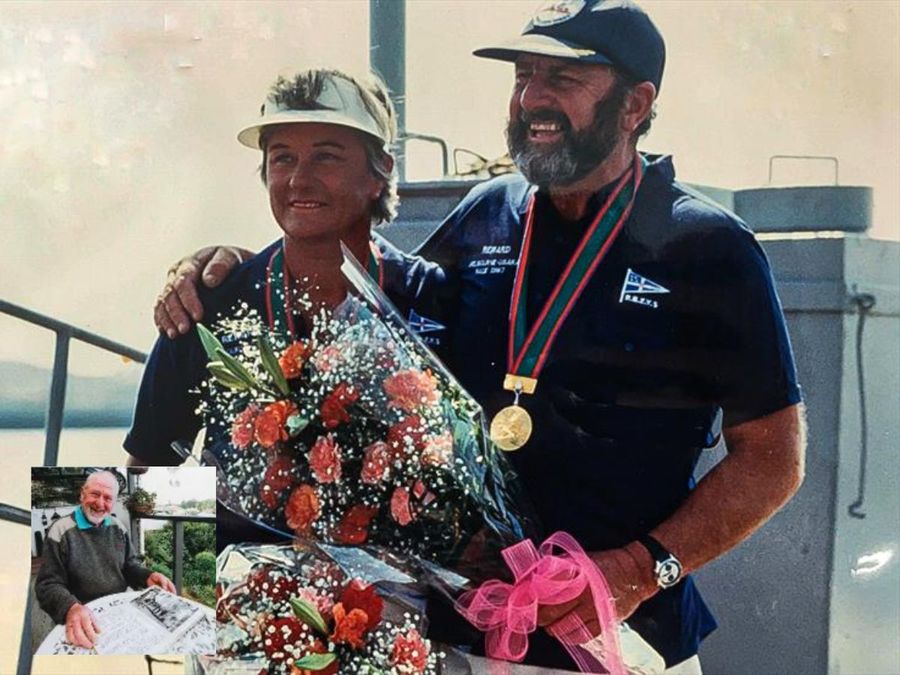
John Lidgard was a man who refused to be defined by a single role. Designer, builder, ocean racer, and blue-water voyager, his life tracked the sea from his earliest years. He served his apprenticeship with Lidgard Bros on Kawau Island, drew his first yacht design at 17, and spent the decades that followed weaving tradition and innovation into a body of work that shaped New Zealand yachting.
By the 1970s he had earned a place at the front of the country's design scene. More than 220 yacht designs bear his name, vessels that have claimed race victories, circumnavigated oceans, and woven themselves into Kiwi maritime history. His 1967 design Runaway helped New Zealand win the 1971 Southern Cross Cup, and that same year finished second in the Sydney–Hobart Race with his wife Heather at the navigation station. Regardless and Reward followed, each reinforcing his ability to marry speed with seaworthiness and strength with elegance. The 60-footer Final Approach, the last major yacht he oversaw, stood as one of his proudest achievements.
A good number of those yachts are still on the water. Two of them, Taonui and Imp-Zap, illustrate the breadth of what Lidgard could do. One was built for himself, the other guided into existence for another sailor. Different in origin, different in scale, but unmistakably from the same hand.
Taonui was never a commission. Launched in 1965, she was the yacht John designed and built for his own use, and that personal investment shows in every aspect of her. At 12 metres, triple-skin Kauri with a round bilge hull, she was conceived as a yacht capable of racing hard and cruising far, a direct expression of John's conviction that a boat should be ready for anything the sea could produce.
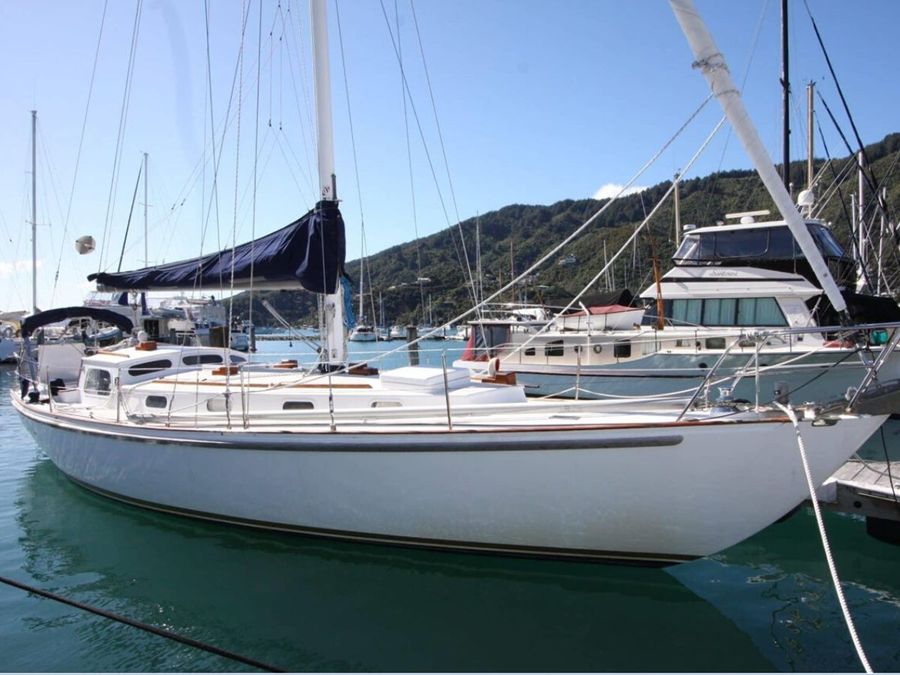
She remains a vessel of purpose and presence. Two double cabins and four single berths, full standing headroom, practical systems, and honest fittings give her a liveability that matches her offshore credentials. A Volvo Penta diesel, Garmin instruments, and straightforward sail handling equipment mean she is ready to sail again rather than waiting on a refit. To take ownership of Taonui is to take ownership of something that came directly from Lidgard's hands and reflects his thinking at full resolution.
Imp-Zap is a different kind of story but arrives at the same conclusion. Built in 1978 by Peter Clements under Lidgard's guidance, she is smaller at 10.4 metres, quicker on her feet, and constructed using the double-diagonal Kauri method so characteristic of his era. Where Taonui was a personal project, Imp-Zap shows how thoroughly Lidgard's influence extended beyond boats he built for himself.
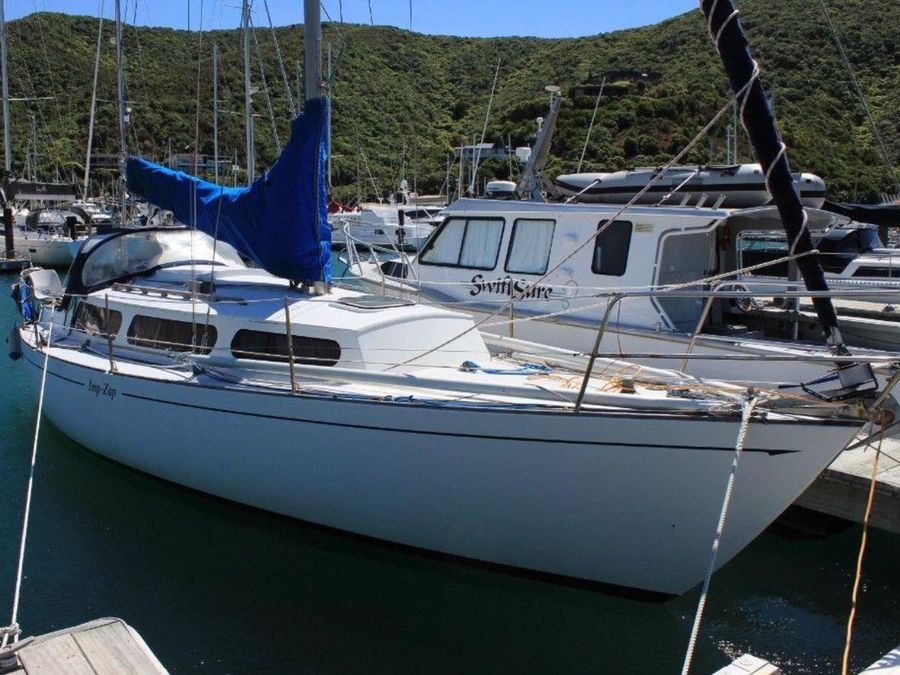
Her appeal is straightforward. A practical interior, a reliable engine, a sensible rig, and no pretension to luxury she cannot deliver. What she does offer is capability, the kind that comes from good bones and honest construction. Club racing, coastal passages, family cruising, she accommodates all of it without complaint. Lidgard's yachts endure precisely because they continue to do what they were designed to do, decades on from their launch.
There is something particular about owning a Lidgard that goes beyond the transaction. These boats carry a lineage. Built by hand from Kauri, tested in offshore conditions, shaped by a man whose dry humour and generosity of spirit were as well regarded as his talent, they connect their owners to a tradition rather than simply providing a platform to sail from. John logged more than 250,000 nautical miles offshore, most of them with Heather navigating beside him. They did not validate his designs on a drawing board but on open water, in events like the Melbourne–Osaka two-handed race and across countless Pacific passages. The yachts still afloat today are not museum pieces preserved behind rope. They are working vessels, ready for whatever comes next.
Timber is often spoken of as a living material, one that moves and flexes and responds to its environment. The paradox Lidgard mastered was making that material strong without heaviness, fast without sacrificing comfort, and innovative without losing honesty. His yachts age well because they were built with integrity from the outset. Taonui and Imp-Zap, each plank carrying decades of sea miles and accumulated story, are waiting for owners prepared to add their own chapters to that history. They represent not just a style of boatbuilding but an identity, a way of thinking about the sea that helped define what it means to be a New Zealand sailor.
John Lidgard passed away in 2022 at the age of 90. The boats still sailing are his legacy.