The story of powerboat racing does not begin with a race. It begins with a river, a timber hull, and an engine that most people in 1886 would have regarded as little more than a dangerous novelty.
That year, on Germany's River Neckar, boatbuilder Friedrich Lürssen took a six-metre timber launch and fitted it with an experimental petrol engine built by Gottlieb Daimler. The vessel was named Rems, and its top speed of around 10km/h was hardly breathtaking. What mattered was what it represented: the first serious marriage of internal combustion and waterborne craft. Daimler's engine was no one-off curiosity. It was a template, and over the following decade, petrol engines would spread steadily across Europe's rivers, lakes, and harbours.
Powerboating had arrived. Sport would follow soon enough.
By the 1890s, the early adopters had begun racing in earnest, quietly at first and then with considerable noise. Wealthy industrialists and aristocrats across Europe, Australia, and New Zealand were installing petrol engines in their pleasure launches, and informal contests were springing up wherever these owners gathered. In New Zealand, early motorboating found footholds in Waitematā, Nelson, and as far south as Lyttelton. In Australia, the sport took shape in Sydney, Brisbane, and Perth. Along the Thames, on Lake Geneva, and across the French Riviera, the vessels the French called canots automobiles became fashionable fixtures. Boats lined up off docks for time trials or quiet wagers. There were no formal trophies, only bragging rights, but reputations were being forged all the same.
Among the builders who shaped this emerging world, three names stand out from the European scene. Thornycroft, rooted in British naval shipbuilding, brought military-grade engineering to early motorboats. Their experience with torpedo boats, those small, fast naval vessels designed to launch torpedoes at enemy ships to sink them, gave them an edge in building lightweight, efficient hulls, and by the late 1890s they were producing sleek racing launches for private clients, many of which would go on to compete in the first Harmsworth races. Napier, better known for fast cars and powerful engines, translated that reputation directly into marine racing. Their purpose-built petrol engines set new benchmarks for performance and reliability. France contributed its own distinct strand of innovation through Canot Automobiles, whose builders blended elegance with engineering, producing light, fast hulls with stepped designs and clean lines that won admirers along the Riviera and helped establish an early French lead in European powerboating.
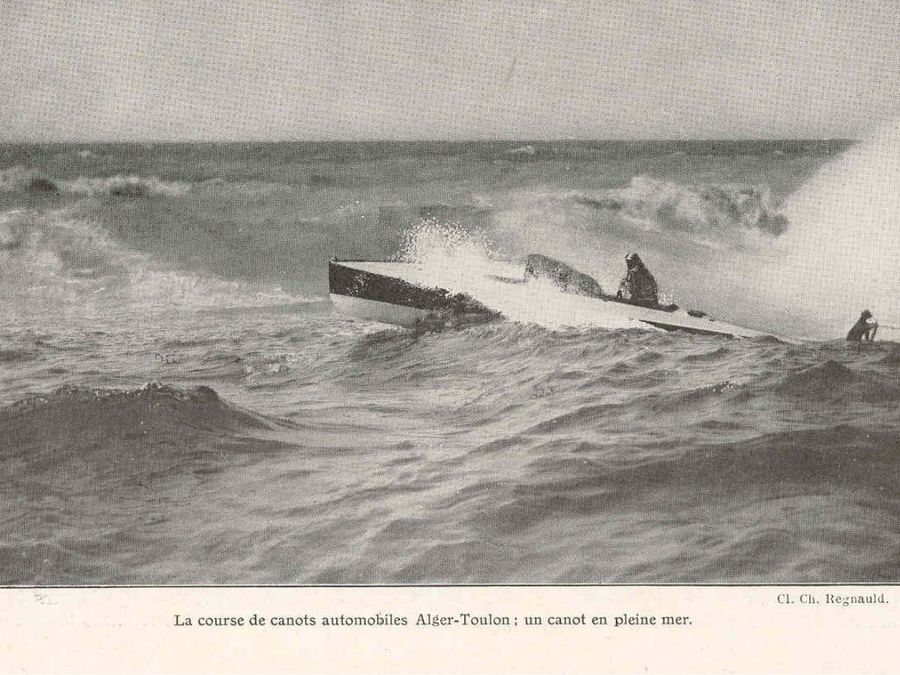
These boats rarely exceeded 20 knots. But they broke tradition at every turn.
At the turn of the century, internal combustion engines were large, heavy machines, and the logical home for them was the displacement hull, sharp at the bow to cut cleanly through the water and fuller at the stern, with the wake closing in quietly behind as though nothing had passed. On England's Lake Windermere, the Napier team drove their prototypes through timed sprints until the engines gave out. In Monte Carlo and Paris, high-society regattas embraced these loud, smoke-trailing newcomers with enthusiasm. Hulls grew sharper forward and fuller aft; engines became more powerful; speeds climbed from 8 to 20 knots. Yet there remained no single international contest, no unifying stage on which the best boats from different nations could meet. That absence would not last.
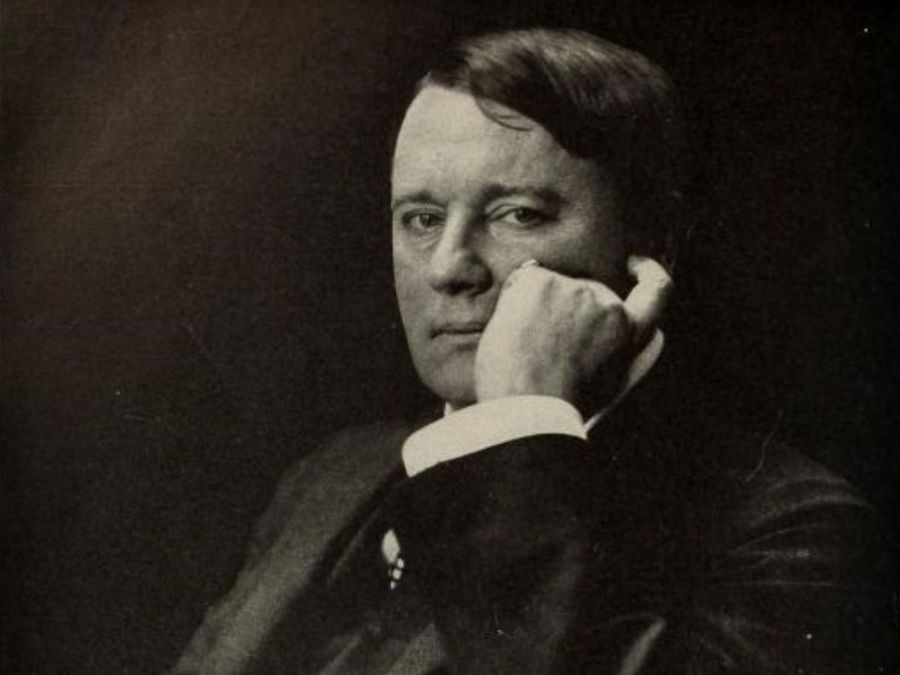
The man who resolved it was neither an engineer nor a boat builder. Alfred Harmsworth, later Lord Northcliffe, owned the Daily Mail and understood spectacle the way most people understand breathing. He had already promoted the Gordon Bennett Cup for motorcars, and he saw in the world of powerboats exactly the combination of national pride, technological ambition, and public drama that sold newspapers. His proposal was straightforward and deliberately provocative: races would be international, each boat must be designed and built in the country it represented, the trophy would go to the nation rather than the individual, and competition would take place on real water rather than sheltered lakes.
The Harmsworth Trophy was born.
The first race was held in 1903 at Queenstown, now known as Cobh, in Ireland. The boats raced around a closed circuit in Cork Harbour, which was not offshore racing in the modern sense, but it was considerably rougher and more demanding than the glassy European lakes most of these competitors knew. Entries from Britain and France lined up, most under 60 feet in length and built from wood or steel-reinforced timber. The race was undermined by boats failing to start, leaving only three entries to contest the course.
The winner was Napier I, a 40-foot, 75-horsepower, steel-hulled speedboat fitted with a three-blade propeller, owned by Selwyn Edge and driven by Dorothy Levitt. Levitt was one of the first women in motorsport and a fearless competitor by any measure. She won at 19.3 mph, securing the trophy for Edge and, in the process, making the kind of statement that resonated well beyond the harbour.
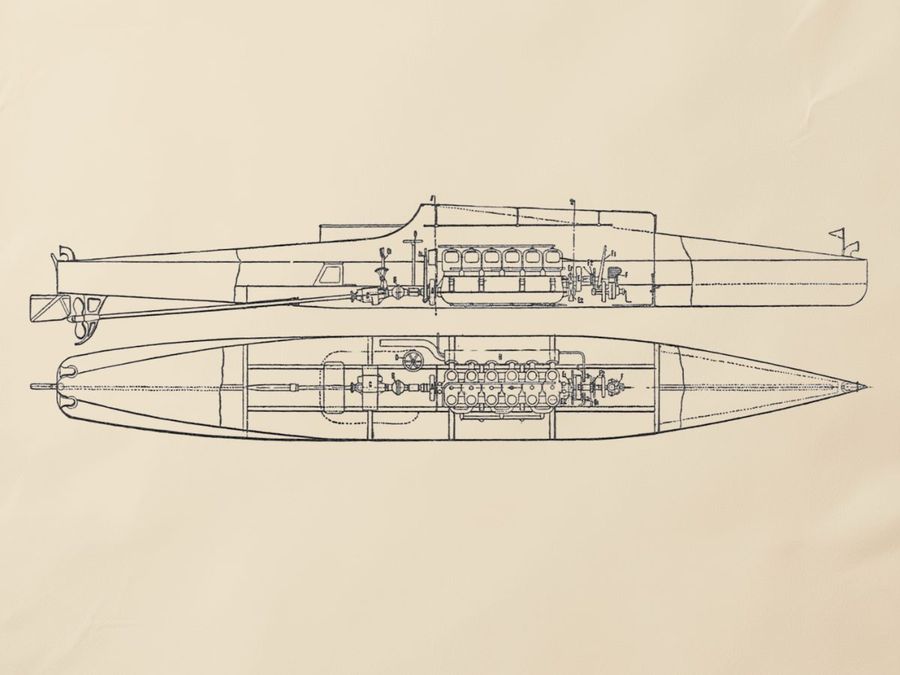
Speed, technology, gender, and national pride had converged in a single boat. The world paid attention. The Harmsworth Trophy was now the pinnacle of powerboat racing.
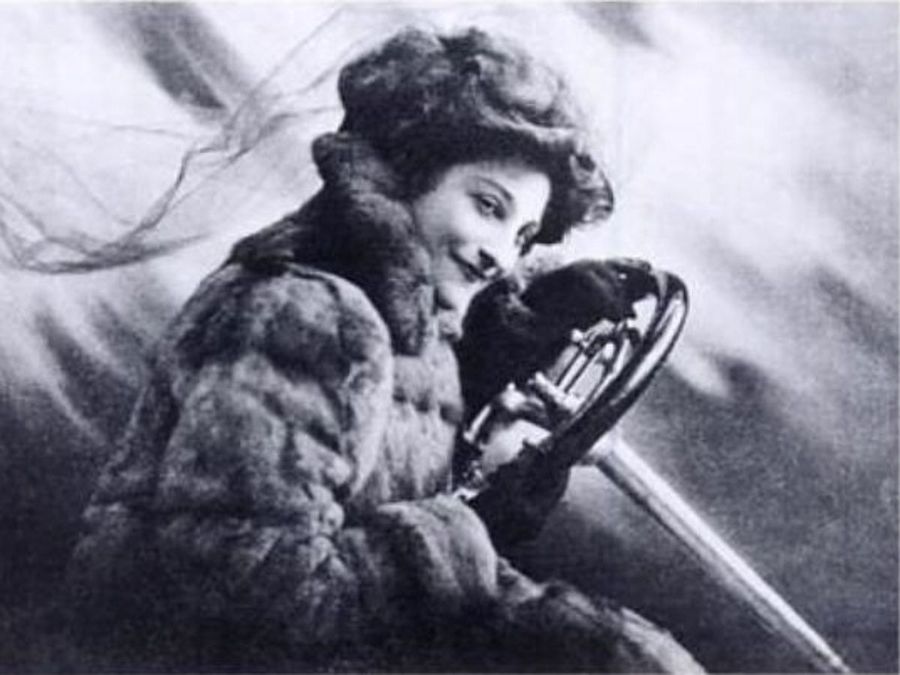
Dorothy Levitt: The Fastest Woman on Water |
| Dorothy Levitt was a fearless British pioneer of speed — the first British woman to race cars, the first woman to win a motorboat race, and the world’s first female holder of a water speed record. |
| In July 1903, Levitt won the inaugural Harmsworth Trophy — the first formal international powerboat race — driving a 75hp Napier speedboat to victory in Cork Harbour. She reached 19.3 mph, setting the first official water speed record. That same year, she raced and won at Cowes, was congratulated by King Edward VII aboard the Royal Yacht, and claimed the Gaston Menier Cup and Championship of the Seas in France. |
| Her boat racing career was short but trailblazing. Levitt wasn’t just fast — she was the public face of early marine speed. Sponsored by Selwyn Edge and Napier, she showed the world that women could master machines, command respect, and win. |
| [IMAGE:3] |
| Levitt later went on to break the women’s land speed record (90.88 mph in 1906), publish a motoring handbook for women, and inspire a generation of female drivers — all while dressed with Edwardian flair and accompanied by her dog, Dodo. |
| In the story of offshore powerboat racing, she remains a foundational figure — and one of its most audacious early champions. |
If 1903 established the Harmsworth Trophy as the sport's premier contest, the following year produced a race that pointed directly toward the offshore discipline we recognise today. The 1904 Calais to Dover contest covered 22 miles of the English Channel, a notoriously turbulent stretch of water that had nothing in common with the harbour circuits and calm lakeside venues of earlier events. Wind, open-sea chop, and genuine navigational uncertainty replaced the predictable conditions that had previously defined the sport.
As reported by The London Times on 9 August 1904, the French boat Mercedes IV, powered by a 60-horsepower engine, completed the course in one hour and seven seconds to claim first prize in the racer category for fastest time. The English Napier Minor finished second. The race attracted enough attention that four days later the Western Mail in Perth carried its own account of the result.
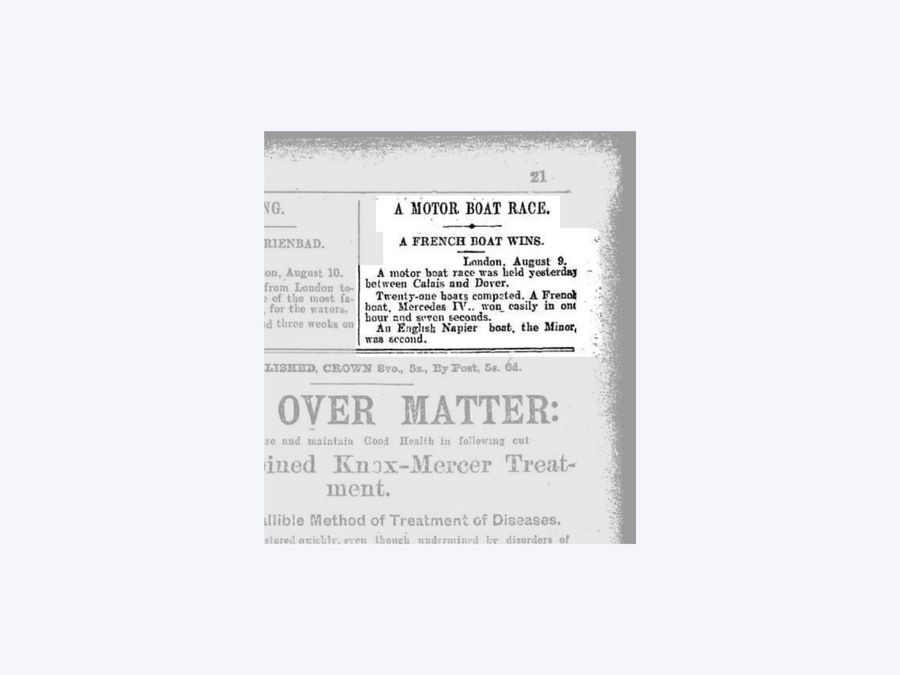
What the Calais to Dover contest demonstrated was that offshore powerboating was no longer merely a spectacle. It had become a test of seakeeping, mechanical endurance, and navigational judgement, precisely the qualities that define the sport in its modern form. That race served as the blueprint for events that followed in its wake: a 414-kilometre (247-mile) contest held since 1929 and recognised as the world's longest powerboat race; a 306-kilometre (200-mile) challenge that began in 1961 with boats racing non-stop from Cowes on the Isle of Wight to Torquay and back, with the 2025 running now approaching; and the annual Key West event held since 2004 in Florida, widely regarded as the holy grail of professional offshore powerboat racing.
The distance from Rems on the River Neckar in 1886 to Mercedes IV in the English Channel in 1904 was not simply a matter of speed or technology. It was the journey from mechanical curiosity to genuine international sport, from wealthy hobbyists circling harbour buoys to competitors battling open water in the name of their nations. Offshore powerboat racing did not begin on the ocean. But it reached the ocean quickly, and what happened when it got there changed everything.