What started as a single frustrated post on social media grew, within hours, into something far larger. Ben Chissell, who administers the New Zealand Fishing Community group, launched the One Ocean Protest after finding out that commercial ring-netting would remain permitted inside two of the Hauraki Gulf's newly gazetted High Protection Areas, despite those zones being established specifically to restore marine biodiversity.
"I think we all got a bit complacent," Chissell told Boating New Zealand. "We assumed someone else would fight it, then suddenly it was law."
The response was swift. Tackle industry heavyweights Daiwa and Shimano made contact within hours of that first post, offering their backing and helping transform what had been a spontaneous online appeal into a structured, lawful protest rally movement.
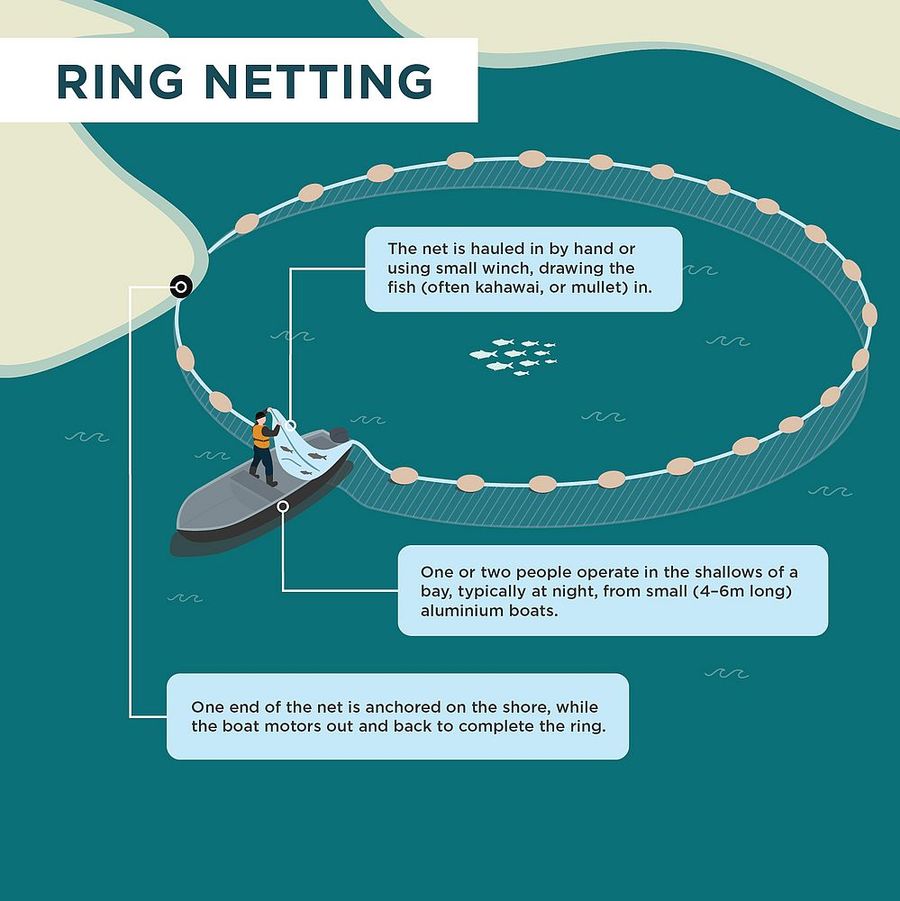
The anger stems from what many recreational fishers see as a fundamental contradiction built into the Hauraki Gulf / Tīkapa Moana Marine Protection Act. The legislation establishes twelve new High Protection Areas intended to rebuild marine biodiversity, and recreational fishing is prohibited inside all of them. Yet commercial operators have been granted limited six-month ring-net exemptions within two of those zones, a carve-out that strikes many everyday anglers as undermining the very purpose of high-level protection.
Chissell put the question plainly during an interview with Tyler Adams on NewsTalk ZB on 6 November: "If you're calling it a High Protection Area, how are you still allowing commercial fishing to exist in there?" He went on to describe how generations of New Zealanders have regarded the ability to "go out on the boat and catch a feed for the family" as something close to a birthright, one that "is being eroded bit by bit."
The practical consequences are already becoming clear to regular users of the gulf. Well-loved spots including the inside of Kawau Island and The Noises are now closed to recreational fishers, who Chissell says will be pushed further offshore into less familiar and more demanding conditions. He points out that recreational fishing accounts for roughly five percent of the total national catch, yet consistently finds itself absorbing the heaviest burden when new restrictions are introduced.
Chissell is careful to frame the grievance as one about fairness rather than animosity toward those who fish commercially. "It's not an attack on any commercial fishermen or women, they're feeding their families too," he told NewsTalk ZB's Adams. "But what I'd call the public fishermen, the everyday Kiwis, are never listened to."
The One Ocean Protest has built its position around four core principles, shared widely on the group's official Facebook page. The first is that no commercial fishing should occur inside HPAs, on the basis that protection must apply equally to all. The second holds that fish are a publicly owned resource and that decisions about them demand open consultation. The third calls for a halt to any new species being added to commercial quotas until existing stocks are properly managed. The fourth places domestic food security ahead of export returns, summed up as a commitment to feed Kiwis first. Those principles have attracted thousands of responses, ranging from enthusiastic agreement to more measured discussion. Supporters have been at pains to note that Māori customary rights and broad public access are not in conflict, and that the movement's primary target is destructive practice, particularly bottom trawling and excessive by-catch.
The rally itself is planned as a convoy of vehicles and boat trailers, departing from the Albany Park and Ride at 8:30am on 22 November. Organisers have been working with NZ Police, Auckland Transport, and Waka Kotahi NZ Transport Agency throughout the planning process to ensure the event proceeds safely and with minimal impact on other road users. Participants are expected to tow boat trailers and display banners as the convoy moves across Auckland.
Chissell has been consistent in his message about the tone of the movement. "We all have to stand together on this. It's not about dividing Kiwis, it's about fixing decisions that have let every fisherman down except the big commercial players." The One Ocean Protest is equally firm that this is not a recreational-versus-commercial dispute but a broader question of public access versus policy process, and it is calling for recreational representatives to have a formal place at the table whenever marine-protection measures are being developed.
The stakes, Chissell argues, reach well beyond the Hauraki Gulf. He warns that permitting commercial activity inside HPAs sets a dangerous precedent for other regions around the country, from Northland through to Nelson, where comparable regulatory frameworks are under consideration. "This little loophole," he said on NewsTalk ZB, "might seem insignificant, but it allows for things to be bent going forward."
The New Zealand Fishing Community group has more than 110,000 members, making it one of the largest recreational fishing communities in the Southern Hemisphere. The One Ocean Protest is not opposed to marine protection as a principle. What it is pushing for is protection that is genuinely fair, transparently designed, and inclusive of the people who rely on the ocean for recreation and sustenance alike.
For the recreational skippers, divers and families who spend their weekends on the Hauraki Gulf, this debate is anything but abstract. HPAs will directly shape where they can anchor, fish, or simply pass through, and the decisions made now will define how those areas are managed for years to come. The One Ocean Protest points to a wider shift in which New Zealanders with a deep connection to the sea are demanding a direct voice in marine policy rather than leaving those decisions entirely to others. Whether the November rally translates into political movement is still to be determined, but the question of who genuinely speaks for the ocean is firmly, and loudly, on the table.