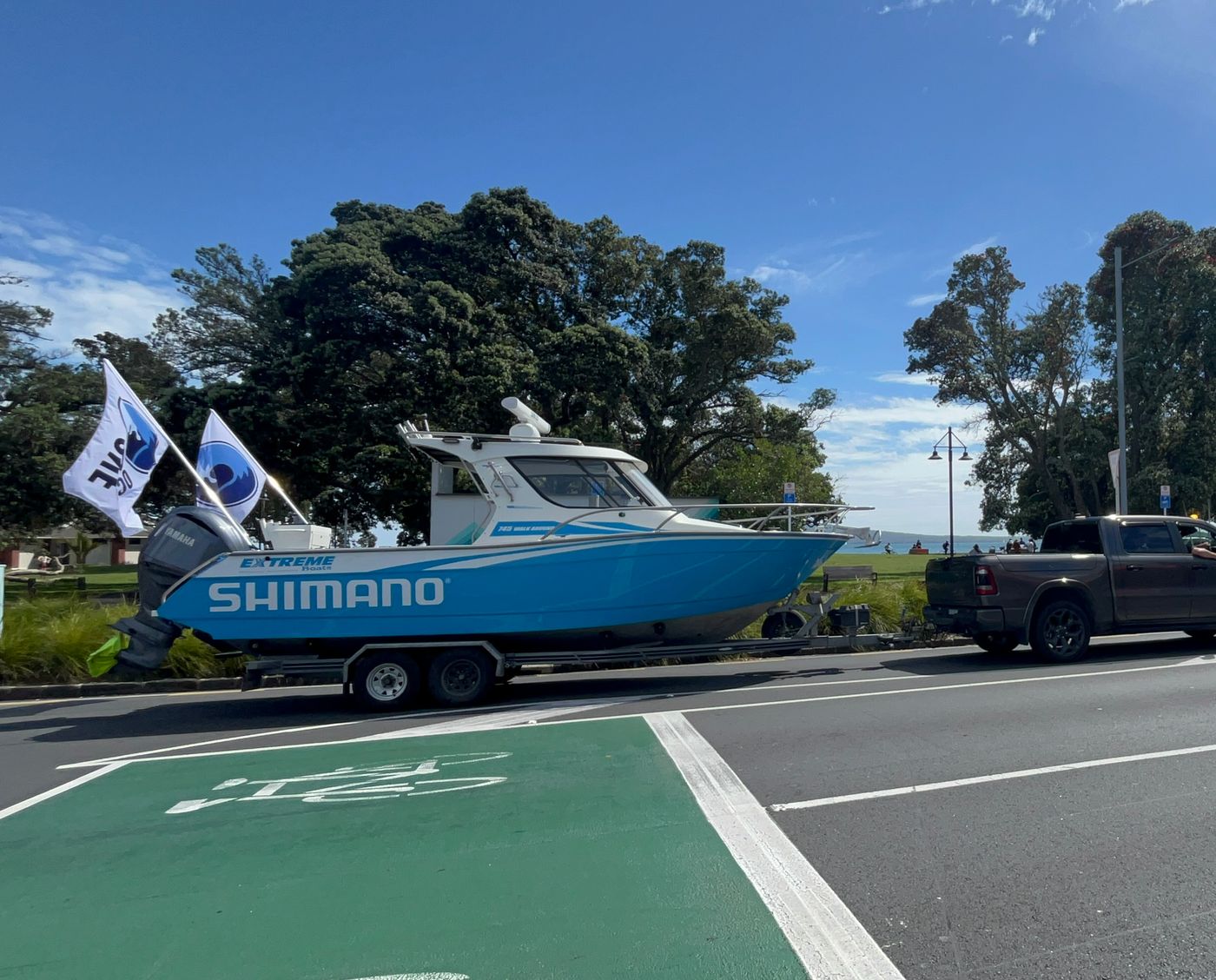
Mission Bay is rarely anything but busy, but just before 11 o'clock this morning the usual rhythm of the waterfront gave way to something altogether louder and more spirited. The One Ocean protest flotilla rolled along the coast in a line of reportedly 400 vehicles that took nearly two hours to pass from start to finish.
The convoy had begun in Albany, tracking down the motorway, past the Port, and along Tamaki Drive to Mission Bay. Cars, utes, and trucks hauled an extraordinary variety of craft behind them. Trailer boats of every size sat alongside jet skis, kayaks, canoes lashed to small trailers, and at least one tinny with a motor that looked as though it had seen more summers than the driver. Every one of them was part of a single, shared call for fairness on the Hauraki Gulf.
The atmosphere along the route was unmistakably upbeat. Horns blared in volleys. Participants waved flags, held signs, and grinned as they moved past the crowds packed onto the footpaths. The energy from those taking part was infectious. Not a subdued petition circulating quietly, but a community declaring its presence.
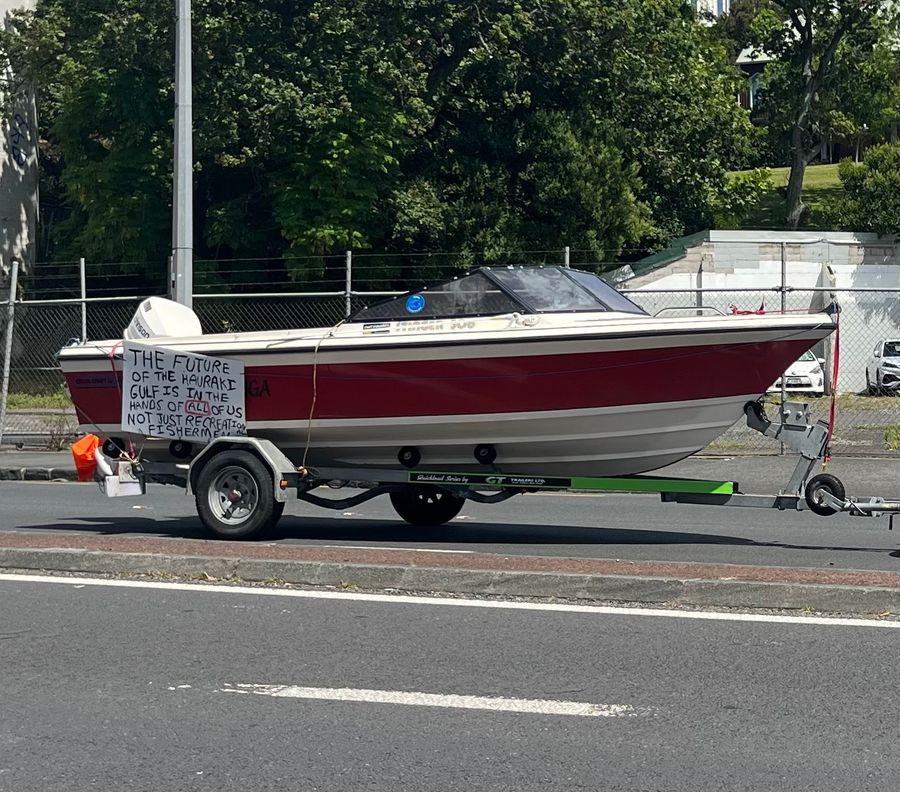
The passion driving the turnout was anything but casual. Many of the signs spoke directly to the proposed high protection zones in the Hauraki Gulf, where recreational fishers fear they will be locked out while commercial operators retain access. That imbalance, real or perceived, sits at the centre of the protest movement. The message from boaties and fishers along the waterfront was consistent: if areas must be protected, protection should apply to everyone. "No fishing means no fishing," read a number of placards, held aloft by families who have fished these grounds for generations. Commercial fishers joined that call as well, with the same demand extending to the proposed high protection area zones.
The mood among the organisers had been established early in the day. With safety instructions delivered and engines warming ahead of the drive, one of the team remarked that it was a stunning day that should have had everyone out on the water. The fact that so many people had chosen to spend their morning on a roadside protest was, in their words, "a resounding message that something isn't right."
The practical impact on the city was immediate and wide-reaching. Motorists along the waterfront slowed as the flotilla passed, some sounding their horns in support, others staring in disbelief as the line of boats kept coming. Once the head of the convoy reached Mission Bay, the group were to loop back toward Stanley Street, leaving Tamaki Drive's lunchtime traffic facing a challenging run. As the flotilla headed back toward the city, horns continued to echo along the waterfront.
For many watching from the footpath, it was the sheer scale of the turnout that made the deepest impression. Frustration in a community is easy enough to picture in the abstract. Standing at the roadside watching thousands of people choose to spend their morning demonstrating it is something else entirely.