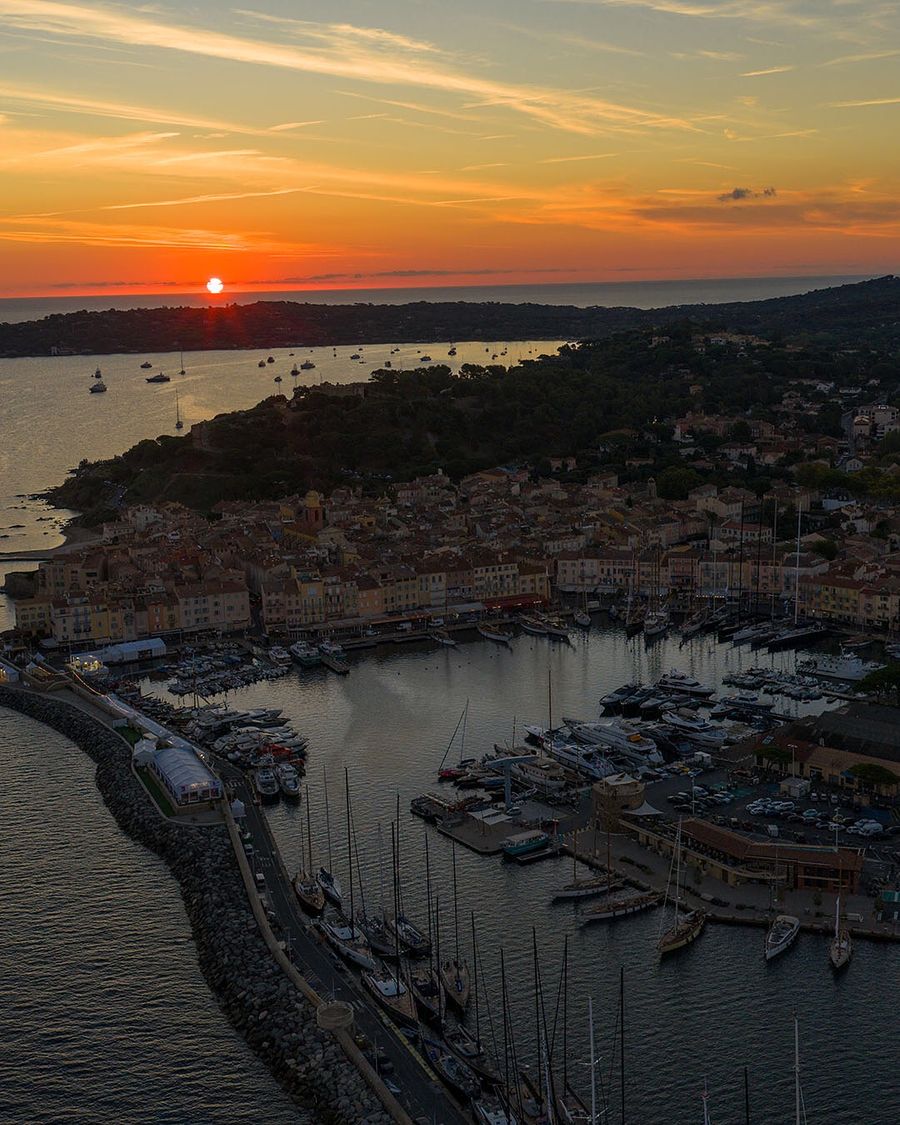
At 10 o'clock this morning, under brilliant sunshine, a kilted crew member aboard the 180-foot (54-metre) racing schooner Elena of London filled the harbour air with bagpipes, signalling the departure of the Tradition yachts from the port of St Tropez.
Eighty-one classic yachts, divided into nine classes, took to the water for Les Voiles de Saint-Tropez, with the 227-foot (69-metre) three-masted schooner Atlantic serving as flagship. The Modern and Maxi yachts had raced the day before, leaving this as the Tradition fleet's moment to parade past the Village atop the Jean Réveille jetty. It was a genuine feast for the eyes.
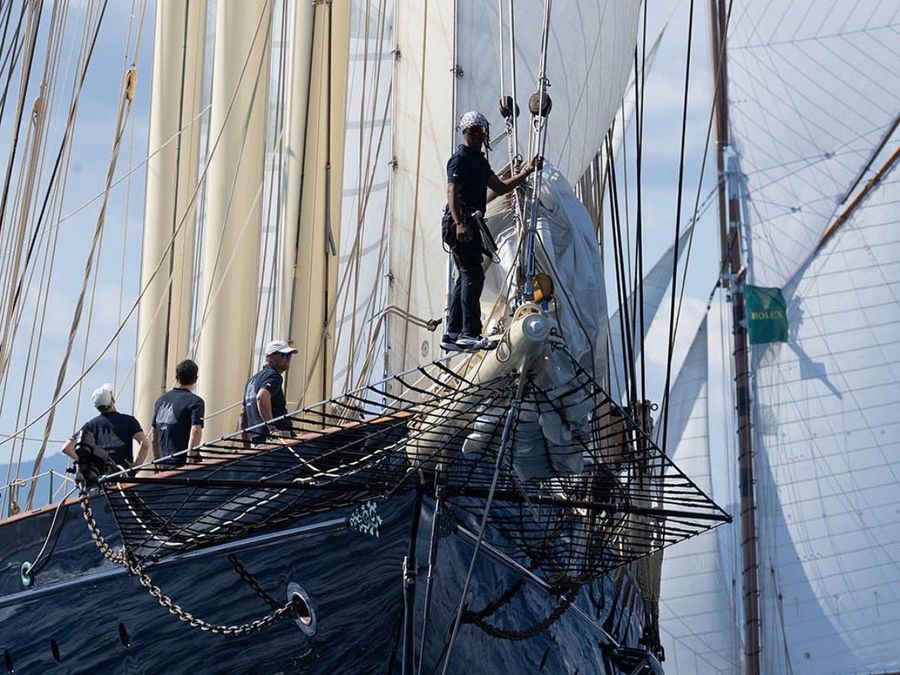
French naval officer and yachtsman Eric Tabarly (1931-1998) was a devoted follower of the Nioulargue. He once described walking the quayside in St Tropez during the event as "strolling through the pages of a book on maritime history." That sentiment felt entirely alive again at teatime by the Portalet Tower, where the Modern fleet launched into a ferocious race and a great procession of Tradition yachts followed.
The day amounted to an epic journey through time and geography: across to New York with the P Class yachts, up to Fairlie in Scotland where three generations of Fife designs were born, then on to Sydney and Auckland where the 12mRs crossed the line as they had in their heyday at Perth in 1987. Among the fleet, several vessels drew particular attention. Cariad, the large Arthur Payne gaff ketch measuring 36 metres, was a newcomer to watch. Leonora, an Anker-designed Q Class, was being celebrated as a new centenarian. And there was real pleasure in welcoming back the elegant 35-metre Fife Sumurun, now owned by Jean-Pierre Dréau, alongside the formidable 22-metre Herreshoff Spartan.
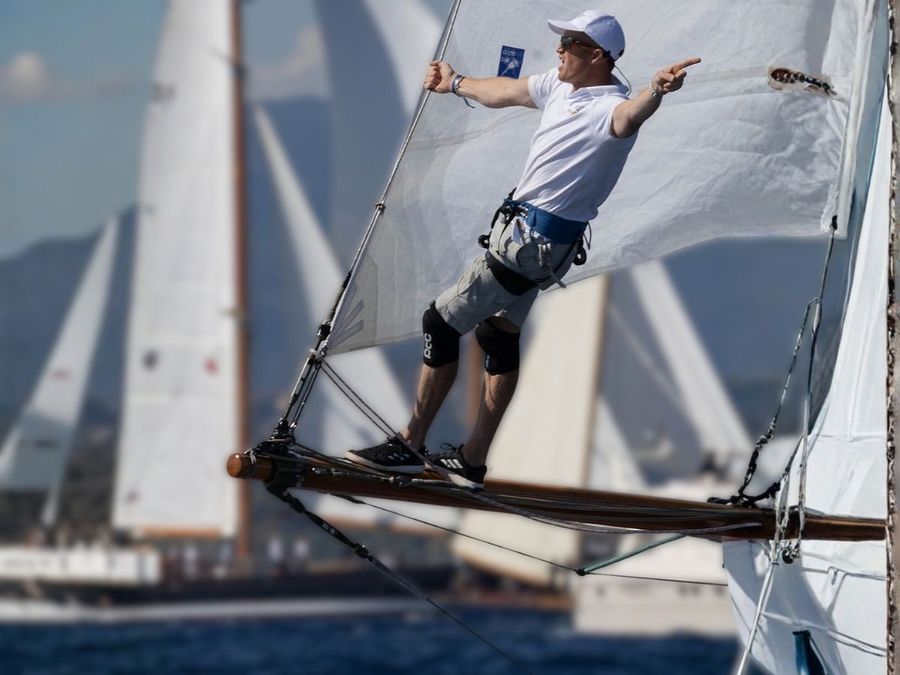
The on-the-water spectacle reached its peak at 1:30 pm when the Race Committee initiated the final start of the day for the Big Boats competing for the Rolex Trophy. Of the ten boats in this exceptional fleet, Cambria was the lone sloop, and she moved swiftly into the lead. But the image that will stay longest is Atlantic fully powered up, level with the committee boat as the starting gun fired, a moment that now sits firmly in the history of Les Voiles de Saint-Tropez.
Maxi GPs: All-out racing!
The Maxi GP category is made up of five high-calibre yachts measuring 70 to 72 feet (21 metres), with racing run essentially on elapsed time given how tightly bunched their ratings are. Jethou, the most senior boat in the class, has not shown her age since 2012, kept in remarkable condition by owner Sir Peter Ogden. The Judel Vrolijk-designed black beauty carries a medium rating but is guaranteed to be dangerous.
At the top of the ratings sit Vesper and Jolt. Vesper, skippered by Jim Schwartz, claimed victory in the opening race at Les Voiles, while Peter Harrison's Botin-designed Jolt was champion of last year's large Maxi class, now part of the GP fleet. These two concede fewer than three minutes per hour of racing to Peter Dubens' NorthStar and Django X, the new Wally Rocket 71 launched only this year and fresh from winning the Maxi Yacht Rolex Cup.
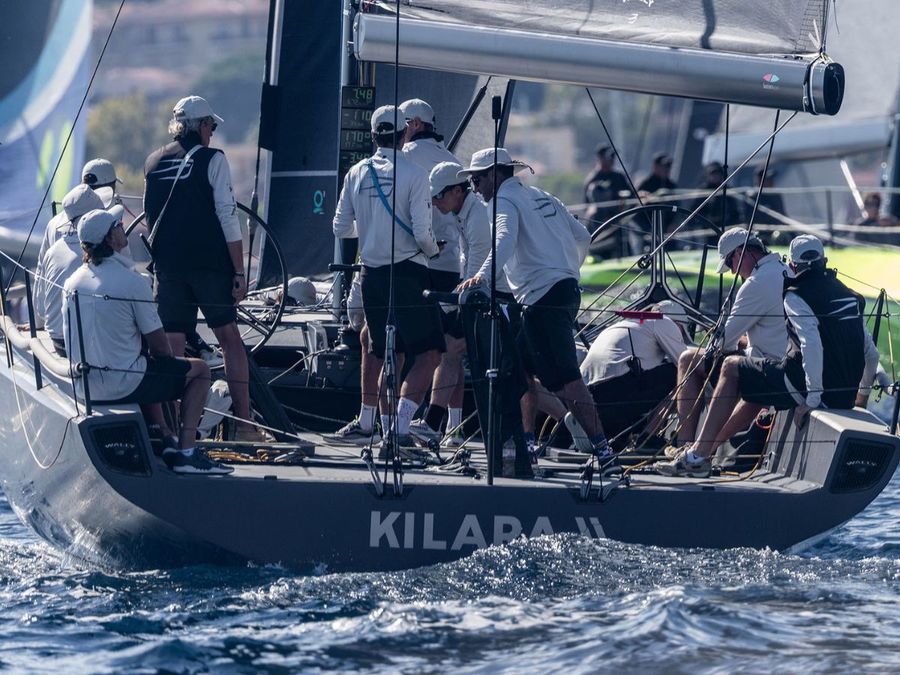
Built last year at King Marine in Valencia, the 21.40-metre Django X is quite the gamble. Six and a half feet (two metres) shorter than her rivals and two tonnes lighter, some might say she is the spoilsport of the category. She compensates through 2.7-tonne ballast tanks fitted on each side of the hull. "The boat is very at ease downwind and on a reach," confirms Vasco Vascotto, the on-board tactician. "To win a race though, you have to be able to survive on a beat!"
Achieving that upwind balance means transferring 2,700 litres of water from one side of the boat to the other in six to seven seconds. The tanks fill at true wind speeds above eight to nine knots and are not always used at full capacity, playing a controlling role as a trimming tool. Vascotto likens the effect to "a crew member out on the trapeze who plays around with the length of their cable." The complexity arrives when tactics come into play, particularly at the leeward gate, where the crew must decide which ballast tank to fill at the end of the downwind tack and time the rounding carefully to avoid dragging excess weight into a windward beat.
Modern yachts: The initial hierarchy
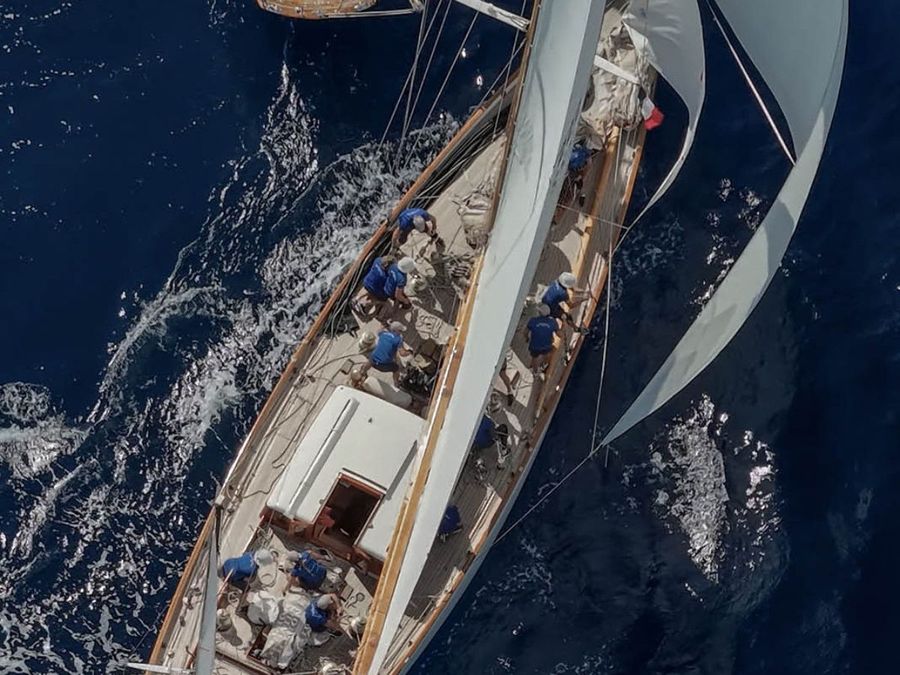
Two days of racing have played out, with light airs reshuffling the cards before an irrefutable victory went to Vesper today. Among the big IRC boats, Zen has consolidated her place at the top of the leaderboard, while a close medal battle has developed in IRC 1 between Zappy S, Andante 4 and Arya. Further down the fleet, Give Me Five leads IRC 2, Pride heads IRC 3, and Mikala sits on top of IRC 4 as the day closes. A minimum of four races must be completed before any boat can drop her worst result from the overall ranking.
One day, one boat: Atlantic, history in the making
Atlantic is a replica of the schooner that set the transatlantic record in 1905 under the command of Charlie Barr and his 50 crewmen. Built in steel between 2007 and 2010 at Van der Graaf in Rotterdam for Dutchman Ed Kastelein, she had, amazingly, never competed at Les Voiles de Saint-Tropez until now. "At the instigation of our guests, who thoroughly enjoyed the spectacle of the races last year, it was decided Atlantic should take part," explains Fosse Fortuin, captain of the 65-metre yacht since 2018, who previously worked alongside Steve McLaren on Elena of London.
Following a change of ownership last year, Atlantic was delivered to the Talsma yard in Holland to prepare for her racing debut. She received a new livery and a new generator, and her entire rigging was removed. The shrouds were upgraded along with any suspect parts of the steel mast, and a new wardrobe of flatter sails was made for her by Zaoli in San Remo, including an enormous 820 m2 gennaker. "This new sail wardrobe has raised Atlantic's game considerably, especially in breezy conditions where the schooner is able to consistently post an average speed of 16 to 17 knots with just her lower sails, resulting in an amazingly smooth yet safe ride," enthuses Fosse.
For Les Voiles de Saint-Tropez, Atlantic's captain has rallied reinforcements, bringing Italian sailmaker Beppe Zaoli aboard alongside a contingent of Dutch sailors. "They've come from the Talsma yard and they have racked up a lot of experience sailing large classic yachts in tight spaces. They are giants in their field and their assistance is invaluable!" gushes Fosse.
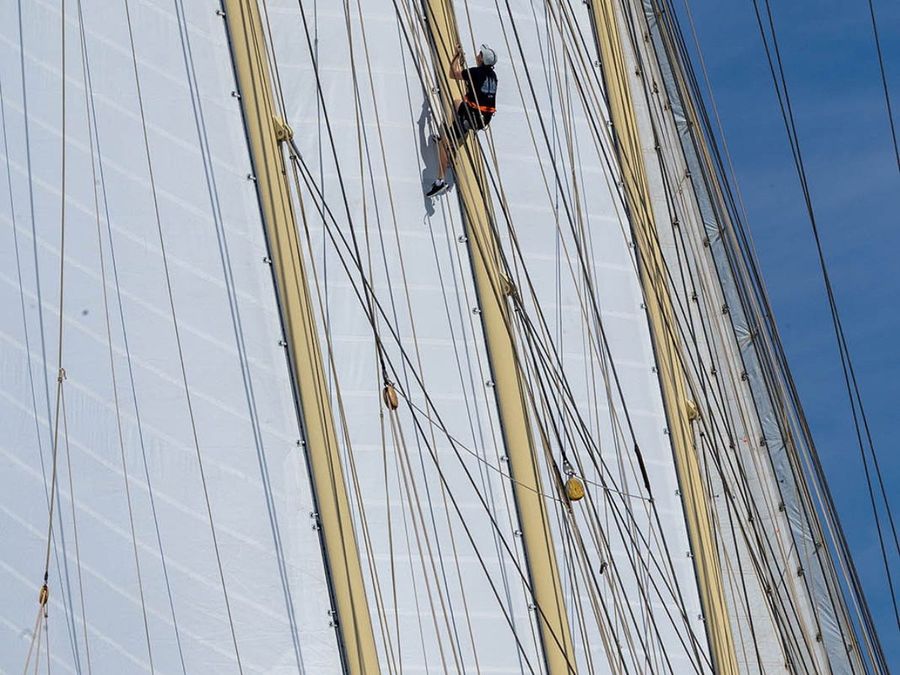
Managing a yacht of 65 metres at the start line demands total concentration from all 30 crew members. The task is to locate the clearest zone possible in which to power up 300 tonnes of vessel driven by 1,750 m2 of sail split across ten sails. To step things up to what Fosse calls a 'Hollywood sail area', a spinnaker and several fisherman sails must be hoisted, pushing the total to a staggering 2,600 m2 on this icon of yachting.
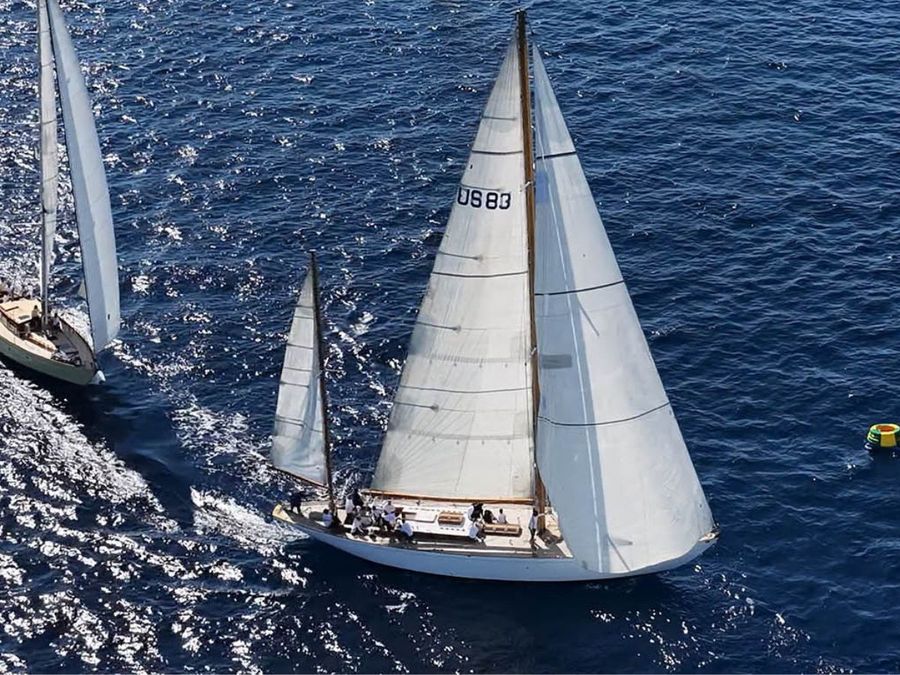
When her time at Les Voiles de Saint-Tropez is done, Atlantic will head to the Caribbean for Antigua Sailing Week before returning to Scotland in 2026 and then setting a course back through the Mediterranean, where another appearance at Les Voiles de Saint-Tropez remains a real possibility. Beyond that, the plans grow considerably more ambitious. "The new owner is very enthusiastic," says Fosse Fortuin. "2027 should see us making for the Pacific, with a schedule that includes French Polynesia, Indonesia, Australia and New Zealand, before a return journey via South Africa and Brazil."