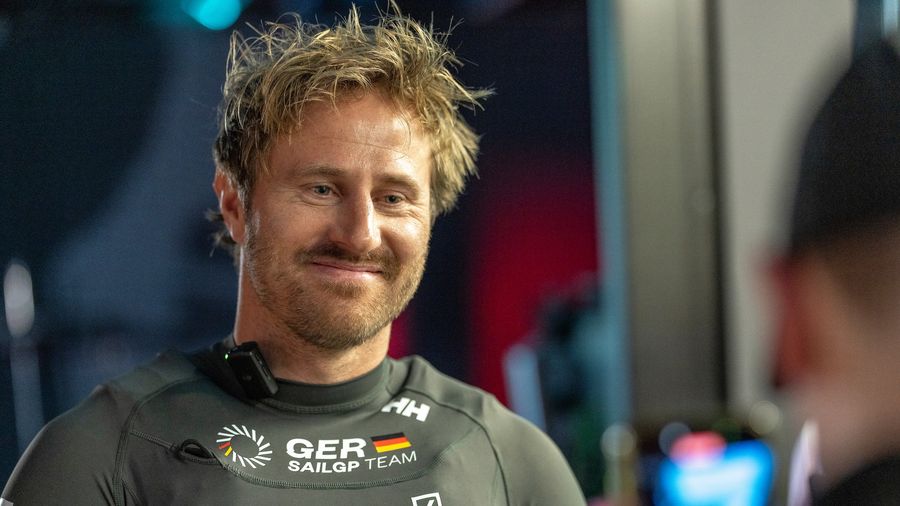
Erik Kosegarten-Heil's farm in Strande, just outside Kiel, is not the kind of place you'd picture a professional racing sailor mid-season.
Horses graze near a basketball court. Sheep wander the paddocks. Steam rises most evenings from the sauna, and somewhere among it all sits a hyperbaric chamber that Kosegarten-Heil steps in and out of the way other people use a shower.
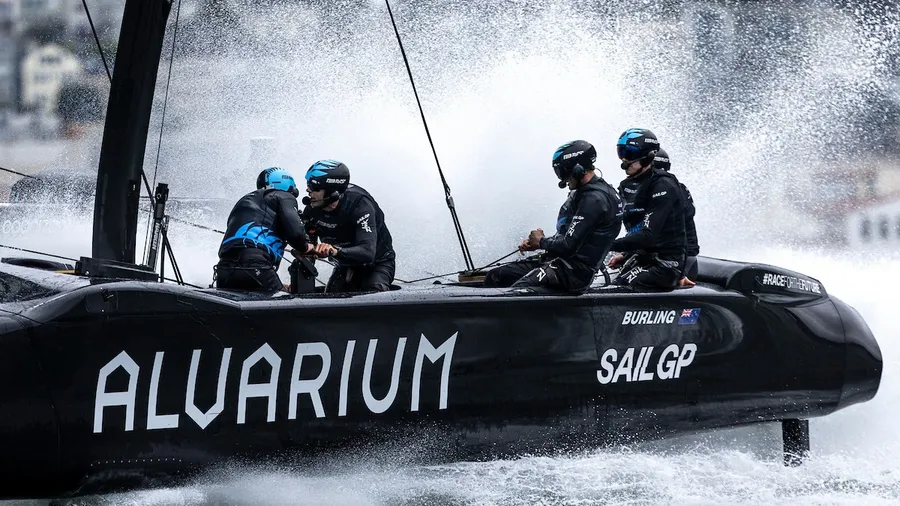
He's the first to admit it's an odd arrangement. Piloting an F50 at speeds north of 100 km/h, finishing a medical degree, and running what he describes as something between a hobby and a laboratory, it's a life built on parallel tracks.
Spend any time understanding what makes him tick and the logic becomes clear. He thrives on being busy. He loves a process. He relishes a challenge.
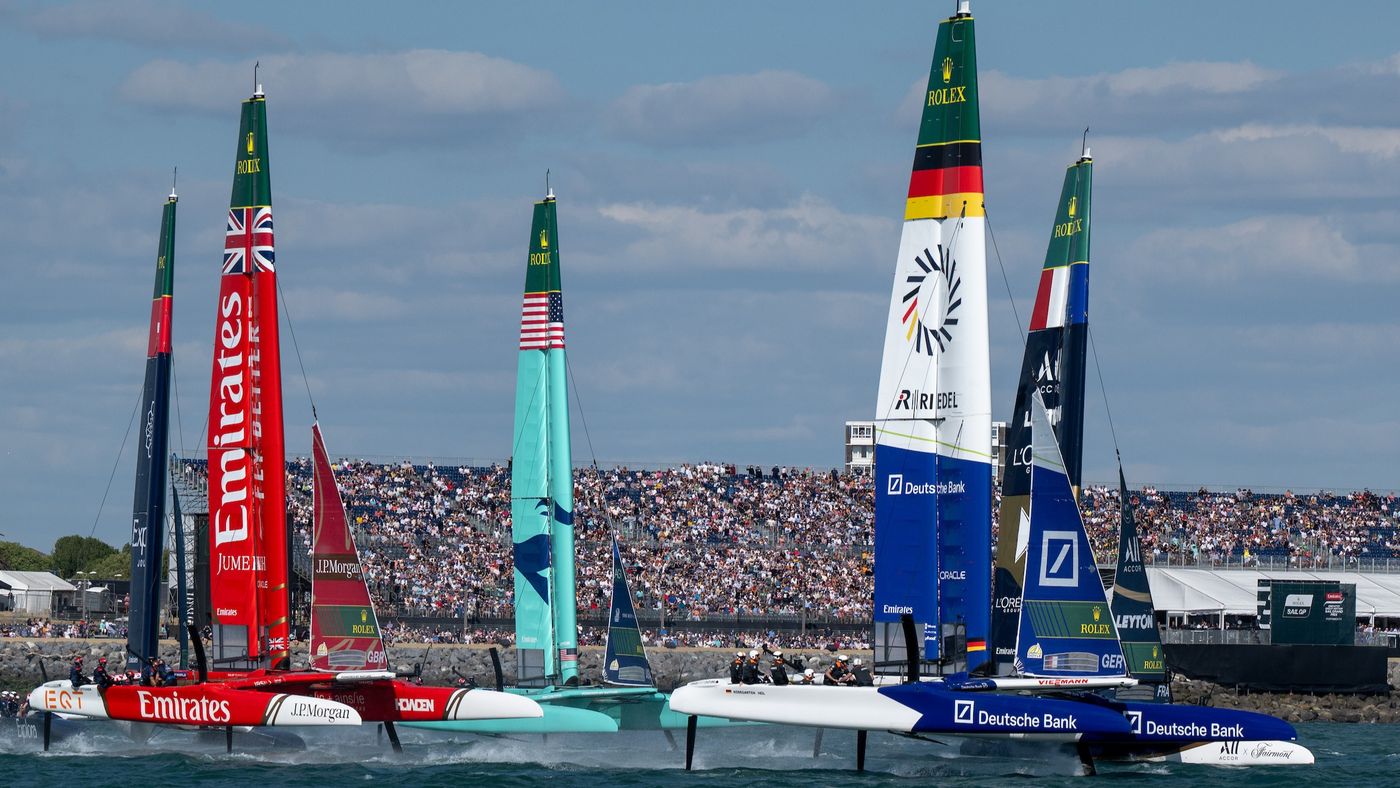
Germany by Deutsche Bank head into their home event with momentum building. An event win in Geneva last season and a first Final of 2026 in Bermuda in May suggest the ingredients are there. What Kosegarten-Heil is working on now is consistency, and he traces much of that challenge back to a wing-trimmer change at the start of this year.
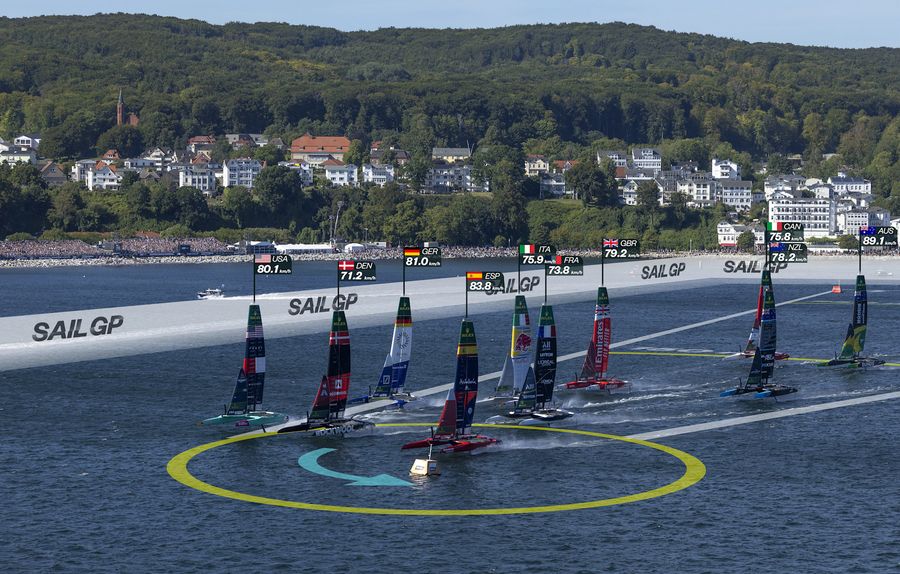
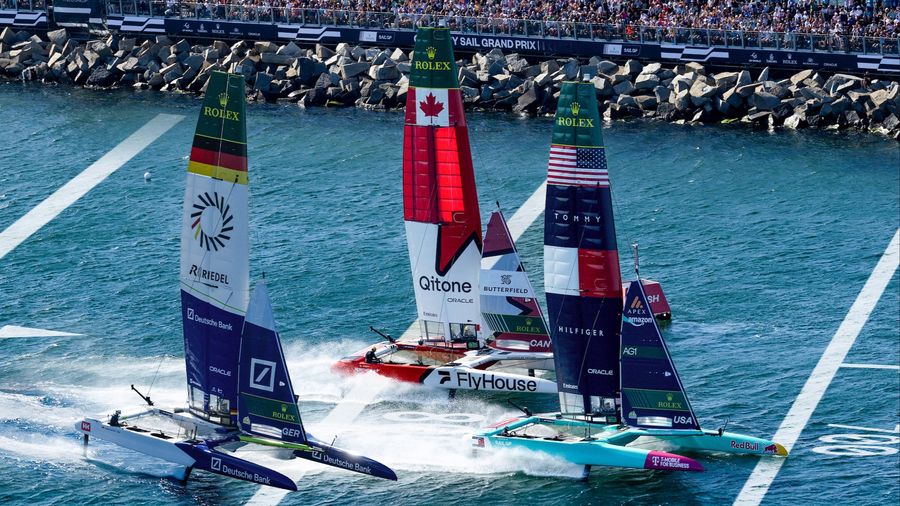
Getting French athlete Kevin Péponnet synchronised with him was never going to be quick. Péponnet came from DS France, a team known for the slingshot start, an approach that favours speed from deep behind the fleet rather than position at the line. In the current split-fleet format, that approach is losing its edge.
"Now we have the split fleet with higher speed approaching the line, the slingshot is getting weaker," Kosegarten-Heil explains. "But there are still a lot of boat-on-boat situations. If my head goes out of the boat, he has to lead it back to the line. We've just had a big job working on this, and it's getting better."
The starts have been the weak point. Everything else has moved in the right direction.
"Apart from that we are faster. Last year we were always losing over the course and now we're just starting badly but we're catching up quite a bit. There's progress in many areas but we don't show it yet in the results because of the starts."
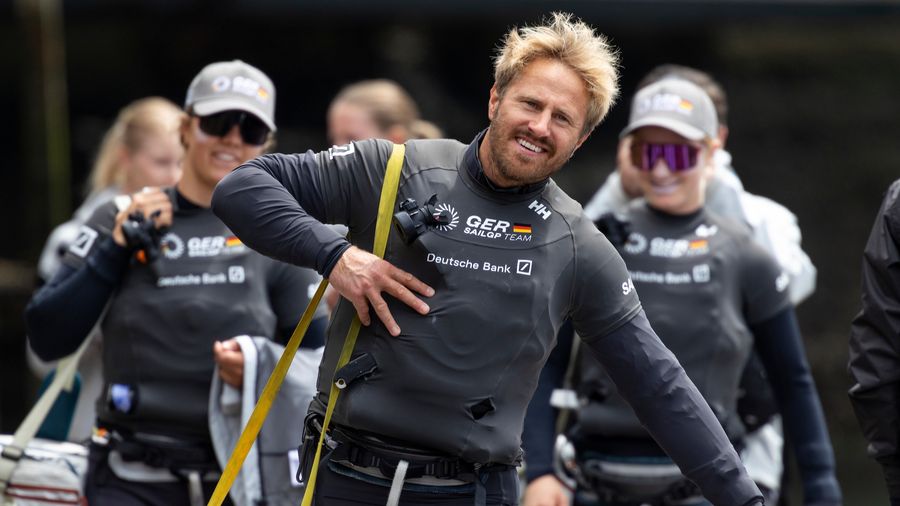
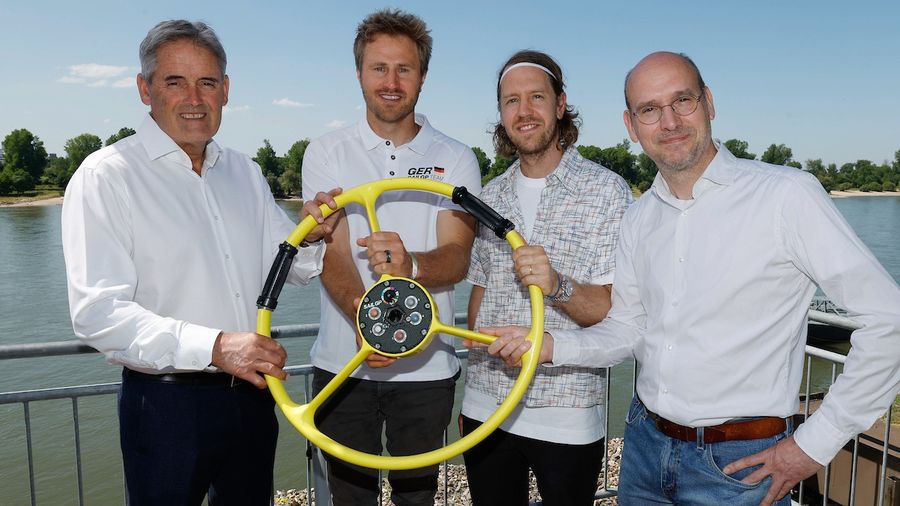
Kosegarten-Heil wasn't brought in to drive for the German team. He helped create it, alongside Formula 1 world champion Sebastian Vettel and entrepreneur Thomas Riedel. What started as three people is now a team of 28.
"I've had to quite significantly decrease all my time on the farm and in medicine to make sure we're running a good project in SailGP, and it still feels like a massive startup where we just don't have enough time for the different areas. We're just trying to handle all the tasks we face at the time."
Stepping back doesn't come naturally to him.
"I try to do less from time to time, but my personality pulls me back in," he says. "If I see there's some potential left behind and no one is touching it, I jump back in. I always loved the idea of having this professional sailing team opportunity in Germany, and it's part of my heart and what I leave behind. I want it to be successful and as well-prepared as possible."
Two Olympic bronze medals give some measure of his sailing ability. Kosegarten-Heil has never measured himself solely by what happens on the water, though. He has completed the theoretical side of a medical degree and needs only to finish the practical to qualify. The question of what kind of doctor he might become draws a considered answer.
"For children is an option, and also sport medicine could be an option," he says. "My wife is in trauma surgery, orthopaedics, and she'll take over the practice of her father. This could be something interesting to develop, a mix of prevention and all the sports stuff being connected to it."
Prevention isn't just a subject he's studied. It's something he's actively testing at the farm, including a hyperbaric chamber protocol he was running the day he spoke about it.
"I think prevention and all the stuff connected to it will be way more present in future, which is also better for everyone actually. You're not trying to solve problems when they're already there, you're trying to solve them beforehand."
Racing at home carries its own weight. Last year's event in Sassnitz left a mark that clearly hasn't faded.
"It was incredible feedback last year. I don't know how many messages I've already got from people travelling there. Hopefully the weather is good, last year was impressive, 30 degrees every day and lots of breeze, which we don't usually get in German summer."
He embraces that kind of pressure rather than managing it down. "I actually like it if it's busy. I like a bit more pressure. If you're not too relaxed, you're not switched on."
His pre-race routine is deliberately loose by SailGP standards, a rough sequence rather than a rigid ritual: briefing, warm-up, mental preparation in the container, changing, a short address to the team, then onto the water. It's a structure built around randomness rather than against it.
One more significant event is approaching. Erik and his wife Louisa are expecting their first child in October, which falls during a break in the SailGP calendar. It is, perhaps, the ultimate addition to a life already full to the brim.