
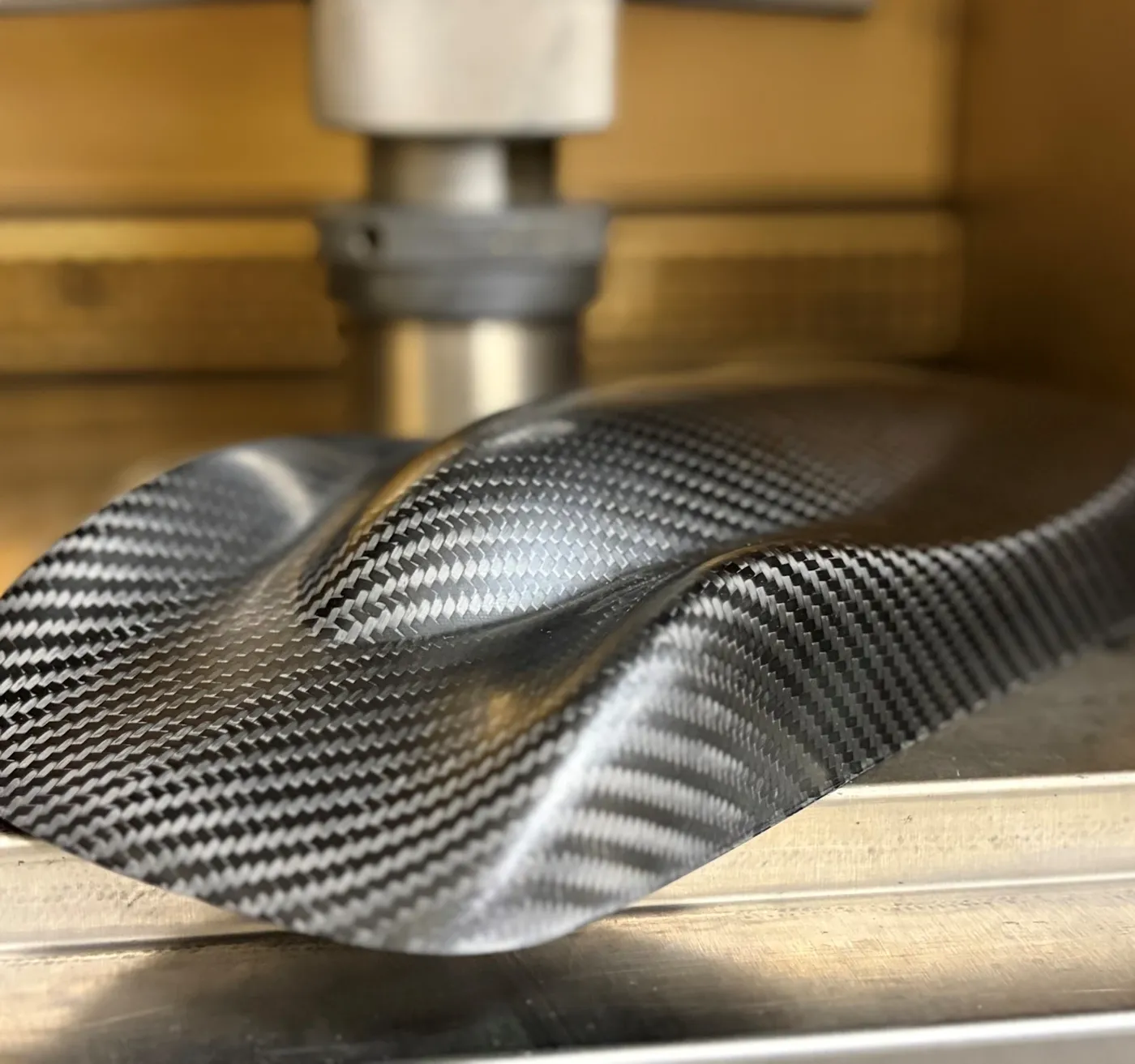
Carbon fibre has earned its place on performance powerboats and foiling yachts through a combination of genuine structural advantage and visual appeal that few other materials can match. Dashboards, helm stations, engine room vents, steering wheels and interior trim all suit that distinctive woven texture, and a growing number of builders are choosing to leave it exposed rather than cover it with paint.
Leaving carbon visible in an enclosed space, though, creates a compliance challenge. Any surface seen inside a cabin or helm station must satisfy fire safety standards, and the clear resins that show off the weave to best effect have historically struggled to meet those requirements. UK manufacturer SHD Composites has tackled that conflict directly with a new material designated MTC521FR, a transparent epoxy pre-preg engineered to deliver both optical clarity and genuine flame retardancy within a single product. For those unfamiliar with the terminology, a pre-preg is a resin system that has already been applied to carbon fibre cloth prior to moulding, making it ready for use in a controlled production process.
When carbon is left exposed, the visual quality of the resin is everything. Any cloudiness, yellowing or inconsistency across the surface defeats the purpose of showing the weave in the first place, so clarity is far from a minor concern. According to SHD, MTC521FR produces a clean, consistent laminate whose finish is comparable to an unfilled cosmetic carbon component, meaning the weave is presented exactly as intended.
{{TABLE_1}}
The fire performance credentials are equally important for marine applications. MTC521FR passes recognised international burn tests, among them the vertical flame standards used for commercial aircraft interiors. That is a demanding benchmark, and one that carries real weight when specifying materials for helm stations, saloon joinery and interior fitout panels where occupants are in an enclosed space.
Finding a single product that does both things well has always been the sticking point. Builders and fitout specialists working on premium craft have long been forced into a trade-off, choosing between a resin that looks exceptional and one that satisfies safety requirements, with very little on the market that genuinely bridges that gap. SHD's R&D Director Dr Alix Sauget was clear about what the development programme was intended to achieve.
"Our customers expect premium visual performance paired with dependable processing and safety compliance. MTC521FR delivers that combination with the consistency and reliability that define SHD materials."
For anyone specifying materials on a performance vessel where interior presentation matters as much as regulatory compliance, MTC521FR removes a compromise that has previously been treated as unavoidable. SHD will be presenting the product at the SAMPE expo in Seattle from 27 to 30 April this month.