The Northern Pacific sea star poses a serious biosecurity threat to New Zealand's coastal waters, even though it has not yet been detected here. A highly opportunistic predator, it consumes a wide range of marine life, including shellfish, crabs, worms, dead fish, and even other sea stars. Its capacity to reach very high population densities makes it a particular concern for the aquaculture industry, where both farmed and wild shellfish stocks could suffer significant losses. The broader marine environment would also be at risk should this species ever establish a foothold.
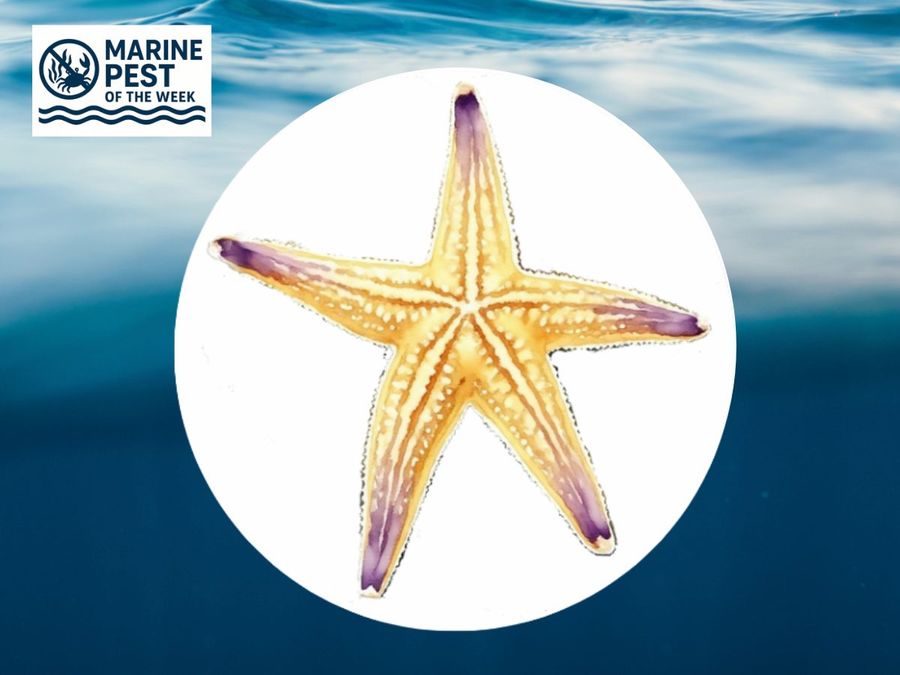
Knowing how to identify this sea star is the first step in keeping it out. Adults typically measure around 10 cm in diameter, with individual arms sometimes reaching between 40 and 60 mm in length. Like most sea stars, it generally has five arms, though what sets this species apart is the way those arms taper to pointed, often upturned tips. Each arm connects to a central disc and is covered in clusters of small, chisel-shaped spines. Colouration on the upper surface can vary considerably from animal to animal, ranging through shades of yellow and orange, sometimes with purple markings. The underside is generally yellow, with spines running in a single line along either side of the groove where the tube feet are located.

This pest is not known to be present in New Zealand. Any suspicious sighting should be reported to the Ministry for Primary Industries.
For more information on this species, visit the Marine Biosecurity Porthole. For marine pest identification, rules for boat owners, and the Clean Below? Good to Go guidance, visit marinepests.nz.