Ngāti Wheke's tāngata tiaki/kaitiaki, the appointed guardians of Rāpaki and Whakaraupō, are pushing for a substantial overhaul of recreational fishing rules across their traditional waters. The proposed changes, currently open for public consultation, aim to rebuild marine populations and secure sustainable access to the harbour's kaimoana for future generations.
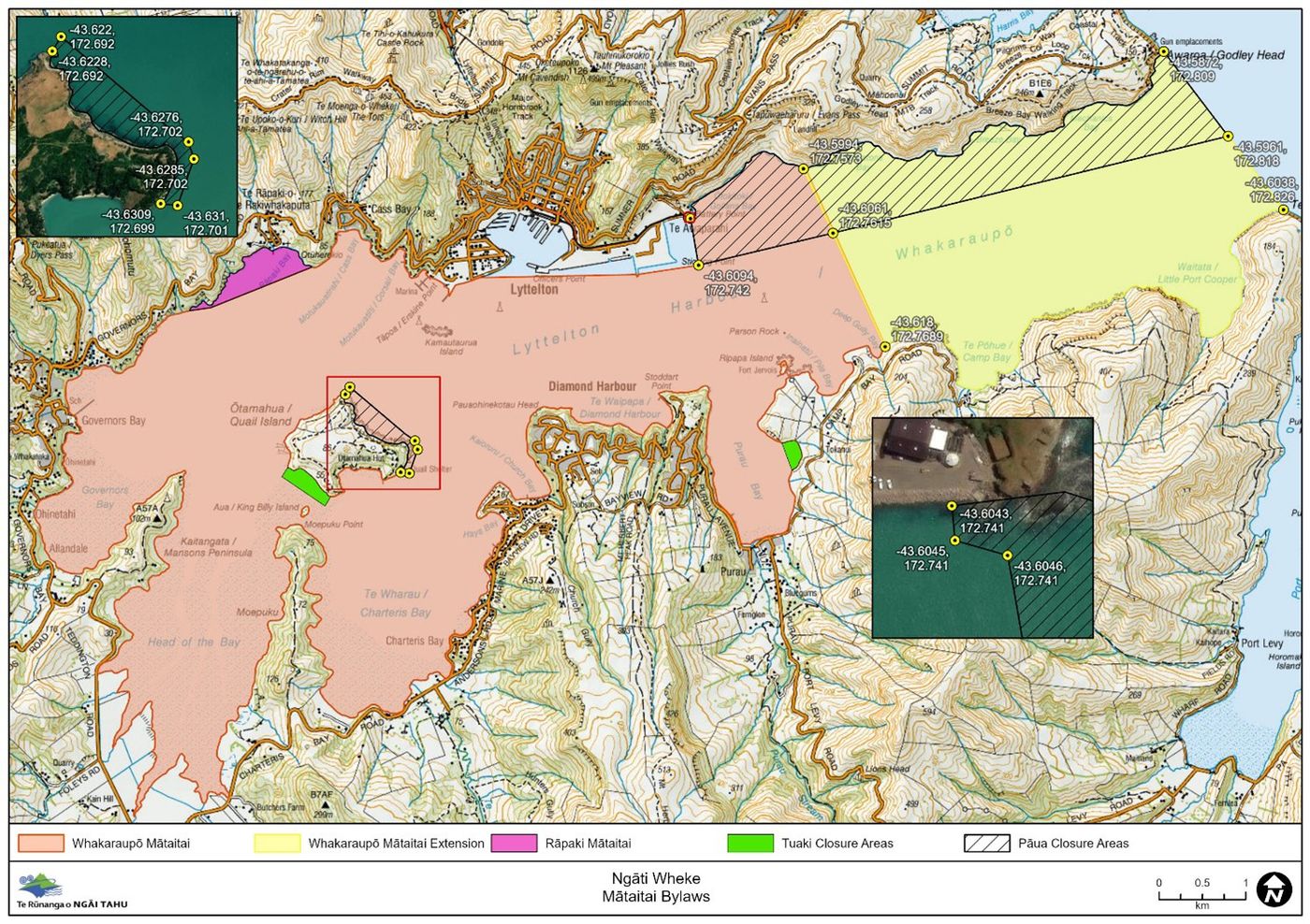
Three connected reserves sit at the heart of the proposal: the Rāpaki Mātaitai Reserve, the Whakaraupō Mātaitai Reserve, and the Whakaraupō Extension Mātaitai Reserve, the last of which was established in 2023 and has not yet been subject to local bylaws. Together, they form a cultural and ecological network spanning a large portion of Lyttelton Harbour.
The scope of the changes is significant. All native seaweeds and shellfish would be closed to taking across the three reserves, with the sole exception of wakame (Undaria), an introduced pest species. Finfish including blue cod, moki, butterfish, and conger eel would be prohibited from the Rāpaki Reserve entirely and tightly controlled elsewhere. Crabs, oysters, red cod, and several other species would receive full protection across the reserves.
Daily bag limits would tighten sharply from current settings. Pāua would be capped at three per person and nine per vessel. The overall finfish limit would sit at ten per person per day. Cockles and pipi allowances would drop to fifteen of each per day within the Whakaraupō and Extension reserves. New minimum size rules would also come into effect, with pāua requiring a minimum of 130 mm, cockles and pipi 40 mm, and green-lipped mussels 70 mm, giving stocks a genuine opportunity to recover and reproduce before harvest.
Pāua collection would be prohibited entirely in some parts of the reserve network, covering all of Rāpaki as well as specific zones around Gollans Bay, Otamahua (Quail Island), and the stretch from Livingston Bay to Godley Head.
Ngāti Wheke are clear that mātaitai reserves are not blanket no-take zones. Rather, they are community-managed areas in which kaitiaki hold the authority to set rules that protect the long-term health of the fishery. "This isn't about locking people out," one kaitiaki explained. "It's about looking after our taonga so there will always be kaimoana for everyone — now and in the future."
Anyone fishing within the reserves under the new rules would also be required to report their catch to Rāpaki Marae within five days, building a clearer local picture of fishing pressure and supporting more informed guardianship over time. Commercial fishing would remain prohibited unless expressly permitted, keeping the focus on subsistence and recreational use by local people.
Fisheries New Zealand is accepting submissions on the proposal until 5 pm on Monday 15 December 2025. Feedback can be sent by email to fmsubmissions@mpi.govt.nz, or by post to Inshore Fisheries South, Ministry for Primary Industries, Private Bag 1926, Dunedin 9054. Copies of the proposal documents and associated maps are available from Fisheries New Zealand offices in Christchurch or from the Rāpaki Rūnanga office.
Should the bylaws be adopted, they would set a benchmark for community-led marine management in Canterbury, drawing on the principles of kaitiakitanga alongside contemporary fisheries science. For Lyttelton Harbour, one of the South Island's most valued coastal environments, that combination of traditional stewardship and evidence-based management could establish a new standard for how inshore fisheries are cared for.