
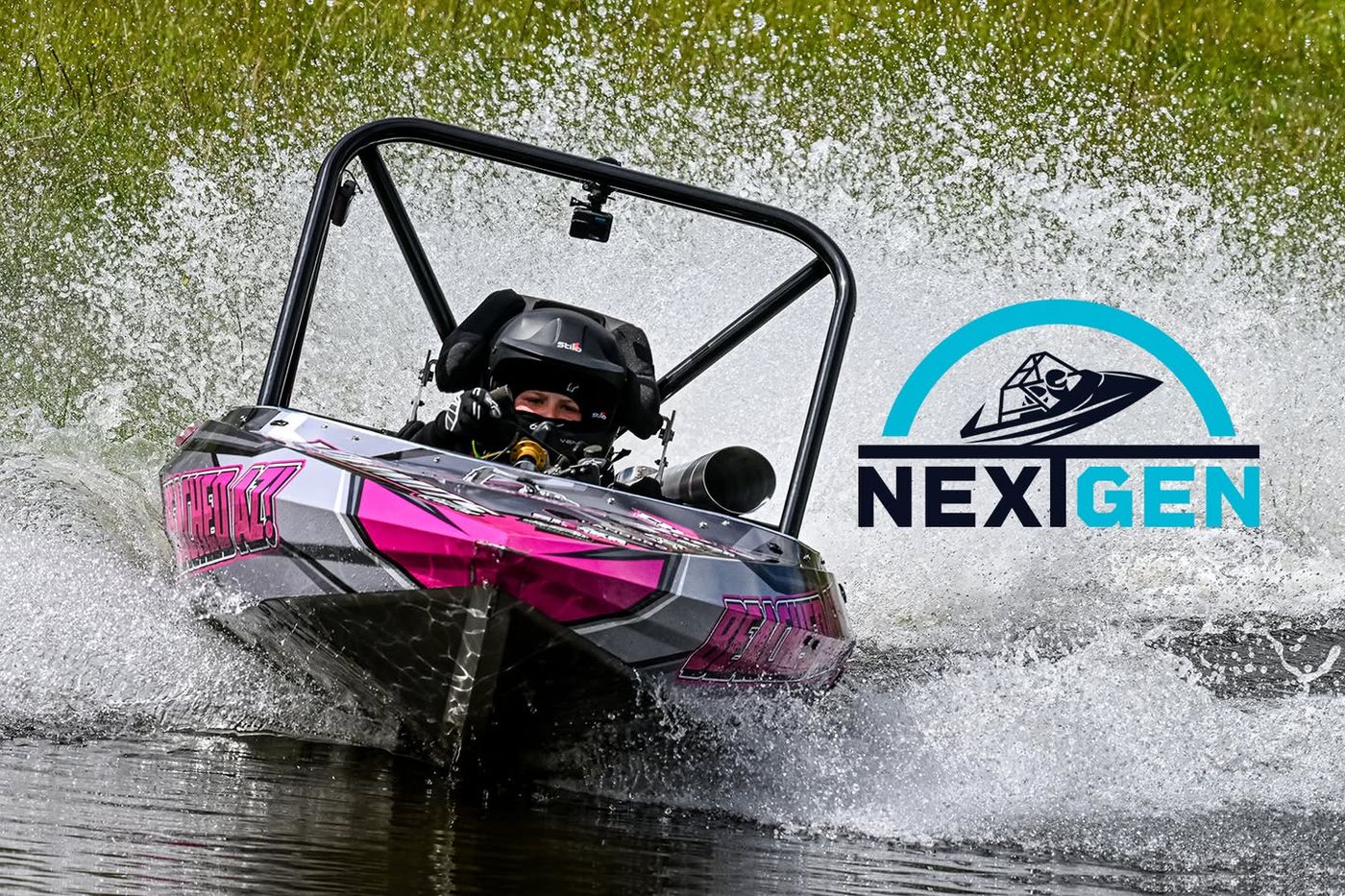
Jetsprinting has long been part of New Zealand's motorsport identity, and those inside the sport have understood for some time that bringing young drivers through earlier is the obvious next move. The New Zealand Jetsprint Association has acted on that understanding by launching the NextGen jetsprint class, a purpose-built category designed to give families a practical, affordable way to introduce their children to competition without the financial shock of stepping straight into a full-spec race boat.
For many young people drawn to the sport, the problem has never been enthusiasm. It has been knowing where to start. NextGen addresses that directly, built around three core principles: safety, affordability, and a clean, consistent rulebook that leaves no room for an equipment arms race.
At the core of the class is a single-engine formula. Every competing boat must run a factory-standard Seadoo GTR 230 power unit, retaining the original jet unit and wiring loom without modification or upgrades of any kind. The logic is straightforward: strip away the temptation to chase horsepower and young drivers are left with the thing that actually matters at this stage of their development, learning how to read a course, commit to a line, and build real confidence at the wheel.
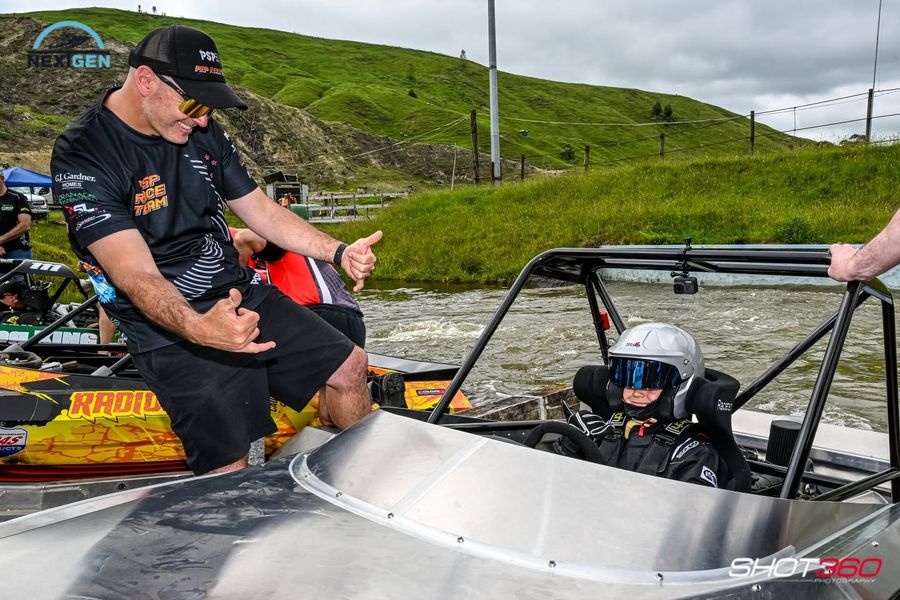
Keeping the engine package fixed also makes the class genuinely accessible. A second-hand GTR 230 jet ski provides everything the rules require, meaning families can put together a competitive package without engaging a specialist workshop or facing unpredictable costs. Racing in NextGen becomes a contest of skill rather than spending, with drivers separated by their ability to pick the right line and hold their nerve through corners rather than by what is happening under the bonnet.
The format mirrors the approach taken by successful junior categories in other forms of motorsport, where identical machinery produces close, fair racing and lets young competitors develop a feel for how a machine actually behaves, rather than learning to compensate for different setups from boat to boat.
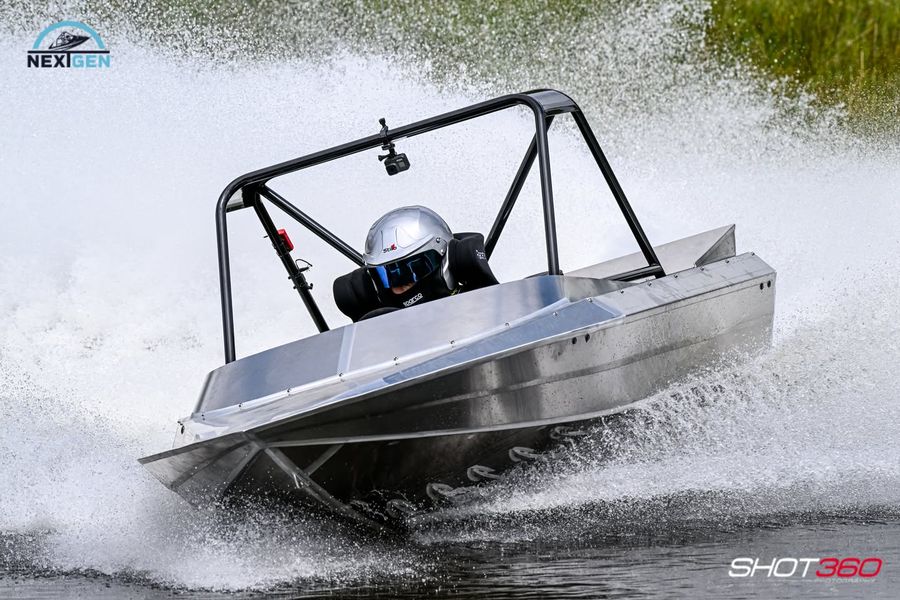
The hull regulations complement that philosophy. Boats must measure between 1250 and 1450 millimetres in width and between 3000 and 3500 millimetres in length, with a profile that resembles a scaled-down version of a modern competition hull. Drivers are positioned in a single centre-mounted seat. Those dimensions are deliberately chosen to produce hulls that are lively enough to teach useful habits while remaining stable enough for newcomers to manage with confidence.
Because every boat runs the same engine and jet unit sourced from the donor ski, builders know exactly what to expect from the running gear before a hull ever hits the water. Coaching becomes more straightforward as well. A driver can feel genuine improvement from one outing to the next without having to account for changes in hardware between sessions.
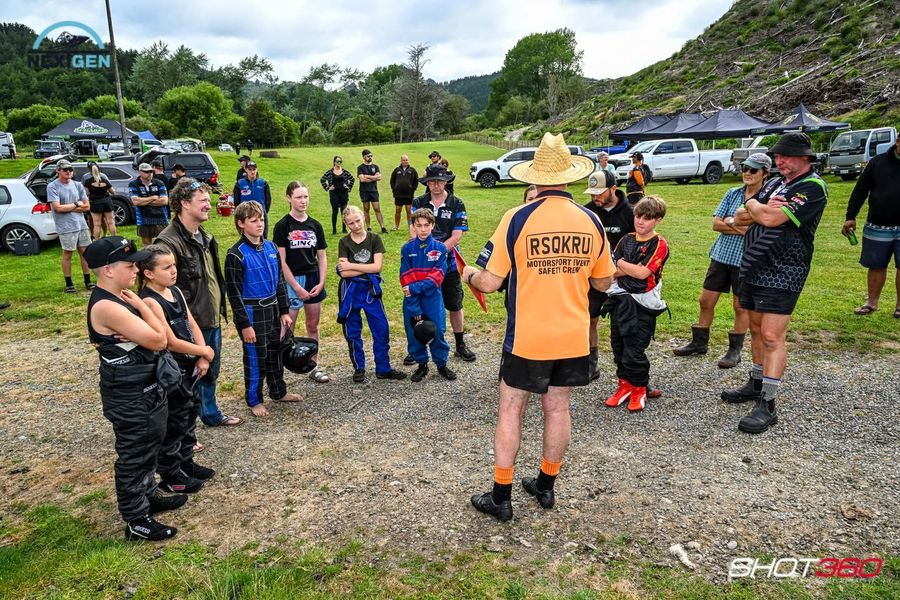
Safety is embedded in the class rules from the ground up rather than treated as an afterthought. A responsible adult must be present and involved whenever the boat is being launched, recovered, or operated. That requirement keeps the environment around the ramp structured and gives young drivers the freedom to focus on what they are there to learn.
The class is built around steady, methodical progression. Drivers develop throttle control, build an instinct for balance, and grow comfortable navigating a course at their own pace rather than being pushed before they are ready. Those foundations matter more than they might appear to in the early stages, because jetsprinting at higher levels demands precision and calm decision-making, particularly as speeds increase. NextGen gives young racers the space and the structure to develop those qualities properly.
The New Zealand Jetsprint Association views the NextGen class as a long-term investment in the health of the sport as a whole. A steady flow of young drivers through a well-structured junior category means more teams, more active clubs, and stronger fields at major events. It also creates natural opportunities for experienced competitors to take on a mentoring role and pass on what they know.
New Zealand has a track record of producing world-class jetsprint drivers, many of whom built their understanding of the sport through time spent at club tracks, absorbing the rhythm and flow of a course. A formal youth class makes that development pathway clearer and more reliable than it has ever been. Should the model prove effective locally, it could well shape the way youth development is approached in the sport beyond New Zealand's shores.
What NextGen ultimately offers is a starting point that is real and reachable. Young Kiwis gain the skills and confidence to move through the ranks at a sensible pace. Families have a genuine entry point without an intimidating price tag. Clubs gain a reason to keep building their programmes. For a sport that runs on attitude, quick thinking, and the satisfaction of a clean lap, fresh energy at the junior level is exactly what it needs.