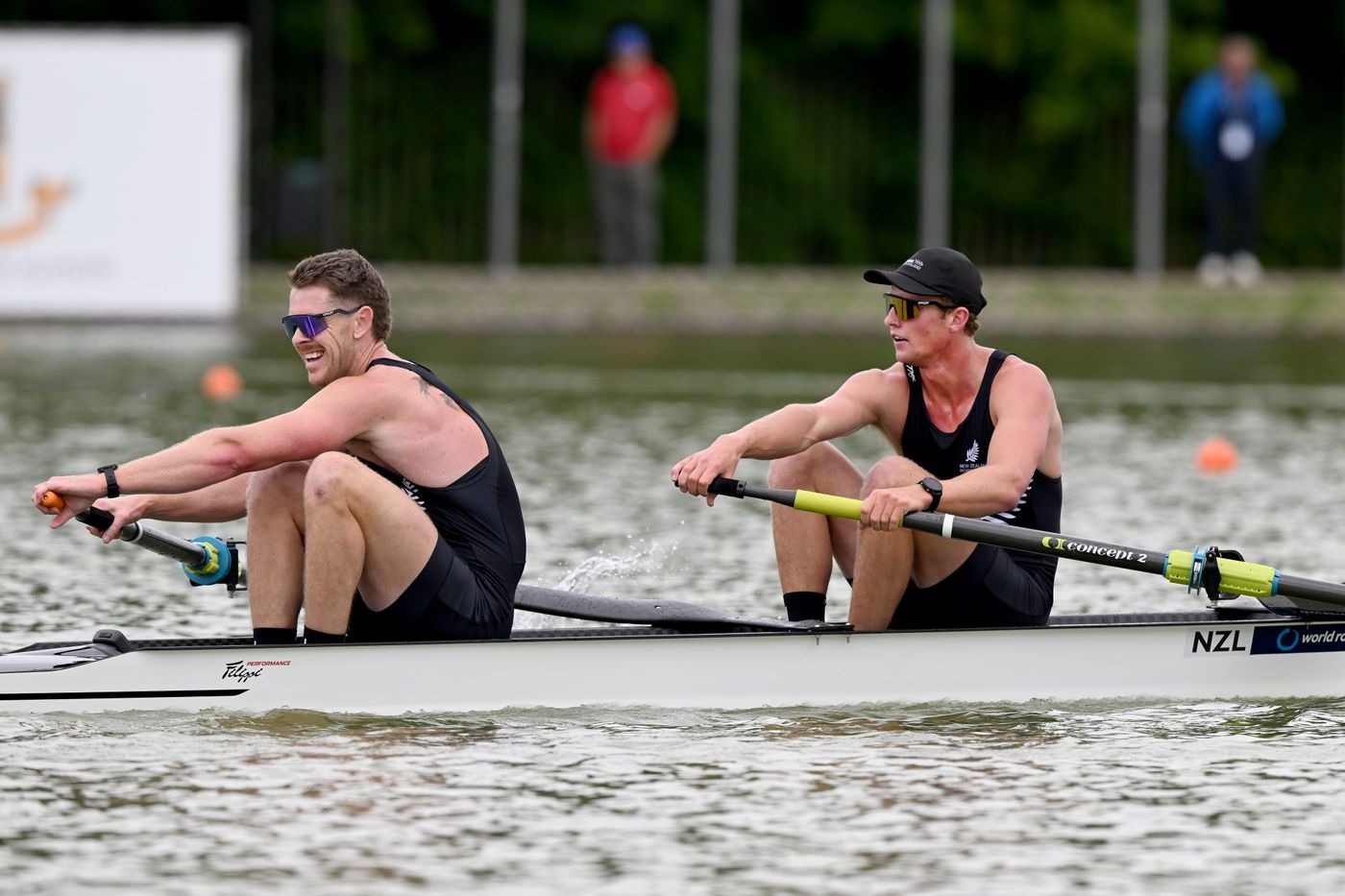
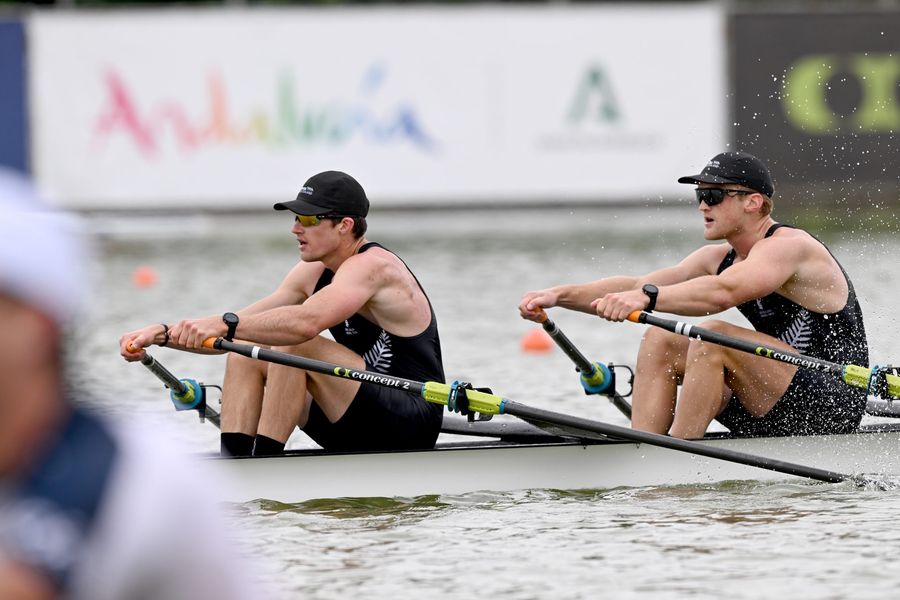
Ben Taylor and Oli Welch arrived in Plovdiv without records on their minds. They were there to race, and the echoes of New Zealand rowing history showed up on their own.
During their Men's Pair semifinal at the World Cup in Bulgaria, the combination posted a first 500m split of 1:30.28, a number that drew immediate comparison to one of the most celebrated pairings the sport has known. At the London 2012 Olympic heat, Mahe Drysdale and Eric Murray had clocked 1:31 on their way to a world best time. The arithmetic of elite rowing leaves nowhere to hide, and Taylor was under no illusions about what the split meant.
"I knew it was fast," he said after the race. "We thought we could improve that first K, so we went out there attacking it. So pretty happy."
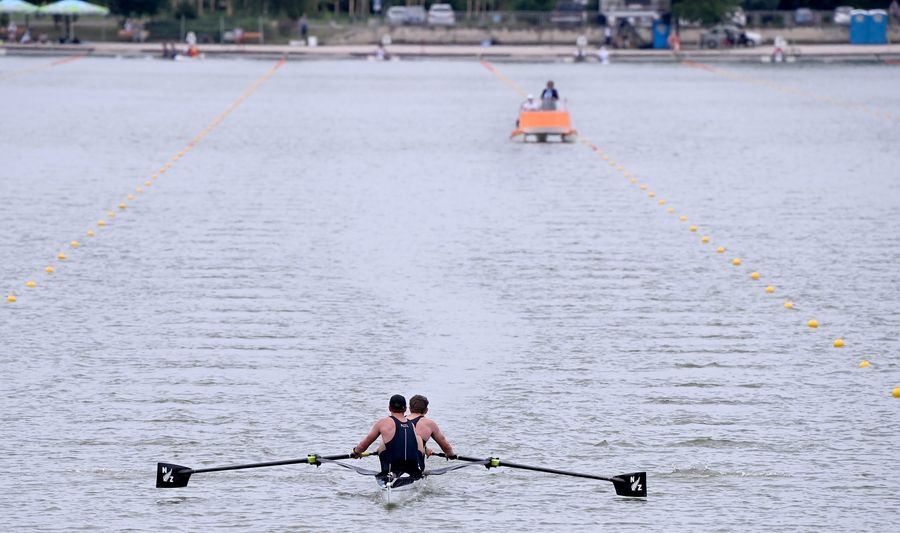
That scorching early pace did not hold through the middle of the race. By 1000m, Taylor and Welch were two seconds behind the Bond-and-Murray template, and with conditions having turned against them, Taylor made a deliberate choice to stop chasing the clock. "It was there, it was a thought but one I had to quickly shake," he recalled. "I didn't think we were really on for achieving that."
The pair crossed the line in 6:23.00, having eased through the final 500m at a controlled 1:43 pace and 32 strokes per minute. No record attempt. A composed, professional passage into the next round.
The performance offered a glimpse of what this combination might eventually produce. Taylor is aware of it, though he and Welch are keeping a lid on any ambitions for headline times. "We're trying to keep chill about it though," he said. "We both deep down know that we could go really fast when we get it right and get the right conditions. It's something we want to let happen when it comes rather than start chasing it."
That kind of self-regulation points to a maturity many emerging crews never quite develop. Reaching for a landmark time before the moment is right has undone more than a few promising combinations.
Elsewhere in Plovdiv, the Men's Double Sculls pairing of Finn Hamill and Ben Mason used the regatta to shake off a flat outing in Seville a fortnight earlier. They won their semifinal by two seconds from the USA, finishing in 6:14.82. The crew had made adjustments to their setup, including what Mason described as "a bit of a panic rig" alongside a position swap, though both rowers were candid about not fully understanding why the changes had worked.
"Honestly, we're probably just as confused as to why we were going slower at the first regatta as why we're going faster now," Mason said. "We just kinda trusted it, I suppose, and it's magically going faster again."
Their intentions heading into the A Final were stated plainly. "Go out and see if we can win the whole thing. Take all the glory," Mason said. "We got a bronze and a silver last year, so it'd be pretty unreal to get a gold at a World Cup this year."