Naples has just shown the sailing world what's coming, and the numbers are hard to ignore. New analysis from Sport e Salute estimates the Louis Vuitton 38th America's Cup could generate an overall economic impact of between €1.4 billion and €1.7 billion when it's staged in Naples in 2027.
That projection follows a hugely successful second Preliminary Regatta in Naples. World-class racing, an enthusiastic public and one of sailing's most spectacular natural amphitheatres combined to produce extraordinary attendance figures, both on land and out across the Bay of Naples.
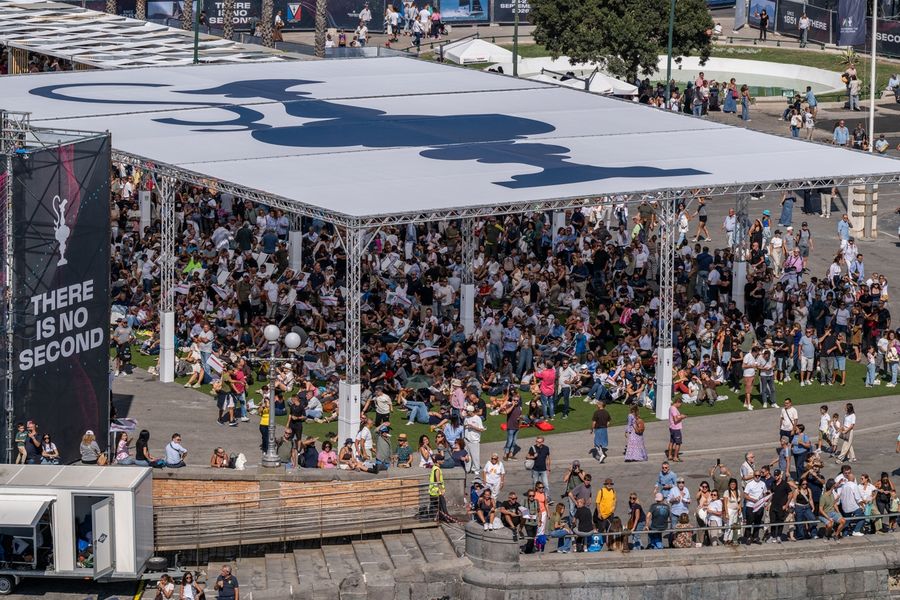
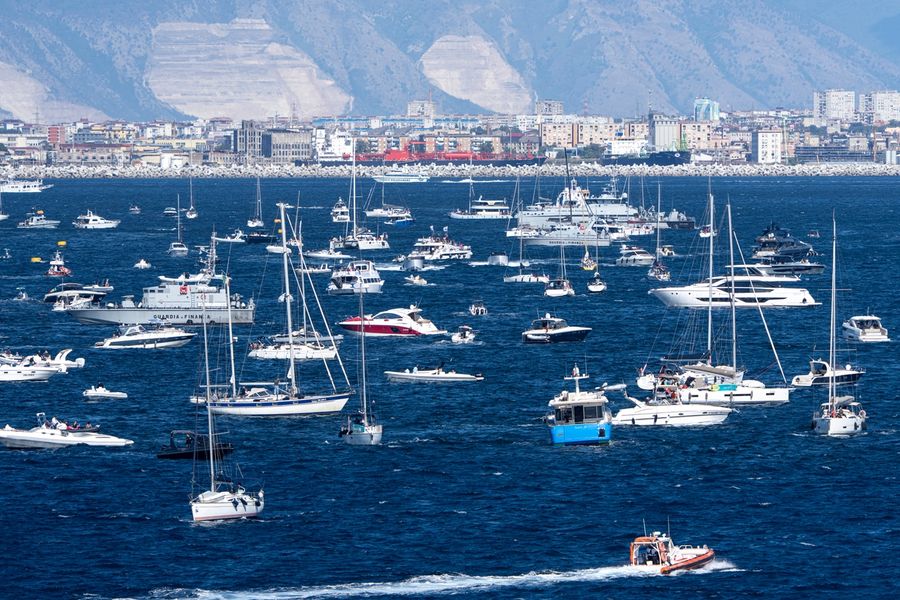
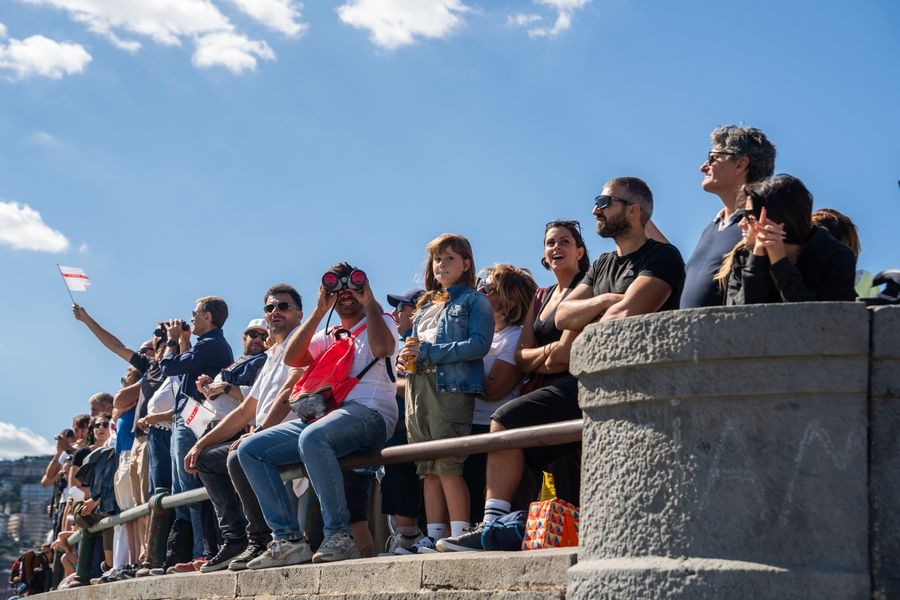
Some 252,520 people visited the Race Village over the event. Another 26,373 spectators watched from the water. An average of 623 spectator boats took to the bay each day, with 2,490 boats involved across the regatta in total, including 22 superyachts daily.
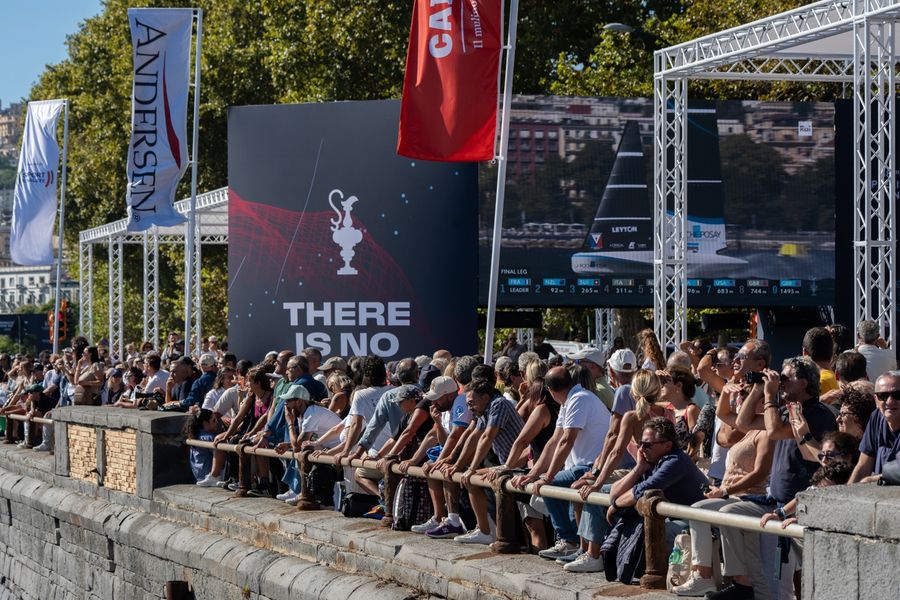
The final day told the story best. More than 120,000 spectators turned out.
The comparison with Barcelona, host of the Preliminary Regatta during the previous America's Cup cycle, is striking. Around 33,000 people attended the Barcelona Race Village across the event, against 252,520 in Naples, roughly 7.5 times as many.
Average daily attendance climbed from about 8,000 in Barcelona to around 63,000 in Naples. Peak-day numbers went from 15,000 to over 120,000. The spectator fleet followed the same trajectory, up from an average of 131 boats a day in Barcelona to 623 in Naples, nearly five times as many. Across land and water combined, 278,893 people attended the Naples Preliminary Regatta altogether.
The reach went well beyond the racecourse too. The event drew 225 accredited media outlets from 14 countries, and social media content generated more than 20 million views, sending images of Naples, its waterfront architecture and the Cup itself out to audiences worldwide.
What matters most, though, is what it signals for 2027.
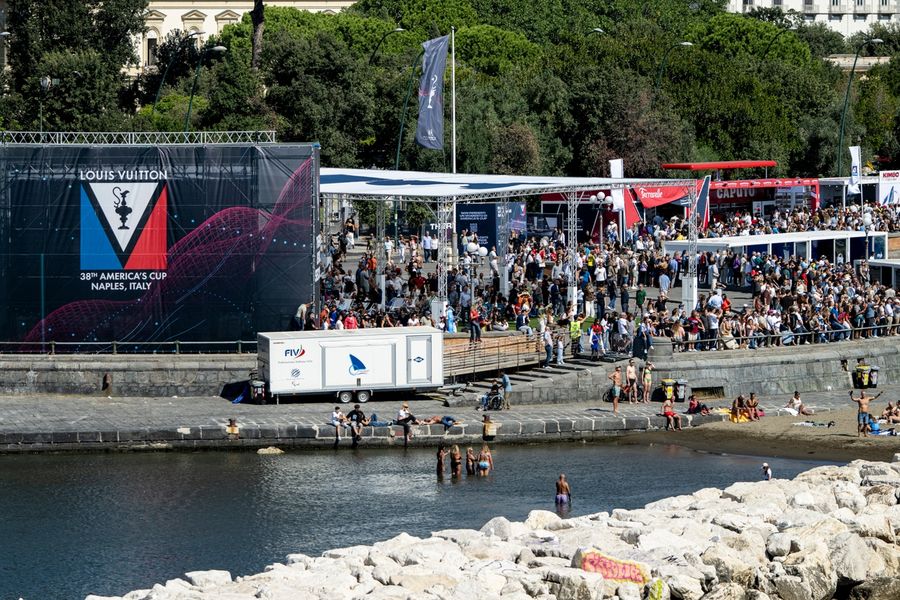
Naples 2026 was a preview. Naples 2027 is an entirely different proposition. This year's Race Village covered roughly 70,000 square metres, with team bases at Nisida spanning around 8,900 square metres and crews in the city for about two weeks. That investment ran to roughly €10 million and drew more than a quarter of a million people.
For the main event, those figures expand dramatically. New team bases at Bagnoli will cover approximately 37,000 square metres, while the Race and Fan Village stretches across some 100,000 square metres.
The 2027 regatta is expected to run 62 days, including 40 days of racing, with teams setting up in Naples for close to a year beforehand. Overall attendance is projected at between three million and 3.5 million visitors, somewhere between 12 and 14 times the turnout for the Preliminary Regatta, a jump that's hard to picture from the raw numbers alone.
Sport e Salute's modelling, which accounts for direct expenditure, indirect economic activity and the induced effects of staging the event, puts the overall economic impact at between €1.4 billion and €1.7 billion. By comparison, the 2024 America's Cup in Barcelona generated an estimated €1.034 billion and drew approximately 1.8 million visitors across 59 days of competition and associated activity.
Naples is now gearing up for an event expected to draw almost double that Barcelona visitor count. The flow-on benefits are expected across hotels, restaurants, transport, retail, marine services and tourism, alongside the broader exposure that comes with hosting one of world sport's oldest and most storied trophies.
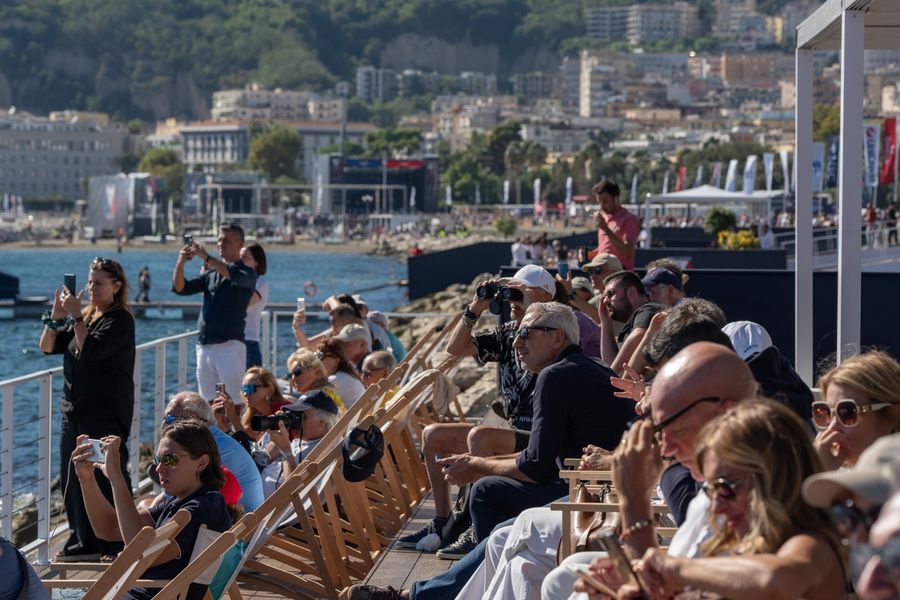
From crowded waterfront vantage points to hundreds of boats jostling for space on the bay, Naples showed genuine appetite for this event. It was meant to be a stepping stone. Instead, it became proof of what happens when the America's Cup lands in one of the Mediterranean's great maritime cities.
Naples 2026 was the preview. The main event is still to come, and by every measure available so far, it is shaping up to be enormous.