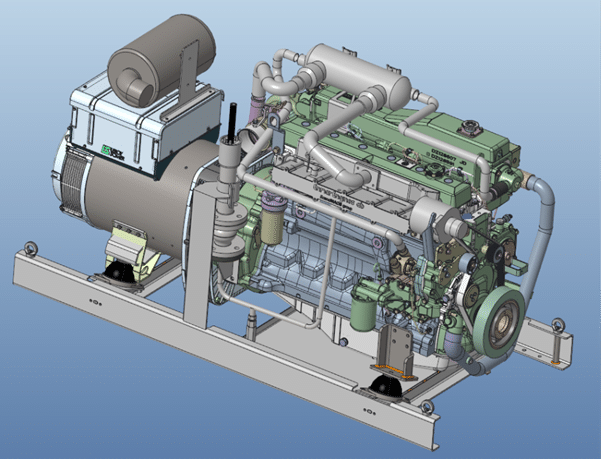
Nanni has successfully tested its first high-speed dual-fuel engine, a methanol-diesel generator set developed in partnership with Swedish naval engineering firm ScandiNAOS AB. The result, confirmed in late 2025 testing, marks a significant step for engines already familiar to boat owners and dealers across New Zealand.
The engine is based on Nanni's John Deere-derived 6-litre platform, converted to run on a blend of roughly 30 percent diesel and 70 percent methanol on an energy basis. ScandiNAOS designed the conversion kit, which includes methanol-specific engine control units, a redesigned air intake manifold with methanol injectors, and a double-walled fuel rail built to maritime safety standards.
Crucially, the system falls back to pure diesel automatically if the methanol tank runs dry. There's no interruption to the boat's operation, and no drama for the person behind the wheel.
The development sits within the wider Life Mystic project, an initiative led by Italian shipyard Sanlorenzo alongside Nanni, MAN Engines and Ranieri Tonissi, aimed at pushing low-impact technology into the yachting sector faster.
Testing was carried out under IACS standards for progressive engine and generator loading, with a representative from classification body RINA on hand to verify results.
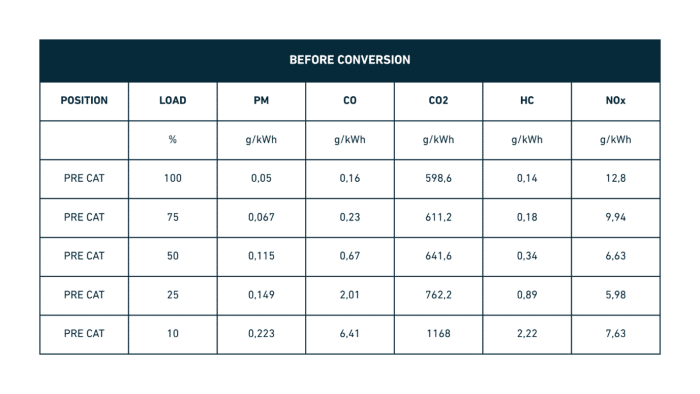
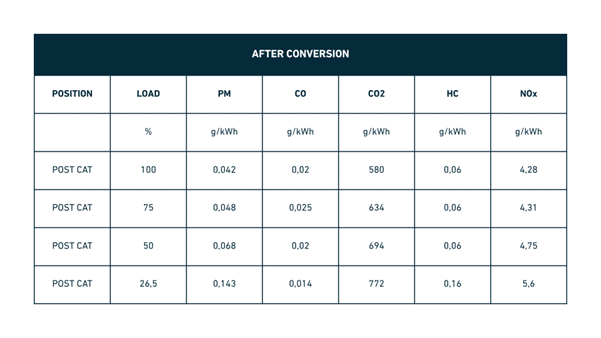
Methanol supplied between 50 and 75 percent of the engine's energy during testing, while full power output was maintained in both diesel and dual-fuel modes. CO and hydrocarbon emissions dropped by 95 to 99 percent after conversion. NOx fell by around 65 percent across most load conditions, and particulate output was consistently lower too.
For an industry under mounting pressure from the International Maritime Organization to cut exhaust emissions, that is a meaningful result rather than a marginal one.
Methanol is increasingly seen as one of the more realistic alternative fuels for shipping, easier to store and handle than some other low-carbon options. This project gives Nanni tangible data to support its use in smaller high-speed marine gensets.
Nanni, founded in 1952 and manufacturing across plants in France and Italy, supplies engines used widely in New Zealand recreational and commercial vessels. Servicing networks and importers here will be watching closely as the technology progresses toward production.
ScandiNAOS, based in Gothenburg and founded in 2005, has built its reputation on integrating alternative fuels into ship design, propulsion and energy systems, with methanol conversion a particular focus.
Nanni describes the milestone as paving the way for a new generation of marine engines built around performance, energy transition and environmental responsibility. Three things not always easy to reconcile in one engine block, but a combination this test suggests is now within reach.