A rebuilt racer, a crew with serious miles under their belts, and New Zealand's most demanding offshore circuit. Few combinations carry more weight in Kiwi sailing.
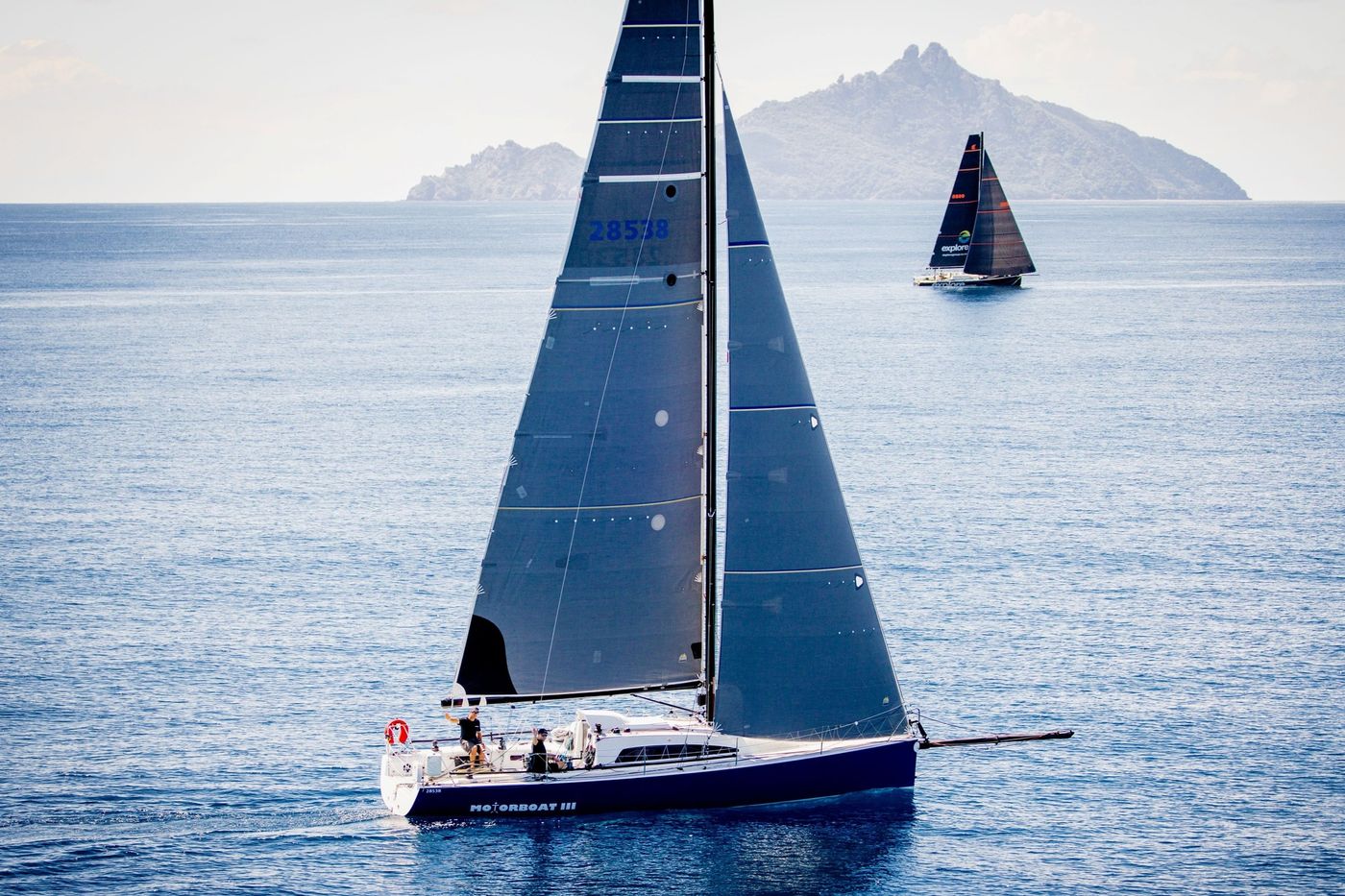
Motorboat III is a dark blue Thompson 1150, 11.6 metres of 2005 vintage, and she is the boat Josh Tucker and Damon Jolliffe will sail in the upcoming Round North Island Yacht Race. The two-handed offshore classic has shaped reputations and punished complacency for years, and this crew is approaching it with a thoroughness that reflects exactly what the event demands.
The campaign began in earnest immediately after Motorboat III took line honours in the Doyle Sails Cavalli Islands Race. Rather than return to Auckland and rest, the crew loaded food and gear and headed straight back out to sea. Their goal was to complete a 250 mile non-stop qualifier with the same two crew, Josh Tucker and Damon Jolliffe, who will race the Round North Island together. What unfolded was something more useful than a simple tick-the-box voyage. The pair zigzagged through the Gulf and pushed north toward Little Barrier, working through sail combinations and stress testing the boat's recent upgrades at every opportunity.
"It was all about learning," Josh says. "We wanted to try every sail combination we could. We ticked off as many of the qualifying checks as possible and made sure the boat was ready."
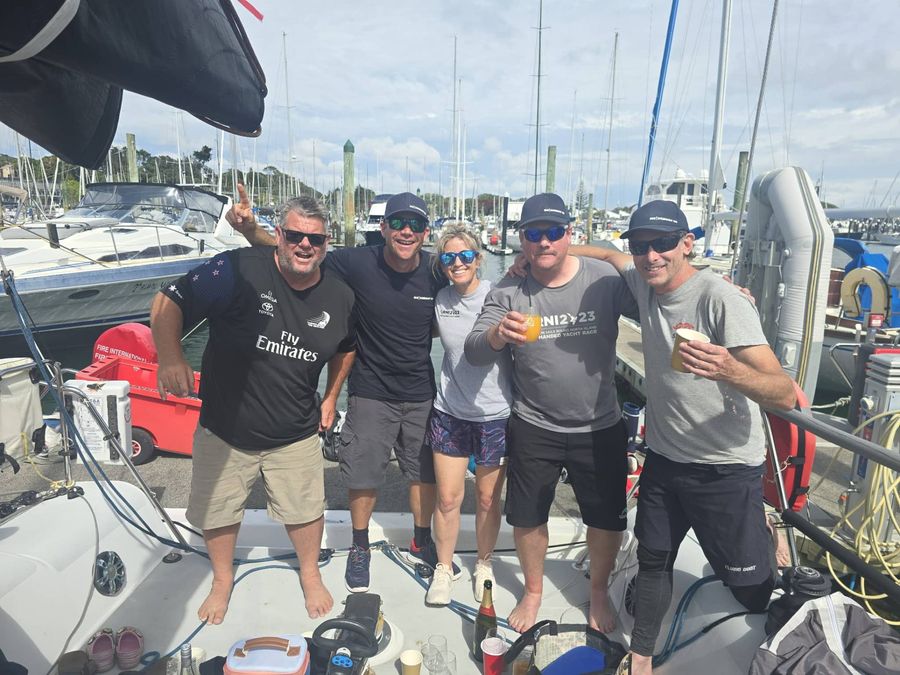
Every crew chasing a Round North Island start must satisfy the same core requirements before race day: a non-stop 250 mile qualifying voyage, Sea Survival certificates for both crew, at least one offshore First Aid qualification, and AIS and VHF checks completed twenty miles offshore. The list is deliberately thorough, because once the race is underway, the New Zealand coastline offers very few ways out.
The Cavalli Islands Race draws a heavy two-handed turnout each year precisely because it serves as a natural qualifier for so many crews. Others satisfy the distance requirement through the Northern Triangle, a roughly 510 nautical mile route running from Auckland to Mangonui, then to Tauranga, and back to Auckland. Some use a combination of longer Short Handed Sailing Association of New Zealand (SSANZ) events. Whatever path they choose, the purpose is the same: demonstrate that the boat and the crew are genuinely prepared for what lies ahead.
Josh understands that preparation requirement better than most. He has completed five Round North Island Yacht Races. Damon has completed four. Two of those campaigns they have shared together. That record was not assembled easily, and it traces back to a sailing life that started very early.
Josh grew up aboard a Herreshoff 45 launched the same year he was born. His parents raised four children on that boat, cruising Hawke's Bay, the Marlborough Sounds, and the Chathams. The family later sailed to protest nuclear testing at Mururoa and completed extended Pacific passages. Boats were not a hobby in that household. They were the context for everything.
"When you grow up like that, sailing becomes normal," he says. "A lot of my early memories are from that boat. It was home."
That foundation shaped a career defined by offshore miles rather than inshore circuits. Josh has completed four Rolex Sydney to Hobart Yacht Races and spent thirty years racing out of Wellington, where the conditions are rarely kind and frequently severe.
"You have to be prepared for anything down there. Cook Strait gives you a hiding if the tide and wind line up the wrong way. [Cape] Palliser can be worse. The Wairarapa coast is brutal."
His first Round North Island Yacht Race came aboard an eight and a half metre sports boat with barely any interior to speak of. He describes it as "two weeks in a beanbag," though the reality involved a light, wet, unforgiving hull that required constant management. They won their division, and whatever discomfort came with that boat delivered something more lasting than a trophy.
Later campaigns brought a Ross 930, a Sunfast 3600, and Motorboat II, an Elliott 10.5. Each race added to a bank of hard-won knowledge. One passage down Cook Strait with a gennaker flying in forty knots remains lodged firmly in the memory. "Everything happens in the dark," he says. "We had to ride it out. There was no other option."
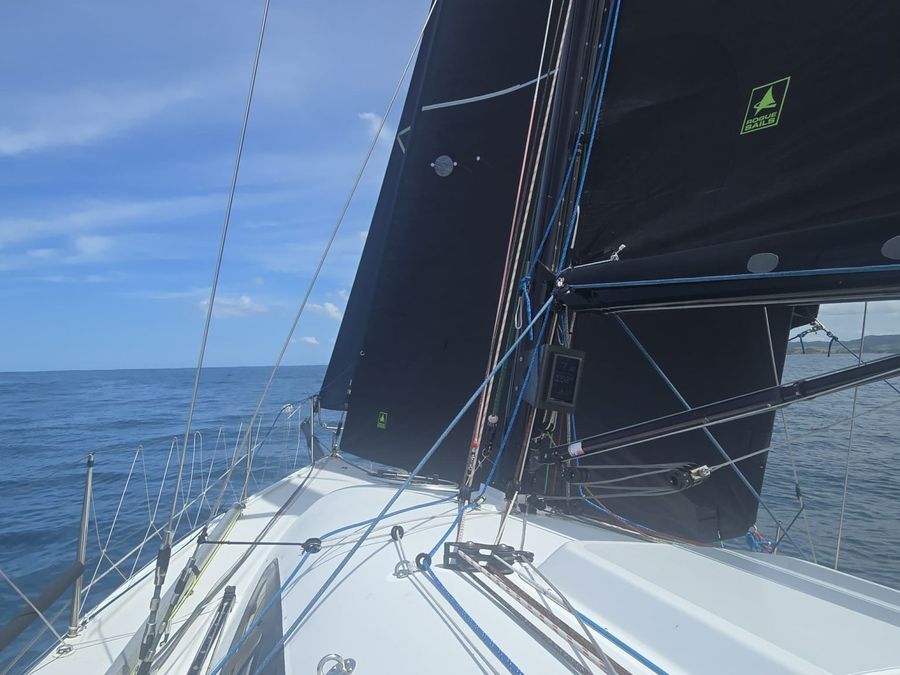
Motorboat III, once known as Serena, was already a respected downwind performer when Damon and Jacs Jolliffe acquired her. The Thompson 1150 hull carries plenty of pace off the breeze but, like most lightweight boats with powerful sail plans, struggled upwind. The solution Josh and Damon chose was significant: water ballast tanks, 500 kilograms per side, capable of transferring across in roughly twenty seconds.
"It is like having a rail stacked with crew the whole time," Josh says. "But locked in place. The boat feels like a tank. It just trucks along."
The modification has pushed their handicap upward, but the upwind improvement is real and measurable. The same refit also brought a reworked interior. Damon and Jacs use Motorboat III as a family cruiser between race campaigns, so the upgrades had to serve both purposes. The interior was reshaped to give their children more comfort on longer passages, with additional galley bench space, a proper fridge, and a forepeak double berth all added. The water ballast tanks convert to fresh water storage when the boat shifts into cruising mode. The result is a complete offshore package rather than a one-dimensional race weapon.
The Round North Island Yacht Race runs in late February, when summer conditions still carry the threat of tropical influence. The fleet departs Auckland and stretches into open water across four distinct legs, each with its own character.
The first leg runs north to Mangonui, tracking past the familiar Coastal Classic route and into the Far North. A minimum twenty-four hour stopover follows while most of the fleet comes in, and the mood in port is typically buoyant. The race is young and the miles ahead are still theoretical.
The second leg is the longest, rounding the top of the North Island and carrying the fleet south down the west coast to the entrance of the Marlborough Sounds, where crews motor a further twenty miles to the marina for a forty-eight hour break. Conditions on this leg vary wildly. Southwesterlies can grind progress to nothing. Long calms leave boats barely moving. The leg can be ruthlessly efficient or deeply demoralising, and there is no reliable way to know in advance which it will be.
Leg three, from Waikawa to Napier, earns the most respect from experienced crews. Cook Strait must be timed precisely: when wind and current oppose each other, the sea conditions deteriorate fast. Cape Palliser adds its own complications through shifting winds and strong tidal streams. Then comes the Wairarapa coast, which Josh describes without hesitation as "the worst part of New Zealand in general." There are no sheltered anchorages and very few options. Commitment is the only strategy.
The final leg from Napier to Auckland carries the fleet north past Gisborne, around East Cape, and through Colville Passage before the finish in the Gulf. The Napier marina shallowed following the floods, but the local community continues to haul boats to create space, and the stopover there has become one of the most warmly regarded in the race.
Fleet numbers for the upcoming edition sit in the low thirties, with the entry cap set at forty. It is a committed field, and the circuit will sort through them in the usual way, with cold fronts and tide gates and sleepless nights doing work that no handicap system can replicate.
Motorboat III arrives at the start line refined, proven, and crewed by sailors who have learned their lessons in some of the hardest water this country offers. They carry no illusions about what the North Island's coastline will ask of them.